Introduction
Hearing aids represent one of the most demanding applications in portable electronics due to their tiny form factors and need for all-day operation on minimal power sources. A Power Management IC (PMIC) serves as the central hub for handling battery charging, voltage regulation, and power distribution in these devices. Engineers designing hearing aid circuits must prioritize efficiency, size, and reliability to meet user expectations for comfort and performance. Key features like step-down charge pump circuits enable compact designs without bulky inductors, while protections against overcharge and discharge safeguard battery health. Flexible charging parameter settings allow customization for various battery types and usage scenarios. This article explores the role of PMICs in hearing aids, focusing on technical principles and practical implementation strategies for electronic engineers.
What Is a Power Management IC for Hearing Aids and Why It Matters
A Power Management IC (PMIC) is a highly integrated semiconductor that oversees all aspects of power handling in a system, including charging, conversion, and regulation tailored to the load requirements. In hearing aids, PMICs manage rechargeable lithium-ion or nickel-metal hydride batteries, providing stable low-voltage rails for digital signal processors, amplifiers, and microphones. These devices operate in microwatt ranges during standby, demanding ultra-low quiescent currents from the PMIC to maximize battery life, often extending to weeks per charge. The integration reduces component count on the PCB, critical for sub-millimeter scale boards common in completely-in-canal (CIC) hearing aids. Without an optimized PMIC, inefficiencies lead to frequent recharging, heat buildup, and reduced device lifespan. For electronic engineers, selecting and implementing the right PMIC directly impacts the overall system reliability and user satisfaction.
The relevance stems from the evolution toward rechargeable hearing aids, where primary zinc-air batteries are giving way to secondary cells for environmental and convenience benefits. PMICs enable wireless or inductive charging, further shrinking the enclosure by eliminating ports. They ensure consistent performance across varying battery states, preventing audio dropouts from voltage sags. In high-volume production, PMIC choice influences yield rates during PCB assembly, as thermal and electrical stresses must align with component specifications. Engineers benefit from PMICs that support multiple output rails from a single chip, simplifying power sequencing for mixed analog-digital circuits.

Technical Principles of PMICs in Hearing Aids
PMICs for hearing aids incorporate a step-down charge pump circuit as a core element for voltage conversion. This inductorless topology uses switched capacitors to transfer charge, stepping down input voltages efficiently at light loads typical of audio processing. Operating modes include 1:1 bypass for minimal loss at higher voltages and 2:1 or 3:2 fractional modes for deeper step-down, achieving over 90% efficiency without electromagnetic interference from inductors. The circuit suits hearing aid PCBs where space constraints prohibit magnetic components, allowing placement near the battery for short traces. Ripple voltage remains low due to integrated filtering, preserving signal integrity in sensitive analog paths.
Overcharge and discharge protections form another pillar, typically implemented via analog comparators and current sensors. During charging, the PMIC monitors cell voltage and current, terminating when thresholds are met to avoid lithium plating or gas generation. For discharge, undervoltage lockout prevents deep discharge that could degrade capacity over cycles. Temperature sensing integrates with these circuits, adjusting rates or halting operation if thermal limits exceed safe bounds. These features comply with safety requirements for medical-grade electronics, ensuring long-term battery stability.
Flexible charging parameter settings distinguish advanced PMICs, allowing engineers to program constant current, constant voltage profiles via resistors or digital interfaces. Parameters like fast-charge current, trickle rates, and termination voltages adapt to battery chemistry and capacity, from 20mAh micro-cells to larger receiver-in-canal units. This programmability supports field-upgradable firmware for evolving standards in hearing aid power needs. State-of-charge estimation uses coulomb counting or voltage curves, providing feedback for user interfaces without additional hardware.

Multi-rail outputs from single-inductor or charge-pump architectures power diverse subsystems. A buck-boost regulator might deliver 1.2V for DSP cores, 1.8V for analog blocks, and 3.3V for peripherals, all sequenced to avoid latch-up. Low-noise linear regulators follow for final cleanup, essential in environments where acoustic feedback loops demand high power supply rejection ratios.
Practical Solutions and Best Practices for Implementation
Integrating a PMIC on hearing aid PCBs requires meticulous layout to minimize parasitics and noise coupling. Place decoupling capacitors as close as possible to power pins, using low-ESR ceramics rated for the operating voltage. High-density interconnect (HDI) vias connect battery pads directly to the PMIC input, reducing trace inductance that could cause voltage droop during peak audio loads. Ground planes must separate analog and digital sections, with stitching vias to maintain return paths integrity.
Thermal management, though subtle in low-power designs, involves copper pours under the PMIC for heat spreading, especially during fast charging. Engineers should simulate power delivery networks early, verifying step-up or step-down stability under varying loads. Flexible charging parameter settings prove invaluable here, tunable via external resistors to match specific battery models without respinning the board.
Assembly processes demand precision, following IPC-A-610 guidelines for acceptability of electronic assemblies to ensure solder joint reliability on fine-pitch PMIC packages like WCSP or QFN. Handling moisture-sensitive devices aligns with JEDEC J-STD-033 standards, preconditioning components to prevent popcorning during reflow. Overcharge and discharge protections reduce field failures, but initial qualification testing verifies margins under accelerated cycles.

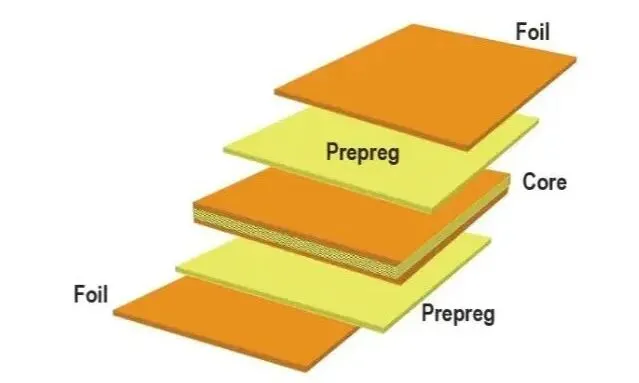
Troubleshooting common issues starts with oscilloscope checks on charge pump outputs for excessive ripple, often traced to inadequate capacitance or switching noise. If overcharge occurs, verify sense resistor accuracy and thermal coupling. Discharge cutoffs too early signal calibration drift, resolvable by adjusting flexible parameters. PCB warpage from lamination stresses can misalign PMIC pads, addressed via controlled curing per IPC-6012 specifications.
Conclusion
Power Management ICs (PMICs) are indispensable for modern hearing aids, delivering compact, efficient power handling through step-down charge pump circuits, robust overcharge and discharge protections, and flexible charging parameter settings. Engineers achieve optimal designs by focusing on PCB layout precision, standard-compliant assembly, and simulation-driven validation. These elements extend battery autonomy, enhance reliability, and support miniaturization trends. As hearing aids incorporate more processing power, PMICs will evolve to meet rising demands while maintaining safety and efficiency.
FAQs
Q1: What role does a step-down charge pump circuit play in a Power Management IC for hearing aids?
A1: The step-down charge pump circuit in a PMIC converts higher battery voltages to lower rails without inductors, ideal for space-constrained hearing aid PCBs. It switches capacitors in modes like 2:1 for efficiency above 90% at light loads, minimizing ripple for clean audio signals. This topology reduces BOM cost and EMI, enabling sleeker designs. Engineers select it for its low quiescent current, crucial for all-day operation.
Q2: How do overcharge and discharge protections function in hearing aid PMICs?
A2: Overcharge protection in PMICs monitors voltage and current, terminating charge to prevent cell damage, while discharge protection activates undervoltage lockout to preserve capacity. Integrated temperature sensors adjust thresholds dynamically. These features ensure safe operation across cycles, aligning with medical reliability needs. Troubleshooting involves verifying sense paths on the PCB for accurate feedback.
Q3: Why are flexible charging parameter settings important in Power Management ICs for hearing aids?
A3: Flexible charging parameter settings in PMICs allow programming of current limits, voltages, and profiles via resistors or I2C, adapting to different battery sizes in hearing aids. This customization optimizes charge times without overheating tiny cells. It supports NiMH or Li-ion chemistries, improving field performance. Engineers use datasheets to set values matching application loads.
Q4: What PCB design best practices support PMIC integration in hearing aids?
A4: Prioritize short, wide traces for power paths, HDI for density, and split grounds to isolate noise in PMIC-integrated hearing aid PCBs. Decouple aggressively and simulate PDN stability. Follow IPC standards for assembly to avoid defects. These steps enhance step-down charge pump efficiency and protection reliability.
References
IPC-A-610H — Acceptability of Electronic Assemblies. IPC, 2019
JEDEC J-STD-033D.01 — Handling, Packing, Shipping, and Use of Moisture/Reflow Sensitive Surface Mount Devices. JEDEC, 2020
IPC-6012E — Qualification and Performance Specification for Rigid Printed Boards. IPC, 2017