Introduction
In the evolving landscape of electronics manufacturing, balancing performance with affordability remains a critical challenge for electric engineers. Printed circuit boards (PCBs) form the backbone of most electronic assemblies, and material selection directly impacts both functionality and budget. Organic substrates have emerged as a cornerstone for cost-effective PCB solutions, offering reliable electrical properties at a fraction of the expense associated with inorganic alternatives. These materials, primarily polymer-based composites, enable scalable production without compromising essential standards. As projects demand higher densities and faster turnaround, understanding the organic PCB cost advantages becomes essential for optimizing designs. This article delves into the mechanisms, benefits, and practical applications of organic substrates.

What Are Organic Substrates and Why Do They Matter?
Organic substrates consist of resin systems reinforced with woven glass fibers or other fillers, forming the dielectric core of PCBs. Common examples include epoxy-based laminates like FR4 and advanced variants such as bismaleimide-triazine (BT) resins, which provide the structural and electrical foundation for traces and vias. Unlike inorganic options such as ceramics or silicon, organic substrates rely on organic polymers for insulation and mechanical support, making them compatible with standard lamination and plating processes. Their relevance stems from the growing pressure on PCB material cost comparison, where engineers seek alternatives to high-end materials without sacrificing reliability.
The importance of organic substrates intensifies in high-volume production, where even marginal savings in raw materials translate to substantial reductions in overall organic PCB cost. They support multilayer constructions essential for modern compact devices, from consumer electronics to automotive controls. By adhering to specifications like IPC-4101 for base materials, manufacturers ensure consistency in thickness, dielectric strength, and thermal stability. For electric engineers, selecting an affordable PCB substrate means prioritizing these materials to meet project timelines and budgets effectively. Ultimately, organic substrates democratize advanced PCB capabilities, making them indispensable for cost-conscious innovation.
Technical Principles Behind Organic Substrates
The core mechanism of organic substrates lies in their composite structure, where epoxy or phenolic resins matrix glass cloth to achieve balanced mechanical and electrical performance. Coefficient of thermal expansion (CTE) matching between the substrate and copper layers minimizes warpage during soldering, a key factor in reliability under thermal cycling. Dielectric constant values typically range from 3.5 to 4.5, supporting signal integrity in mid-frequency applications without excessive signal loss. Thermal conductivity, though lower than ceramics at around 0.3 W/mK, suffices for most designs through optimized copper planes and vias.
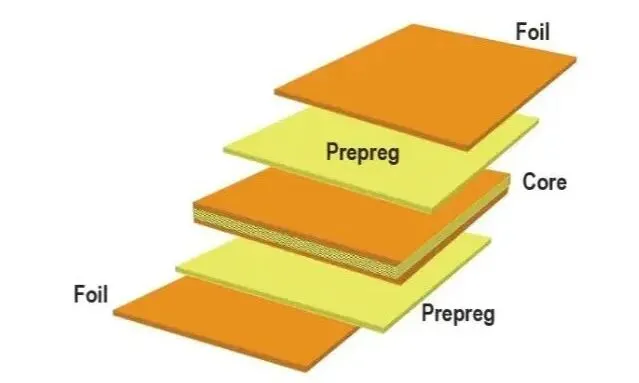
Fabrication begins with impregnating glass fabric with resin to form prepregs, which are stacked with copper foils and pressed under heat and pressure in a process governed by controlled flow and cure kinetics. This sequential build-up allows for fine-line patterning and blind vias, enhancing density cost-effectively. Moisture absorption, managed below 0.5% per IPC standards, prevents delamination in humid environments. Engineers must consider glass transition temperature (Tg) to ensure stability above 130°C for lead-free assembly. These principles underscore why organic substrates excel in PCB material cost comparison, as their processing aligns with high-throughput equipment.
Dimensional stability derives from the orthotropic nature of the laminate, with in-plane shrinkage controlled to under 0.5% post-cure. Vias filled with conductive epoxy or electroplated copper maintain interlayer connectivity without the brittleness of inorganic fillers. Halogen-free variants further reduce environmental impact while preserving flame retardancy per UL94 V-0. By leveraging these properties, designs achieve the sweet spot between performance and organic PCB cost.
Factors Influencing PCB Material Cost Comparison
Cost in PCBs arises from raw material pricing, processing complexity, and yield rates, with organic substrates consistently offering the lowest entry point. FR4, as the benchmark for the cost of FR4 PCB, benefits from abundant supply chains and mature recycling, keeping per-square-foot expenses minimal compared to high-Tg or low-loss alternatives. Inorganic ceramics demand specialized sintering at elevated temperatures, inflating tooling and handling costs exponentially. Organic options scale effortlessly from prototypes to millions, as panel utilization exceeds 90% in standard formats.
Layer count amplifies differences: multilayer organic builds add prepregs incrementally at low marginal cost, whereas inorganic stacks require hybrid integration prone to defects. Copper weight, from 1 oz to 3 oz, adds linearly in organics but disproportionately in rigid inorganics due to adhesion challenges. Panel size standardization, typically 18x24 inches, optimizes organic runs, reducing scrap. Engineers evaluating cheap organic PCB must factor drill bit wear, as high-aspect vias in organics use carbide tools efficiently over thousands of hits.
Surface finishes like ENIG or HASL apply uniformly, with organics accepting immersion processes without cracking. Testing for ionic contamination and solderability per IPC-TM-650 methods confirms quality without premium fixturing. In a PCB material cost comparison, organics win for mid-tier power densities up to 5W/cm2, where heat sinking suffices.
- Raw Material Availability: Organic (e.g., FR4) — High-volume, global supply; Inorganic (e.g., Ceramic) — Limited, specialized sourcing
- Processing Temperature: Organic — 170-200°C lamination; Inorganic — 800-1500°C sintering
- Multilayer Scalability: Organic — Up to 50+ layers routine; Inorganic — Typically 1-4 layers
- Via Formation: Organic — Laser/mechanical drilling; Inorganic — Precision punching or etching
- Cost Scaling with Volume: Organic — Linear decrease; Inorganic — High fixed tooling
Practical Solutions and Best Practices for Affordable PCB Substrates
To harness cheap organic PCB benefits, start with stackup optimization per IPC-2221 design guidelines, balancing core and prepreg thicknesses for uniform CTE. Select FR4 with Tg ≥170°C for reflow profiles exceeding 260°C peak, ensuring no resin softening. Minimize via count through fanout strategies, reducing drill cycles and plating time. Panelize designs with 10-20 boards per array to amortize setup costs.
Quality control involves visual inspection per IPC-A-600 for surface defects and cross-sectioning for layer alignment. Bake-out at 125°C for 24 hours mitigates popcorn effects in MSL3-rated parts. For high-density interconnects, use build-up organics with laser vias, adhering to IPC-6012 performance specs. Simulate warpage with FEA tools incorporating laminate orthotropy for preemptive adjustments.
Sourcing affordable PCB substrate requires specifying exact resin content and filler type to avoid grade substitutions. Sequential lamination for cavities controls flatness within 0.1mm. Post-etch etchback ensures consistent impedance. These practices yield robust boards at optimized organic PCB cost.

Insights from Manufacturing Perspectives
Organic substrates shine in automotive ECUs, where cost pressures meet reliability demands under vibration and thermal swings. Factory data shows yield rates above 98% for 20-layer FR4 builds versus 85% for ceramic hybrids. Troubleshooting warpage involves symmetric stackups and constrained edges during press. For RF modules, low-loss organics like BT reduce insertion loss by 20% over standard FR4 without cost escalation.
In power supplies, embedding capacitors in prepregs cuts discrete parts, trimming assembly costs. Engineers report 15-25% savings in BOM through integrated organics. Adopting IPC-6921 for IC substrates extends these gains to package-level integration.

Conclusion
Organic substrates deliver compelling cost-effective PCB solutions through inherent manufacturability, material abundance, and standards compliance. From basic FR4 to advanced BT builds, they provide electric engineers with versatile options in PCB material cost comparison. Key benefits include low processing barriers, high yield scalability, and reliable performance in demanding environments. By applying best practices like precise stackup design and quality inspections, teams achieve substantial savings on organic PCB cost without performance trade-offs. As electronics miniaturize, these materials will anchor affordable innovation.
FAQs
Q1: What factors contribute most to organic PCB cost reductions?
A1: Organic PCB cost benefits from high-volume raw material availability, standard lamination processes, and efficient panel utilization. Unlike inorganic options, organics avoid specialized high-temperature equipment, enabling cheaper organic PCB production. Adhering to IPC-4101 ensures material consistency, minimizing defects and rework. Engineers can further optimize by standardizing layer counts and via densities for scalable manufacturing. (62 words)
Q2: How does the cost of FR4 PCB compare to other substrates?
A2: The cost of FR4 PCB sets the benchmark as the most affordable due to mature supply chains and simple fabrication. It outperforms ceramics in multilayer scalability at a fraction of the price, ideal for mid-power applications. Factors like copper weight and finishes add incrementally, keeping totals low. For precise budgeting, factor in yield from IPC-6012 qualification. (58 words)
Q3: Are affordable PCB substrates reliable for high-density designs?
A3: Yes, affordable PCB substrates like FR4 organics support HDI with laser vias and fine-pitch traces per IPC standards. They match CTE to components, reducing stress in thermal cycles. Manufacturing insights confirm stability up to 170°C Tg, with warpage controlled below 0.5%. Proper bake-out enhances MSL performance for cheap organic PCB reliability. (54 words)
Q4: When should engineers choose organic substrates over alternatives?
A4: Opt for organic substrates in cost-sensitive projects needing 4-30 layers and frequencies under 10 GHz. They excel in PCB material cost comparison for automotive and consumer goods. Reserve inorganics for extreme thermal demands. IPC-2221 guides design for optimal balance. (48 words)
References
IPC-4101E — Specification for Base Materials for Rigid and Multilayer Printed Boards. IPC, 2017
IPC-6012DS — Qualification and Performance Specification for Flexible Printed Boards. IPC, 2015
IPC-2221B — Generic Standard on Printed Board Design. IPC, 2012
IPC-6921 — Requirements and Acceptance Criteria for Organic IC Substrates. IPC, 2026