Introduction
Printed circuit boards form the backbone of gaming consoles, enabling everything from high-speed graphics processing to seamless user inputs. In the fast-paced world of gaming, Precision Gaming PCBs ensure reliable performance under demanding conditions like intense heat and rapid signal transmission. These boards power handheld devices, arcade systems, and associated peripherals, where even minor deviations can lead to latency or failures. Engineers designing for gaming must prioritize precision to meet player expectations for smooth gameplay. This article explores the engineering behind Gaming Console PCBs, focusing on technical principles and best practices. Key areas include Arcade PCBs for gaming and components in Handheld Accessories, all demanding exacting standards.
What Are Gaming Console PCBs and Why Precision Matters
Gaming Console PCBs are multilayer assemblies that integrate processors, memory, power regulators, and connectivity interfaces tailored for interactive entertainment. These boards handle gigabit data rates for video output and controller signals, requiring tight control over trace widths and spacings. Precision in fabrication becomes critical because gaming environments involve vibration from controllers, thermal cycling from prolonged sessions, and electromagnetic interference from nearby components. A Precision Gaming PCB minimizes signal degradation, ensuring low-latency responses essential for competitive play. For instance, Arcade PCBs for gaming often feature robust mechanical designs to withstand cabinet vibrations and frequent coin-operated use. In Handheld Accessories like controllers or docking stations, compact HDI structures pack high-density interconnects without compromising reliability.
The relevance extends to the entire supply chain, where electric engineers balance cost with performance. Poor precision leads to issues like crosstalk in high-speed buses or delamination under heat, disrupting gameplay. Industry standards such as IPC-6012E define qualification criteria for rigid boards, ensuring they meet performance specs for dynamic applications. Precision Gaming PCBs thus represent a convergence of electrical, thermal, and mechanical engineering. Without it, consoles fail to deliver the immersive experiences gamers demand.

Key Technical Principles in Gaming Console PCBs
At the core of Gaming Console PCBs lies controlled impedance for high-speed signals like DDR memory interfaces and display outputs. Traces must maintain 50-ohm or 100-ohm differentials to prevent reflections that cause data errors during frame rendering. Materials selection plays a pivotal role; low-loss dielectrics with dielectric constant (Dk) stability reduce attenuation at frequencies above 1 GHz. Thermal management integrates copper pours and embedded vias to dissipate heat from graphics chips operating near 100 degrees Celsius. Engineers calculate stackups using field solvers to predict impedance variations across the board.
Power delivery networks demand low inductance paths, achieved through wide planes and decoupling capacitors placed strategically near ICs. In Precision Gaming PCBs, voltage droop must stay below 5% during peak loads from GPU bursts. For Arcade PCBs for gaming, thicker copper weights up to 2 oz/ft2 handle higher currents for illumination and solenoids. Handheld Accessories benefit from embedded components to shrink footprints while maintaining signal integrity. Vibration resistance requires anchor points and conformal coatings per J-STD-020E guidelines for moisture sensitivity.
Signal integrity analysis involves eye diagram simulations to verify timing margins for USB 3.0 or HDMI paths common in consoles. EMI suppression uses ground stitching vias and shielding cans around sensitive RF sections. These principles ensure Gaming Console PCBs support 4K resolutions and 120 Hz refresh rates without artifacts.

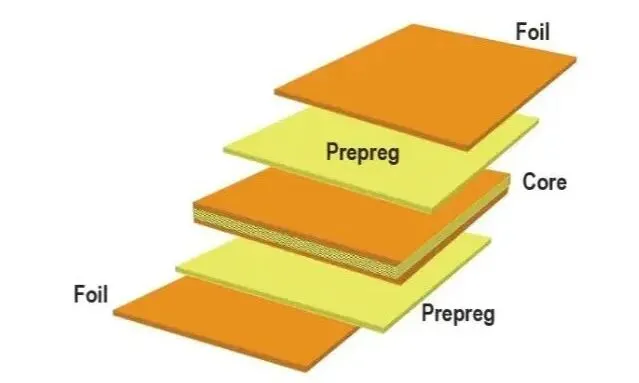
Layer stackups in Precision Gaming PCBs typically range from 8 to 16 layers, with blind and buried vias for routing density. Core materials adhere to high Tg specifications to resist warpage during reflow soldering peaks. Prepreg selection influences resin flow, critical for via fill in HDI designs used in Handheld Accessories. Thermal vias under hotspots transfer heat to inner planes, maintaining junction temperatures within safe limits.
Design Best Practices for Precision Gaming PCBs
Electric engineers start with schematic capture emphasizing decoupling strategies and bypass paths. During layout, maintain return currents close to signals to minimize loop inductance. Design rules enforce minimum clearances per IPC-2221 guidelines, preventing shorts in dense areas. Simulate power integrity early to identify resonance peaks that could destabilize clocks. For Arcade PCBs for gaming, incorporate mechanical fiducials for panelization and edge bevels to ease assembly in cabinets.
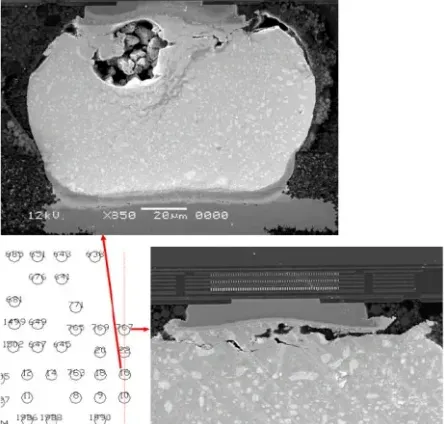
Fabrication tolerances tighten to ±0.05 mm for line widths in high-speed sections of Precision Gaming PCBs. Panel utilization optimizes yield, with routing tabs for handling. Solder mask registration ensures coverage over fine-pitch pads. Bake-out processes precondition boards per IPC-A-600K acceptability criteria, removing moisture before assembly. These steps reduce defects like opens in BGA balls common in console processors.
In Handheld Accessories, microvias enable fanout from 0.3 mm pitch BGAs, but require sequential lamination to control aspect ratios below 0.8:1. Test coupons on panels verify material properties like Dk and Df post-fabrication. Engineers iterate DFMs with fabricators to align on capabilities.

Assembly processes favor nitrogen reflow for Precision Gaming PCBs to minimize oxidation on immersion gold finishes. Stencil apertures adjust for QFN wetting, ensuring void-free joints. X-ray inspection confirms barrel fill in vias carrying power. For Arcade PCBs for gaming, wave soldering suits through-hole connectors for joysticks. Post-assembly functional tests stress boards with burn-in cycles simulating extended play.
Common Challenges and Troubleshooting in Gaming Console PCBs
Warpage poses a frequent issue in multilayer Gaming Console PCBs due to CTE mismatches between copper and laminate. Engineers mitigate this with symmetric stackups and low-CTE cores. Delamination during thermal shock testing signals poor adhesion, addressed by plasma cleaning pre-lamination. Signal skew in differential pairs arises from unequal lengths; length matching tools enforce <1 mil tolerances.
EMI radiation from switching regulators affects wireless Handheld Accessories. Ground plane partitioning isolates analog and digital sections. Crosstalk in unshielded HDMI traces requires guard traces or stitching. Troubleshooting involves TDR for discontinuities and near-field probes for emission sources. Adhering to IEC standards for EMC helps pass compliance.
Reliability under vibration demands strain relief on flex-to-rigid transitions in portable consoles. Drop tests simulate handling, guiding reinforcement stitching.
Conclusion
Precision Gaming PCBs drive the performance of gaming consoles, from compact Handheld Accessories to durable Arcade PCBs for gaming. Key principles like impedance control, thermal design, and power integrity ensure low-latency, reliable operation. Best practices rooted in standards deliver manufacturable designs that withstand real-world stresses. Electric engineers who master these elements create boards that elevate gaming experiences. Future advancements will push HDI densities and materials further, maintaining precision at the forefront.
FAQs
Q1: What is a Precision Gaming PCB?
A1: A Precision Gaming PCB refers to a printed circuit board engineered for gaming consoles with tight tolerances on traces, vias, and materials to support high-speed signals and thermal loads. It ensures minimal latency in graphics and input processing, critical for immersive play. Standards like IPC-6012E guide qualification for rigid boards in these applications. Engineers focus on controlled impedance and HDI for density. This precision differentiates high-performance gaming hardware. (68 words)
Q2: How do Arcade PCBs for gaming differ from standard boards?
A2: Arcade PCBs for gaming feature thicker copper and robust mechanical designs to handle cabinet vibrations and high-current loads for lights and actuators. They prioritize through-hole components for easy repairs in commercial settings. Precision in plating thickness per IPC-A-600K ensures longevity under frequent use. Signal routing supports legacy video standards alongside modern interfaces. These boards balance durability with performance for continuous operation. (72 words)
Q3: What role do PCBs play in Handheld Accessories?
A3: PCBs in Handheld Accessories like controllers use HDI and embedded passives to achieve compact sizes while managing battery power and wireless signals. Fine-pitch SMT demands precise stencil design for reliable joints. Thermal vias dissipate heat from haptics motors during extended sessions. Moisture protection follows J-STD-020E for portable reliability. Engineers optimize for low power to extend playtime without sacrificing responsiveness. (64 words)
Q4: Why is signal integrity crucial in Gaming Console PCBs?
A4: Signal integrity in Gaming Console PCBs prevents data errors in high-speed buses like DDR and PCIe used for frame buffers. Reflections from impedance mismatches cause bit flips, leading to glitches. Simulations verify eye openings before fabrication. Controlled dielectrics and via optimization maintain margins. This ensures smooth 4K gaming without artifacts. (52 words)
References
IPC-6012E - Qualification and Performance Specification for Rigid Printed Boards. IPC, 2017
IPC-A-600K - Acceptability of Printed Boards. IPC, 2020
J-STD-020E - Moisture/Reflow Sensitivity Classification. JEDEC, 2014