Introduction
Low Dk PCB materials play a critical role in high-frequency applications where signal integrity is paramount. Engineers designing for RF, microwave, and millimeter-wave systems prioritize these materials to minimize dielectric losses and maintain controlled impedance. Rogers low Dk PCB, Taconic low Dk PCB, and Isola low Dk PCB options each offer distinct advantages in dielectric constant (Dk) stability and dissipation factor (Df). This comprehensive comparison evaluates their properties, helping with informed PCB material selection guide decisions. Understanding these differences ensures optimal performance in demanding environments like 5G infrastructure and radar systems. The analysis draws on established engineering principles to guide electric engineers through key considerations.
What Are Low Dk PCB Materials and Why They Matter
Low Dk refers to materials with a dielectric constant typically below 3.5, which reduces signal propagation delay and capacitive coupling in high-speed circuits. In high-frequency PCBs, a lower Dk allows for faster signal speeds and smaller physical sizes without compromising performance. These materials also feature low Df to limit energy dissipation as heat, crucial for maintaining insertion loss below acceptable thresholds. Industry relevance stems from applications in telecommunications, aerospace, and automotive radar, where even minor variations in Dk can degrade signal integrity. According to IPC-4101 standards, base materials must exhibit consistent electrical properties across temperature and frequency ranges. Selecting the right low Dk material directly impacts yield rates and system reliability in production environments.
Engineers face trade-offs between electrical performance, thermal management, and manufacturability when choosing low Dk options. Materials with Dk values around 2.2 to 3.0 excel in ultra-high frequencies above 10 GHz, where phase stability is essential. Moisture absorption further influences Dk stability, as absorbed water can elevate effective Dk and increase losses. Compliance with JEDEC J-STD-020 ensures materials withstand reflow soldering without delamination. Ultimately, low Dk materials enable denser routing and higher data rates in modern PCBs. This makes a thorough low Dk material comparison indispensable for design success.
Key Technical Properties of Low Dk Materials
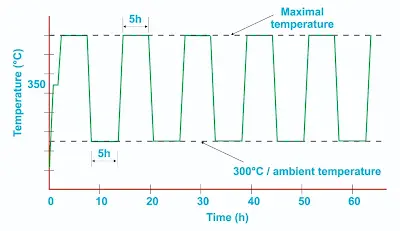
The dielectric constant (Dk) measures a material's ability to store electrical energy relative to air, directly affecting impedance and wavelength. Low Dk values, such as 2.2 or 3.0 at 10 GHz, promote uniform field distribution and reduce crosstalk. Dissipation factor (Df) quantifies dielectric losses, with values below 0.002 critical for minimizing attenuation in mmWave designs. Coefficient of thermal expansion (CTE) matching between laminate and copper prevents warpage during thermal cycling, especially Z-axis CTE under 50 ppm/°C. Thermal conductivity aids heat dissipation in power amplifiers, while glass transition temperature (Tg) above 200°C supports lead-free assembly. These properties must align with IPC-6012E qualification for rigid boards to ensure reliability.
Frequency-dependent behavior is another key aspect, as Dk and Df often remain stable up to 40 GHz in premium laminates. Moisture absorption below 0.1% preserves electrical consistency in humid conditions. Peel strength and dimensional stability facilitate multilayer stacking without misalignment. Engineers evaluate these via split-post resonators or stripline methods for accurate characterization. Variability in Dk tolerance, like ±0.02 to ±0.05, influences impedance control precision. Balancing these ensures robust performance across operating temperatures from -55°C to 125°C.
Rogers Low Dk PCB Materials
Rogers materials dominate ultra-low loss applications with PTFE-based composites offering exceptional stability. For instance, RT/duroid 5880 exhibits Dk of 2.2 ±0.02 and Df of 0.0009 at 10-12 GHz, ideal for millimeter-wave circuits. RO4003C provides Dk 3.38 ±0.05 and Df 0.0027 at 10 GHz, with low Z-axis CTE of 46 ppm/°C and thermal conductivity of 0.71 W/m·K. These support frequencies up to 110 GHz, maintaining consistency in multilayer boards. RO3003, with Dk 3.0 ±0.04 and Df 0.001, suits precision radar antennas. Rogers options excel in thermal management but require specialized handling due to PTFE content. Their high cost reflects superior electrical performance in demanding RF systems.
Rogers laminates like RO4350B (Dk 3.48, Df 0.0037) offer FR-4-like processing at lower cost for base stations. Low moisture absorption (0.01-0.10%) minimizes Dk drift. Engineers appreciate the wide Dk range for tailored impedance. However, higher CTE in some pure PTFE variants demands careful stackup design.
Taconic Low Dk PCB Materials
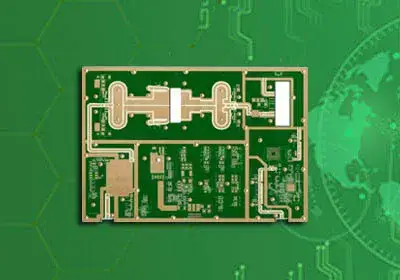
Taconic provides cost-effective PTFE/woven glass laminates for high-volume RF production. TLY-5 stands out with Dk 2.2 ±0.03 and Df 0.0009 at 10 GHz, enabling compact trace widths. RF-35 offers Dk 3.5 ±0.1 and Df 0.0018, balancing performance and affordability for commercial microwave apps. TLX series (Dk 2.45-2.65, Df 0.00155-0.0021) provides rigidity with low moisture absorption. Thermal conductivity ranges from 0.22 W/m·K in TLY-5 to 0.92 W/m·K in RF-35TC. These materials support up to 40 GHz with good dimensional stability.
Taconic's ORCER family enhances peel strength and laser drillability. Z-axis CTE varies, higher in lightweight options like 217 ppm/°C for TLY-5. They offer value in automotive radar and satellites, with Td up to 526°C. Processing resembles standard PTFE but with easier bonding.
Isola Low Dk PCB Materials
Isola focuses on FR-4 compatible laminates for hybrid digital-RF boards. Astra MT77 delivers Dk 3.0 stable from 2-20 GHz and Df 0.0017, with Tg 200°C and Td 360°C. Z-axis CTE 50-70 ppm/°C suits multilayer reliability. Thermal conductivity at 0.45 W/m·K aids moderate power handling. I-Tera MT40 (Dk 3.45, Df 0.0031) eases fabrication with standard equipment. These excel in cost-sensitive designs up to 20 GHz.
Isola materials minimize crosstalk in dense assemblies. Low profile copper compatibility enhances signal integrity. Moisture absorption around 0.10% requires controlled storage. They provide a practical entry for low Dk without PTFE challenges.
Low Dk Material Comparison
- Typical Dk @10 GHz: Rogers 2.2-3.38; Taconic 2.2-3.5; Isola 3.0
- Typical Df @10 GHz: Rogers 0.0009-0.0027; Taconic 0.0009-0.0018; Isola 0.0017
- Z-CTE (ppm/°C): Rogers 24-237; Taconic 23-217; Isola 50-70
- Thermal Conductivity (W/m·K): Rogers 0.20-0.86; Taconic 0.22-0.92; Isola 0.45
- Frequency Capability: Rogers up to 110 GHz; Taconic up to 40 GHz; Isola up to 20 GHz
- Cost/Processability: Rogers High/Medium; Taconic Medium/Moderate; Isola Low/High
Rogers leads in loss and frequency range, Taconic balances cost and performance, Isola prioritizes ease.
PCB Material Selection Guide: Best Practices
Start with frequency and loss budget to narrow options; ultra-low Df for >20 GHz favors Rogers or Taconic. Match CTE to copper for multilayer warpage control per IPC-6012E. Simulate impedance with vendor Dk/Df data at operating temperature. Consider moisture effects via JEDEC preconditioning. Prototype stackups to verify signal integrity. Prioritize FR-4 compatibility for volume if performance allows.
Factor power density; higher thermal conductivity suits amplifiers. Evaluate total cost including processing. Validate via VNA measurements post-fabrication.
Conclusion
Rogers low Dk PCB materials offer top-tier performance for extreme frequencies, Taconic provides versatile high-volume solutions, and Isola enables accessible integration. Key differentiators include Dk/Df stability, thermal properties, and processing. A structured PCB material selection guide ensures alignment with design goals. Adhering to standards like IPC-4101 guarantees quality. Electric engineers benefit from this low Dk material comparison to optimize high-speed systems.
FAQs
Q1: What factors decide between Rogers low Dk PCB and Taconic low Dk PCB?
A1: Frequency range and budget guide selection; Rogers suits >40 GHz with ultra-low Df, while Taconic offers similar losses at lower cost up to 40 GHz. Evaluate CTE for reliability and thermal conductivity for power apps. Simulate losses early.
Q2: How does Isola low Dk PCB compare in manufacturability?
A2: Isola materials process like FR-4, easing volume production versus PTFE-based Rogers or Taconic. Dk 3.0 and Df 0.0017 support 20 GHz hybrids. Ideal for mixed-signal boards.
Q3: What role do standards play in low Dk material comparison?
A3: IPC-4101 defines base material specs, ensuring Dk consistency. JEDEC J-STD-020 verifies reflow tolerance. These validate performance across suppliers.
Q4: When to choose low Dk materials in PCB material selection guide?
A4: Opt for Dk <3.5 in RF/microwave for low loss and impedance control. Assess Df for insertion loss budgets above 10 GHz.
FAQs
Q1: What factors decide between Rogers low Dk PCB and Taconic low Dk PCB?
A1: Frequency range and budget guide selection; Rogers suits >40 GHz with ultra-low Df, while Taconic offers similar losses at lower cost up to 40 GHz. Evaluate CTE for reliability and thermal conductivity for power apps. Simulate losses early.
Q2: How does Isola low Dk PCB compare in manufacturability?
A2: Isola materials process like FR-4, easing volume production versus PTFE-based Rogers or Taconic. Dk 3.0 and Df 0.0017 support 20 GHz hybrids. Ideal for mixed-signal boards.
Q3: What role do standards play in low Dk material comparison?
A3: IPC-4101 defines base material specs, ensuring Dk consistency. JEDEC J-STD-020 verifies reflow tolerance. These validate performance across suppliers.
Q4: When to choose low Dk materials in PCB material selection guide?
A4: Opt for Dk <3.5 in RF/microwave for low loss and impedance control. Assess Df for insertion loss budgets above 10 GHz.
References
IPC-4101B — Specification for Base Materials for Rigid and Multilayer Printed Boards. IPC.
IPC-6012E — Qualification and Performance Specification for Rigid Printed Boards. IPC, 2017.
JEDEC J-STD-020E — Moisture/Reflow Sensitivity Classification. JEDEC, 2014.