Introduction
Battery charger PCBs power a wide range of portable devices, electric vehicles, and renewable energy systems, demanding high efficiency and reliability under demanding conditions. Selecting the right battery charger PCB components directly impacts performance metrics like charging speed, thermal stability, and lifespan. Poor choices can lead to overheating, reduced efficiency, or outright failure, especially in compact designs where space constraints amplify heat dissipation challenges. Engineers must balance cost, availability, and electrical characteristics to meet design goals. This article dives into key selection criteria for critical components, offering practical guidance for optimizing battery charger PCB components. By focusing on proven engineering principles, designers can achieve robust, efficient circuits.
Why Component Selection Matters in Battery Charger PCBs
Battery chargers operate in topologies like buck, boost, or buck-boost converters, handling variable input voltages and high currents from sources such as AC adapters or solar panels. Components endure repetitive stress from switching frequencies often exceeding 100 kHz, generating heat and electromagnetic interference if not properly chosen. Inefficiencies compound in multi-cell lithium-ion setups, where precise current regulation prevents overcharge risks. Reliability hinges on derating factors, ensuring parts operate well below maximum ratings for longevity. Troubleshooting common issues like ripple voltage or efficiency drops often traces back to suboptimal component picks. Optimizing battery charger PCB components enhances overall system safety and compliance with industry expectations.
Core Technical Principles for Power Components
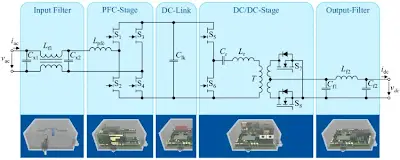
Switching regulators in battery chargers rely on energy storage and transfer via inductors, capacitors, and semiconductors, where losses from resistance, capacitance, and switching times dictate efficiency. MOSFETs and diodes manage power flow, while passives filter noise and stabilize voltages. Thermal runaway poses a primary failure mode, necessitating low-loss materials and adequate margins. Parasitic inductances in PCB traces exacerbate voltage spikes, demanding tight layout integration with component choices. Standards like IPC J-STD-001 guide soldering processes to preserve component integrity during assembly. Understanding these interactions allows engineers to predict and mitigate performance bottlenecks.
MOSFET Selection for Battery Charger PCBs
MOSFET selection starts with voltage rating exceeding the maximum drain-source voltage, typically 20-50% headroom for spikes in boost configurations. Low on-resistance (RDS(on)) minimizes conduction losses, crucial for high-current paths in fast chargers. Gate charge (Qg) influences switching losses, favoring devices with optimized figure-of-merit (RDS(on) x Qg) for targeted frequencies. Package type affects thermal resistance; power packages like D2PAK suit high-power needs but require robust PCB copper pours. Troubleshooting tip: Monitor junction temperature rise under load; excessive heating signals inadequate selection or layout. In synchronous rectification, pair high-side and low-side MOSFETs with matching characteristics to balance losses.
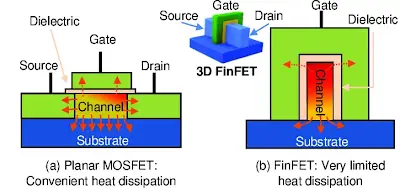
Body diode recovery time matters in non-synchronous designs, where slow recovery increases losses. Logic-level gate drive simplifies control in low-voltage systems. Always verify safe operating area (SOA) curves against charger duty cycles. Field failures often stem from avalanche rating oversights during transients. Practical advice: Prototype with thermal imaging to validate choices before production scaling.
Capacitor Selection Strategies
Capacitors in battery chargers handle ripple currents, requiring low equivalent series resistance (ESR) to limit voltage ripple and heat. Ceramic types excel in high-frequency decoupling due to low ESL, but derate capacitance by 50% for DC bias effects. Electrolytic capacitors suit bulk storage with high ripple ratings, yet monitor lifespan under temperature cycling. Voltage rating should exceed peak voltages by at least 1.5 times, preventing dielectric breakdown. Placement near ICs or switches reduces loop inductance, aiding stability. Common pitfalls include overlooking temperature coefficients, leading to detuned feedback loops.
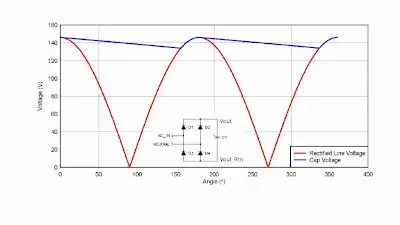
Hybrid polymer capacitors bridge ESR and lifespan gaps for demanding applications. Validate with impedance analysis for frequency response. In multi-phase chargers, balance values across phases for even current sharing. Troubleshooting voltage instability often reveals insufficient capacitance or poor grounding. Source components with detailed datasheets specifying ripple current at operating frequencies.
Inductor Selection Essentials
Inductors store energy in magnetic fields, sized by inductance value to maintain continuous conduction mode without excessive ripple. Saturation current must surpass peak inductor current by 20-30% margin to avoid droop under load. Low DC resistance (DCR) boosts efficiency, especially in low-voltage drops. Core material choices like ferrite minimize losses at high frequencies, while powdered iron suits higher currents. Shielded types suppress EMI, vital in compact battery charger PCBs. Measure DCR impact on total losses during validation.
Shielding also aids regulatory compliance for emissions. Troubleshooting current ripple spikes points to undersized or saturating inductors. Calculate ripple via L * di/dt for duty cycle verification. Multi-layer windings reduce proximity effects. Pair with PCB layout minimizing loop areas for optimal performance.
Diode Selection Guidelines
Diodes rectify or protect in battery chargers, with Schottky types preferred for low forward voltage drop (VF) reducing conduction losses. Reverse voltage rating covers input-output differentials, with surge margins for inrush. Switching speed prevents reverse recovery spikes in high-frequency circuits. Synchronous MOSFETs can replace diodes for further efficiency gains. Average current rating handles continuous loads, while peak accounts for transients. Heat sinking via PCB vias dissipates generated power.
Troubleshoot efficiency drops by probing VF under real currents. Silicon carbide options suit ultra-high voltages but add cost. JEDEC standards ensure moisture sensitivity handling during reflow. Validate with thermal simulations. Proper selection cuts losses by orders of magnitude in forward converters.
Component Sourcing Best Practices
Component sourcing for battery charger PCB components prioritizes distributors with traceability and stock visibility to mitigate lead time risks. Review datasheets for parametric searches matching exact needs like ripple ratings or Qg. Derating guidelines from manufacturers prevent field failures. Qualify multiple sources for second-sourcing resilience. Batch testing verifies consistency across lots. Long-term availability forecasts guide volume planning.
Audit supplier quality systems aligned with ISO standards. Prototype with engineering samples before production. Track obsolescence alerts for proactive swaps. Cost-optimize without compromising margins. Collaborative tools streamline team reviews.
Thermal Management and Layout Integration
Component choices interlink with PCB layout; wide traces under power parts enhance heat spreading. Vias arrays transfer heat to inner layers or opposite sides. Thermal vias under packages improve dissipation. Simulate junction temperatures incorporating ambient conditions. Conformal coatings protect against humidity in portable chargers. IPC-6012 specifications ensure board-level reliability under thermal stress.
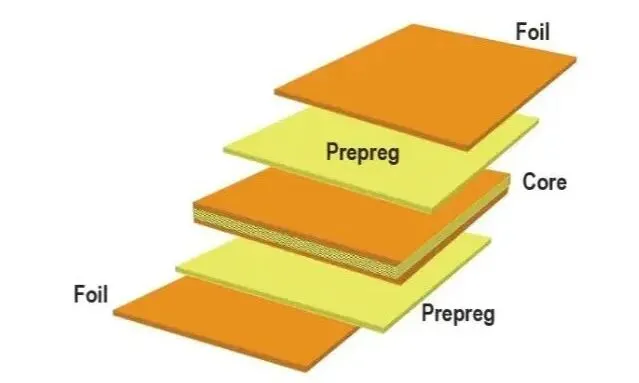
Stack-up design with thick copper layers supports high currents. Troubleshooting hotspots reveals layout flaws amplifying component limits. Airflow paths in enclosures aid convection. Material thermal conductivity guides FR4 vs. metal-core picks.
Conclusion
Optimizing battery charger PCB components demands holistic consideration of electrical, thermal, and mechanical stresses across MOSFET selection, capacitor selection, inductor selection, diode selection, and component sourcing. Practical derating, datasheet diligence, and standards adherence yield reliable designs. Engineers gain troubleshooting prowess by linking failures to specs. Iterative prototyping refines choices for peak efficiency. Prioritizing these factors elevates charger performance in competitive markets.
FAQs
Q1: What key factors drive MOSFET selection in battery charger PCBs?
A1: MOSFET selection hinges on RDS(on) for conduction losses, voltage rating for spikes, and gate charge for switching efficiency. Ensure package thermal resistance fits PCB dissipation. Verify SOA against duty cycles. Synchronous pairs optimize losses. Follow derating to extend lifespan.
Q2: How does capacitor selection affect battery charger performance?
A2: Capacitor selection focuses on low ESR for ripple handling and high ripple current ratings to minimize heating. Derate voltage and bias effects for stability. Place near switches for low inductance. Polymer types balance traits. Test impedance curves validate choices.
Q3: What are essentials for inductor selection in switching chargers?
A3: Inductor selection requires saturation current above peak, low DCR for efficiency, and shielded cores for EMI. Match L value to ripple targets. Ferrite suits high frequencies. Measure losses under load. Layout minimizes parasitics.
Q4: Best practices for diode selection and component sourcing?
A4: Diode selection prioritizes low VF Schottky for losses, high surge ratings. Synchronous alternatives boost efficiency. Sourcing demands traceability, derating data, and multi-source quals. Prototype verifies. Standards ensure handling.
References
IPC J-STD-001J — Requirements for Soldered Electrical and Electronic Assemblies. IPC, 2024
JEDEC J-STD-020E — Moisture/Reflow Sensitivity Classification of Nonhermetic Surface Mount Devices. JEDEC, 2014
IPC-6012E — Qualification and Performance Specification for Rigid Printed Boards. IPC, 2017