Introduction
Printed circuit boards (PCBs) form the backbone of control systems, power electronics, and monitoring devices in renewable energy applications. As the green energy sector expands, the demand for PCBs that align with sustainability goals has surged. Renewable PCBs, characterized by materials derived from renewable sources and manufacturing processes that minimize environmental impact, offer a pathway to reduce the carbon footprint of electronics in solar, wind, and energy storage systems. These boards integrate bio-based resins, recycled fibers, and low-emission fabrication techniques to support the broader objectives of renewable energy. Electrical engineers designing for the green energy sector must consider how renewable PCBs enhance system reliability while promoting circular economy principles. This article explores the integration of renewable PCBs for solar panels, sustainable PCBs in wind turbines, eco-friendly PCBs for energy storage, and other renewable energy applications PCBs.

Defining Renewable PCBs and Their Relevance to Green Energy
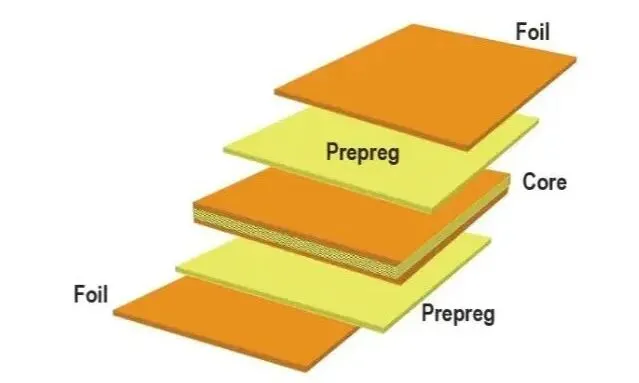
Renewable PCBs refer to printed boards engineered with substrates, finishes, and components that prioritize renewability and recyclability. Unlike traditional FR-4 boards reliant on petroleum-based epoxies, renewable variants employ laminates from plant-derived polymers, such as soy or lignin-based resins, which decompose more readily at end-of-life. In the context of PCBs for the green energy sector, these materials reduce reliance on finite resources and lower embodied energy during production. Engineers benefit from their compatibility with high-reliability standards, ensuring performance in harsh outdoor environments typical of renewable installations. The synergy arises because renewable energy systems, like solar arrays and wind farms, operate over decades, demanding electronics that match their long-term sustainability profile. Adopting renewable energy applications PCBs thus addresses both functional and ecological imperatives.
The relevance intensifies with global pushes for net-zero emissions, where electronics contribute significantly to lifecycle emissions. Factory insights reveal that renewable PCBs can cut material toxicity by avoiding halogens and heavy metals, aligning production with environmental compliance. For electrical engineers, this means selecting boards that withstand thermal cycling and humidity without compromising signal integrity. Key attributes include higher glass transition temperatures from bio-resins and improved dimensional stability under load. Overall, renewable PCBs transform passive components into active contributors to sustainable design.
Technical Principles of Renewable PCBs in Solar Applications
Renewable PCBs for solar panels power critical functions in inverters, maximum power point trackers (MPPT), and string monitors. These boards must handle high voltages, thermal gradients from 40°C daytime peaks to sub-zero nights, and UV exposure. Bio-based laminates provide dielectric strengths comparable to synthetics, with permittivity values around 3.5 to 4.0, suitable for high-frequency switching in inverters. Engineers design multilayer stacks with embedded capacitors to minimize parasitic inductance, enhancing efficiency in DC-AC conversion. Sustainable inks and solder masks derived from natural oils reduce volatile organic compound emissions during curing.

Fabrication emphasizes low-energy processes like vacuum lamination to preserve bio-resin integrity. IPC-6012DS specifications guide qualification for double-sided and multilayer boards, ensuring warpage below 0.75% after reflow. In solar contexts, renewable PCBs integrate wide-bandgap semiconductors like SiC MOSFETs, demanding precise via-in-pad designs for thermal dissipation. Reliability testing per IPC-TM-650 verifies interlaminar shear strength, critical for vibration-prone rooftop mounts. This approach yields systems with over 98% conversion efficiency while embedding sustainability.
Sustainable PCBs in Wind Turbine Control Systems
Sustainable PCBs in wind turbines manage pitch control, yaw systems, and grid-tie converters exposed to extreme conditions. Offshore turbines face salt spray, gales up to 50 m/s, and temperatures from -40°C to 60°C. Renewable substrates with natural fiber reinforcements offer superior moisture resistance, with water absorption rates under 0.5% per ASTM D570. These boards support high-current paths for IGBT modules, using thick copper pours up to 4 oz/ft2 for low resistance. Factory-driven processes employ aqueous cleaning to eliminate solvent use, aligning with eco-friendly manufacturing.
Multilayer configurations, often 12 to 16 layers, route gigabit Ethernet for SCADA integration and fiber optic transceivers for lightning protection. Dimensional stability prevents via cracking during blade flexure-induced vibrations. JEDEC J-STD-020E classifies moisture sensitivity, ensuring level 1 handling for renewable materials prone to hygroscopicity. Engineers optimize stackups with low-loss dielectrics to minimize EMI in crowded nacelle environments. Thus, sustainable PCBs enhance turbine uptime while reducing lifecycle waste.

Eco-Friendly PCBs for Energy Storage and Battery Management
Eco-friendly PCBs for energy storage systems underpin battery management systems (BMS) in lithium-ion packs for grid stabilization and EV charging. These boards monitor cell voltages, balance currents, and dissipate heat from 100 A shunts. Renewable variants use recyclable base materials like cellulose-reinforced epoxies, maintaining Tg above 170°C for safety in fault scenarios. Surface finishes such as organic solderability preservatives (OSP) from plant extracts replace immersion silver, cutting precious metal use. High-density interconnects (HDI) enable compact designs for stackable modules.
Thermal vias and embedded heat pipes manage hotspots, with CTE matching to battery tabs per IPC-6012. In large-scale storage, PCBs handle CAN bus protocols for fleet communication, demanding robust ESD protection. ISO 14001 frameworks guide factory environmental audits, ensuring process waste diversion exceeds 90%. Engineers appreciate the reduced flammability from non-halogenated resins, classified V-0 per UL 94. This integration bolsters renewable energy applications PCBs for resilient grids.
Best Practices for Implementing Renewable PCBs in Green Energy Designs
Selecting renewable PCBs begins with material datasheets verifying compliance to IPC standards. Engineers specify laminates with documented renewability content, targeting over 30% bio-sourced without sacrificing electrical properties. Design rules include wider trace spacing for high-voltage creepage in solar strings, per IEC 60950 safety margins. Prototyping via quick-turn fabs tests warpage and CAF resistance under accelerated aging.
Assembly favors lead-free SAC305 solder, compatible with renewable surface finishes. Conformal coatings like parylene from bio-precursors protect against ingress. Factory quality control per IPC-A-600 ensures class 2 acceptability for field-deployable boards. Supply chain transparency demands material passports detailing recycled content. Troubleshooting common issues like delamination involves root-cause analysis via C-mode scanning acoustic microscopy.
For scalability, modular designs facilitate end-of-life disassembly. Engineers collaborate with fabs on DfE (design for environment) reviews early. These practices yield reliable, green PCBs for the sector.
Challenges and Future Directions
Renewable PCBs face hurdles like higher initial costs from bio-resins, 20-30% above FR-4, offset by volume scaling. Variability in natural material properties requires tighter process controls. High-power applications demand proven reliability data, prompting extended HALT testing.
Advancements in lignin epoxies promise Tg over 200°C. Hybrid laminates blend renewability with performance. Standards evolution, like IPC updates, will certify these materials. Engineers must stay abreast via consortiums.
Conclusion
Renewable PCBs synergize with solar, wind, and storage by embedding sustainability into core electronics. From renewable PCBs for solar panels to eco-friendly PCBs for energy storage, they deliver performance matching traditional boards. Standards like IPC-6012DS and JEDEC J-STD-020E ensure quality. Adopting these advances positions the green energy sector for true circularity. Electrical engineers drive this shift through informed specifications and best practices.
FAQs
Q1: What materials define renewable PCBs for solar panels?
A1: Renewable PCBs for solar panels use bio-based resins like soy epoxies and natural fiber reinforcements in laminates. These provide dielectric constants near 4.0 and low CTE for thermal matching in inverters. Factory processes emphasize low-VOC curing and halogen-free compositions per IPC guidelines. This ensures reliability in outdoor exposure while reducing petroleum dependency.
Q2: How do sustainable PCBs in wind turbines handle environmental stresses?
A2: Sustainable PCBs in wind turbines incorporate moisture-resistant substrates with absorption under 0.5% and conformal coatings for salt resistance. Multilayer designs support high currents with thick copper and via reliability per JEDEC J-STD-020E. Vibration damping from fiber additives helps prevent fatigue. These features extend service life in harsh nacelle conditions.
Q3: Why choose eco-friendly PCBs for energy storage systems?
A3: Eco-friendly PCBs for energy storage feature recyclable bases and non-toxic finishes like bio-OSP, ideal for BMS compactness. They maintain high Tg for safety and integrate HDI for dense monitoring. ISO 14001-aligned production minimizes waste, supporting scalable, low-impact battery deployments in renewable grids.
Q4: What standards apply to PCBs for the green energy sector?
A4: PCBs for the green energy sector adhere to IPC-6012 for performance and IPC-A-600 for acceptability. JEDEC J-STD-020E addresses moisture sensitivity in renewables. These standards help control warpage and ensure reliability in thermal cycling, while ISO 14001 guides environmental management for sustainability claims.
References
IPC-6012DS — Qualification and Performance Specification for Flexible and Rigid-Flex Printed Boards. IPC, 2015
JEDEC J-STD-020E — Moisture/Reflow Sensitivity Classification for Nonhermetic Surface Mount Devices. JEDEC, 2014
IPC-A-600K — Acceptability of Printed Boards. IPC, 2020
ISO 14001:2015 — Environmental Management Systems. ISO, 2015