Introduction
Silk screen color matching plays a critical role in printed circuit board manufacturing, ensuring that legends, markings, and identifiers remain clear and reliable throughout the product lifecycle. In PCB production, the silkscreen layer provides essential information such as component designators, polarity indicators, and assembly instructions directly on the board surface. Precision in PCB silkscreen color matching prevents issues like poor legibility that could lead to assembly errors or field failures. Factors such as ink formulation, printing conditions, and curing processes all influence silkscreen color accuracy, making consistent control a factory priority. Electrical engineers rely on this precision for automated optical inspection compatibility and long-term board identification. Mastering these elements aligns production with quality expectations in high-volume fabrication.
Achieving consistent silkscreen color requires integrating color specification systems like PMS color matching silkscreen from the design stage through final inspection. Variations in color can arise from substrate interactions or environmental exposures, underscoring the need for standardized approaches. Factories implement color calibration silkscreen protocols to maintain uniformity across panels and batches. This attention to detail supports compliance with performance specifications and enhances overall PCB reliability. Engineers specifying custom colors must consider manufacturing tolerances to avoid costly reprints.
What Is Silk Screen Color Matching and Why It Matters
Silk screen color matching refers to the process of selecting, mixing, and verifying inks to reproduce specified colors accurately on PCB surfaces during legend printing. This involves aligning the printed result with a reference standard, often using systems like PMS for precise hue, saturation, and brightness control. In PCB manufacturing, silkscreen serves as the primary means of conveying critical information, making color accuracy vital for readability under various lighting conditions. Poor matching can result in faded or shifted colors that compromise identification during assembly or maintenance.
The importance of silkscreen color accuracy extends to quality control and traceability in production environments. Consistent colors facilitate automated inspection systems that detect defects by relying on expected visual contrasts. According to IPC-A-600, markings must meet legibility criteria, where insufficient contrast due to color mismatch constitutes a nonconformance. This standard emphasizes inspection at low magnification to ensure readability without defects like ink voids or bleeding.
Furthermore, achieving consistent silkscreen color supports branding and customization in specialized applications. Engineers designing for harsh environments demand colors that resist fading from thermal cycling or chemical exposure. Color mismatches can lead to misinterpretation of polarity or test points, increasing error rates in high-reliability sectors. Factories prioritize this to minimize rework and uphold customer specifications.
Technical Principles Behind Silkscreen Color Accuracy
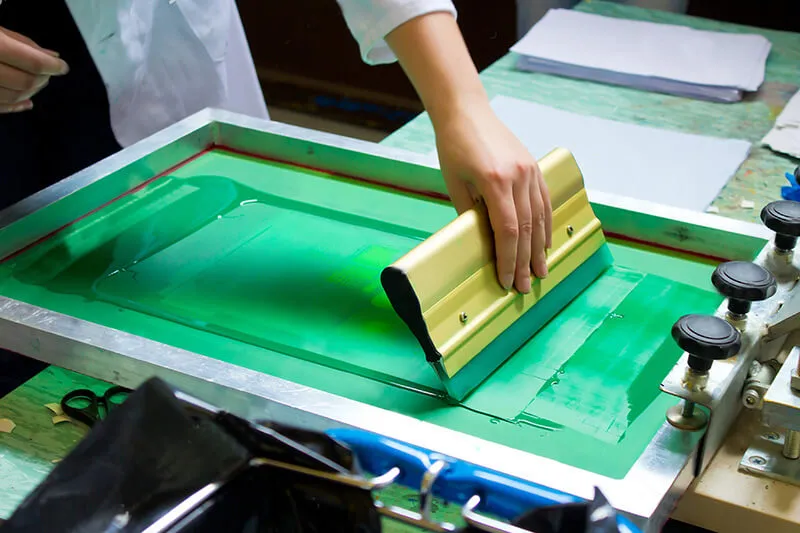
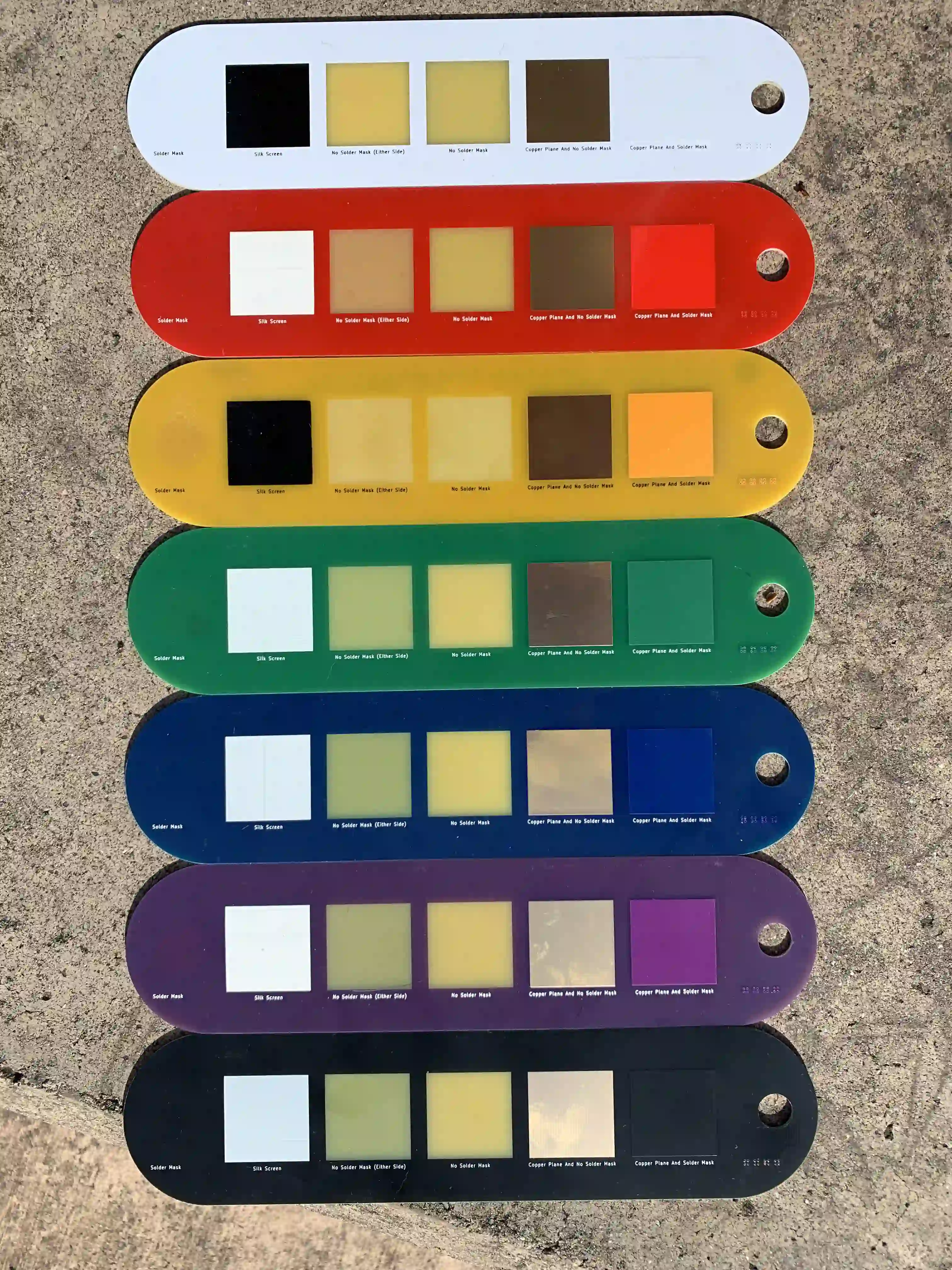
Silkscreen application in PCBs typically uses screen printing, where ink passes through a stencil onto the solder mask-coated surface. Ink composition includes pigments, resins, solvents, and additives tailored for adhesion and durability. Color development depends on pigment dispersion uniformity, which affects light absorption and reflection properties. Substrate color, usually green or black solder mask, influences perceived hue through optical interactions.
PMS color matching silkscreen provides a standardized numbering system for specifying colors independent of process variations. Designers reference PMS codes to communicate exact shades, allowing factories to mix inks accordingly. However, actual printed color deviates due to ink thickness, typically 10 to 25 microns, and curing mechanisms. UV-curable inks polymerize rapidly, locking in color, while thermal curing may cause slight shifts from oxidation or evaporation.
Environmental factors during printing impact silkscreen color accuracy. Humidity alters ink viscosity, leading to inconsistent deposition, while temperature affects drying rates. Mesh count in screens, ranging from 200 to 400 threads per inch, controls ink transfer volume and edge definition. Squeegee pressure and speed further refine color uniformity across large panels.
Curing completes color stabilization, as incomplete polymerization results in tackiness or metamerism, where colors match under one light but differ under another. Standards like IPC-4781 outline qualification tests for legend inks, including color retention after solvent resistance and thermal shock. These ensure inks maintain hue integrity under assembly stresses.
Post-print inspection uses standardized lighting, such as D65 daylight, to evaluate color fidelity. Spectrophotometers measure L*a*b* values, quantifying deviations as Delta E, where lower values indicate closer matches. Factory processes calibrate equipment to minimize batch-to-batch variations inherent in pigment lots.
Best Practices for Achieving Consistent Silkscreen Color
Establish a controlled ink mixing protocol using PMS references to start with base colors and tint precisely. Maintain ink viscosity within manufacturer tolerances through agitators and temperature-controlled storage. Document mixing ratios for repeatability, verifying against physical swatches under controlled illumination.
Select inks qualified per IPC-6012 performance specifications, ensuring compatibility with solder mask and base materials. Conduct pre-production trials on scrap panels to validate color on actual substrates. Adjust screen parameters, like emulsion thickness and tension, to achieve uniform ink laydown.
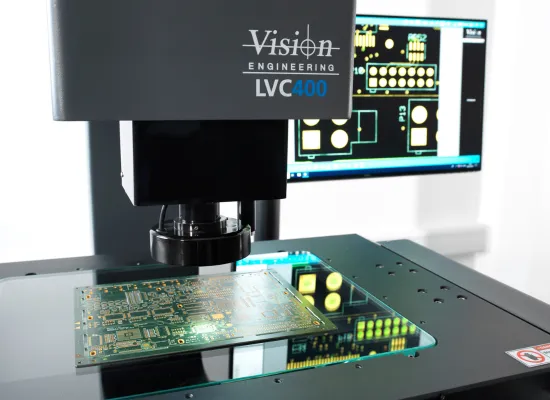
Implement color calibration silkscreen routines at key stages: incoming ink inspection, post-print, and post-cure. Use inline vision systems for real-time monitoring of hue consistency across panels. Standardize curing ovens for uniform exposure, preventing gradients from airflow variations.
For multi-color silkscreens, sequence printing to avoid register shifts that alter perceived color blends. Limit colors to two or three per side to reduce setup errors and maintain efficiency. Train operators on visual checks against master samples, supplementing with periodic instrumental verification.
Integrate silkscreen into design for manufacturing reviews, specifying minimum clearances and font strokes for ink flow. Collaborate with suppliers on ink formulations optimized for PCB processes. Track process capability data to refine controls over time.
Troubleshooting Common Silkscreen Color Matching Issues
Color shifting after curing often stems from incomplete solvent evaporation or overexposure to UV. Verify oven profiles match ink data sheets, extending dwell time if needed. Test smaller batches to isolate thermal effects on pigments.
Bleeding or feathering indicates excessive ink flow, typically from high viscosity or low screen tension. Increase squeegee angle or speed, and recalibrate stencil exposure for sharper edges. Substrate contamination exacerbates this; ensure panels are plasma-cleaned pre-print.
Batch inconsistencies arise from pigment lot variations. Qualify new lots against previous via drawdown cards before full use. Maintain FIFO inventory to minimize age-related settling.
Metamerism appears when colors mismatch under different lights. Standardize evaluation to D50 or D65 sources throughout the chain. If persistent, reformulate with non-metameric pigments.
Fading post-assembly links to solvent resistance failure. Reference IPC-4781 tests like marker pen rub to preempt issues. Switch to higher-grade inks for demanding environments.
Conclusion
Precision in PCB silkscreen color matching ensures legibility, traceability, and reliability from fabrication to end-use. By leveraging PMS systems, standardized processes, and ink qualifications per IPC guidelines, factories achieve consistent results. Electrical engineers benefit from reduced errors and enhanced inspection compatibility. Prioritizing color calibration silkscreen practices minimizes defects and supports high-volume production. Implementing these strategies elevates overall PCB quality.
FAQs
Q1: What factors most affect PCB silkscreen color matching?
A1: Substrate color, ink formulation, printing parameters, and curing conditions primarily influence silkscreen color accuracy. Variations in humidity or temperature during application can alter viscosity and deposition. Factories control these through calibrated equipment and environmental monitoring. Adhering to PMS color matching silkscreen standards helps predict outcomes. Consistent practices yield reliable results across batches.
Q2: How does IPC-A-600 address silkscreen color accuracy?
A2: IPC-A-600 specifies legibility requirements for markings, emphasizing contrast and absence of defects like voids. It guides inspection for readability at 2X magnification maximum. Color mismatches reducing visibility fail acceptability criteria. Engineers use this for quality gates in manufacturing. It promotes uniform standards without prescribing exact hues.
Q3: Why use PMS for achieving consistent silkscreen color?
A3: PMS provides numbered color references for precise specification across suppliers. It accounts for printing variables, ensuring factories reproduce designs accurately. Color calibration silkscreen with PMS minimizes deviations from digital previews. This system supports global consistency in PCB production. Designers specify codes in documentation for best results.
Q4: What are key steps in silkscreen color calibration?
A4: Start with reference swatches under standardized lighting, mix inks to match, then print trials on production substrates. Measure post-cure with spectrophotometers for Delta E verification. Adjust processes iteratively for uniformity. Integrate into SPC for ongoing control. This achieves consistent silkscreen color reliably.
References
IPC-A-600K — Acceptability of Printed Boards. IPC, 2020
IPC-4781 — Qualification and Performance Specification of Permanent, Semi-Permanent and Temporary Legend and/or Marking Inks. IPC, 2008
IPC-6012E — Qualification and Performance Specification for Rigid Printed Boards. IPC, 2017