Introduction
Military and aerospace applications demand printed circuit boards that withstand extreme temperatures, vibrations, shocks, and electromagnetic interference while prioritizing mission-critical reliability. Sustainable PCB laminates emerge as a viable solution, combining eco-friendly compositions with the rugged performance required for these sectors. These materials, often featuring non-halogenated resins or bio-based reinforcements, enable sustainable PCB military aerospace designs that reduce environmental footprints without sacrificing durability. As regulatory pressures grow for greener electronics, engineers seek durable eco-PCBs military options that align factory processes with high standards. This article delves into the advantages of sustainable laminate defense applications and green circuit boards aerospace use, drawing from established engineering principles. Factory insights reveal how these laminates support long-term performance in harsh environments.

Defining Sustainable PCB Laminates and Their Relevance
Sustainable PCB laminates consist of base materials engineered for reduced environmental impact, such as those using phosphorus or nitrogen-based flame retardants instead of halogens, or incorporating natural fibers like flax or jute with epoxy matrices. These differ from traditional FR4 by prioritizing recyclability, lower toxicity, and biodegradability where feasible, while maintaining essential electrical and mechanical properties. In military and aerospace contexts, relevance stems from the need to balance operational ruggedness with sustainability mandates from supply chains and end-of-life disposal requirements. Eco-friendly PCB ruggedized boards address concerns over hazardous waste in defense logistics, ensuring compliance with evolving global regulations. Factory-driven qualification processes confirm these laminates perform comparably in thermal cycling and vibration tests. Ultimately, they represent a shift toward circular electronics without compromising the zero-failure ethos of these industries.
Core Technical Benefits for High-Reliability Performance
Sustainable laminates deliver electrical properties akin to conventional high-Tg materials, with dielectric constants and dissipation factors suitable for high-speed signals in radar systems or avionics. Their non-halogenated formulations often exhibit enhanced moisture resistance, reducing hydrolysis risks during prolonged exposure in humid or saline environments common to aerospace deployments. Mechanical integrity remains robust, supporting peel strengths and flexural moduli that endure mechanical stresses per industry test methods. Thermal stability allows survival through soldering profiles and operational extremes, with decomposition thresholds supporting lead-free processes. In practice, these properties minimize warpage and delamination, critical for multilayer stacks in compact military electronics. Engineers appreciate how sustainable variants maintain signal integrity under vibration, fostering reliable green circuit boards aerospace integration.

Per IPC-4101 specifications for base materials, certain grades qualify for high-reliability applications by defining consistent resin flow and glass transition behaviors. This standard ensures laminates meet dimensional stability needs for rigid and multilayer boards used in defense systems.
Environmental and Regulatory Advantages
The primary draw of sustainable PCB laminates lies in their reduced ecological burden, as they generate fewer toxic emissions during manufacturing and combustion, aiding fire safety in enclosed aerospace cabins. Recyclability facilitates metal recovery and resin repurposing, aligning with circular economy goals for military surplus equipment. Bio-based reinforcements lower dependency on petroleum-derived epoxies, cutting carbon footprints across the supply chain. For procurement teams, these laminates simplify compliance with substance restriction directives, easing certification for international operations. Factory processes benefit from cleaner waste streams, enhancing worker safety and operational efficiency. Overall, durable eco-PCBs military adoption supports strategic sustainability without added complexity.
Enhanced Durability in Extreme Conditions
In military and aerospace, laminates face rapid temperature swings, from cryogenic altitudes to desert heats, demanding low coefficients of thermal expansion to prevent via cracking. Sustainable options, particularly halogen-free types, offer superior chemical resistance, resisting degradation from fuels or cleaners encountered in maintenance. Vibration and shock resistance matches polyimide levels in qualified grades, ensuring component retention during maneuvers or launches. Factory thermal aging tests validate long-term integrity, with reduced microcracking compared to some legacy materials. These attributes make sustainable laminate defense applications ideal for ruggedized electronics in drones or satellites. Engineers gain confidence through proven performance in simulated mission profiles.

Practical Implementation and Best Practices
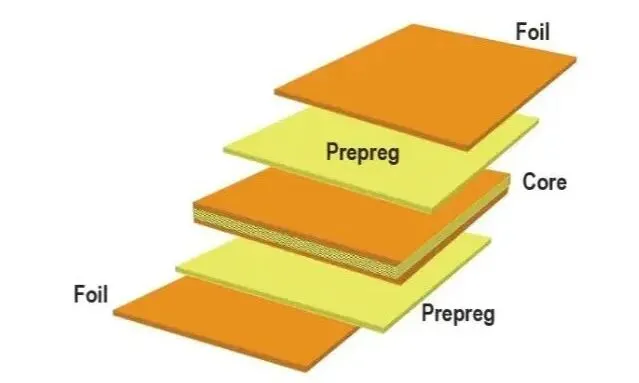
Selecting sustainable laminates begins with reviewing IPC-4101 slash sheets for grades matching application needs, such as high-Tg for aerospace or low-loss for RF military systems. Factory qualification involves layer stacking trials to verify resin flow and Z-axis uniformity, preventing voids in multilayers. Prepreg selection ensures compatibility with copper foils, optimizing peel strength for harsh handling. Testing protocols include thermal shock, humidity bias, and mechanical flexure to confirm reliability. Engineers should prioritize suppliers with traceability for material content, facilitating audits. Integrating these into designs yields eco-friendly PCB ruggedized boards ready for production scale-up.
Per IPC-6012 qualification specifications, rigid printed boards achieve performance levels suitable for demanding environments through rigorous acceptance criteria on conductor spacing and solderability.
Overcoming Challenges in Adoption
Initial concerns about lower mechanical strengths in bio-based variants have been addressed via hybrid reinforcements, boosting tensile and flexural properties for defense viability. Moisture absorption, a potential pitfall, mitigates through surface treatments like silane coupling, aligning with standard conditioning tests. Cost premiums narrow as production volumes rise, with lifecycle savings from recyclability offsetting upfront investments. Factory troubleshooting focuses on optimized drilling parameters to minimize fiber pullout in natural composites. Collaborative testing with end-users refines formulations for specific mil/aero profiles. These solutions position sustainable PCB military aerospace as a mature choice.
Future Outlook and Strategic Insights
Advancements in bio-epoxies and recycled glass cloths promise even closer parity with legacy materials, driven by factory R&D. Military programs increasingly mandate green materials in RFPs, accelerating adoption. Aerospace OEMs benefit from lighter weights in some sustainable variants, aiding fuel efficiency. Engineers must stay attuned to evolving specifications for optimal integration. Sustainable laminates not only meet but enhance the resilience of critical systems.
Conclusion
Sustainable PCB laminates bridge the gap between environmental responsibility and the unforgiving demands of military and aerospace applications. Their electrical, thermal, and mechanical prowess, validated through standard qualifications, supports reliable operation in extremes. Benefits span reduced toxicity, recyclability, and regulatory ease, making them indispensable for forward-thinking designs. Factory-aligned practices ensure seamless deployment of these durable eco-PCBs military solutions. As the industry evolves, embracing green circuit boards aerospace will define competitive edges in sustainability and performance.
FAQs
Q1: What makes sustainable PCB military aerospace laminates suitable for high-vibration environments?
A1: Sustainable PCB military aerospace laminates use reinforced matrices that provide flexural strength and low CTE, enduring shocks per standard test methods. Factory processes optimize fiber orientation for enhanced peel adhesion and reduced delamination risks. These properties match requirements for drones and missiles, ensuring signal integrity under G-forces. Overall, they deliver rugged performance with eco-friendly profiles.
Q2: How do eco-friendly PCB ruggedized boards comply with reliability standards?
A2: Eco-friendly PCB ruggedized boards adhere to IPC specifications for base materials and board qualification, verifying thermal stability and electrical performance. Halogen-free compositions resist moisture better, extending lifespan in humid operations. Factory inspections confirm Class 3 acceptability for defense use. This alignment guarantees zero-fail margins in critical applications.
Q3: Are sustainable laminate defense applications cost-effective long-term?
A3: Sustainable laminate defense applications reduce end-of-life disposal costs through recyclability and lower toxicity handling. Initial material premiums offset by efficient manufacturing and supply chain transparency. Lifecycle assessments show environmental savings translate to strategic advantages. Factory scalability further enhances viability for volume production.
Q4: What testing ensures green circuit boards aerospace durability?
A4: Green circuit boards aerospace undergo thermal cycling, vibration, and humidity tests per J-STD requirements for assemblies. Laminates demonstrate consistent dielectric properties and mechanical integrity post-stress. Factory protocols validate solder joint reliability and warpage control. These confirm suitability for space and flight environments.
References
IPC-4101E — Specification for Base Materials for Rigid and Multilayer Printed Boards. IPC, 2017
IPC-6012DS — Qualification and Performance Specification for Rigid Printed Boards for Space and Military Applications. IPC, 2018
J-STD-001GS — Requirements for Soldered Electrical and Electronic Assemblies. IPC/JEDEC, 2020
ASTM D638 — Standard Test Method for Tensile Properties of Plastics. ASTM, 2014