Introduction
The Internet of Things (IoT) has reshaped hotel operations by enabling smart room controls that enhance guest experiences and operational efficiency. In hotel room control systems, PCBs serve as the central nervous system, integrating connected devices such as lighting, thermostats, locks, and curtains into a cohesive network. As hotels adopt IoT hotel PCBs, engineers face new demands for compactness, reliability, and security in these boards. This article explores emerging trends driving IoT adoption in hospitality and the PCB design challenges they introduce. Electric engineers must navigate these shifts to deliver robust solutions that support seamless smart room controls. Understanding these dynamics ensures PCBs meet the rigors of continuous operation in guest environments.

Understanding IoT Hotel PCBs and Their Industry Relevance
IoT hotel PCBs are specialized printed circuit boards designed to manage interconnected devices within hotel rooms, facilitating automated control over environmental and security features. These boards incorporate microcontrollers, wireless communication modules, and sensor interfaces to enable real-time data exchange via the Internet of Things. In the hospitality sector, they matter because they reduce energy consumption through intelligent scheduling and predictive adjustments based on occupancy. For instance, connected devices on these PCBs can dim lights or adjust HVAC systems automatically, aligning with guest preferences stored in cloud platforms. Electric engineers value their role in enabling scalable deployments across multiple rooms without extensive rewiring. As hotels prioritize personalization, IoT hotel PCBs become essential for competitive differentiation.
The relevance extends to maintenance and cost savings, as these boards support remote diagnostics to preempt failures in smart room controls. Engineers designing them must consider the high uptime requirements in 24/7 environments. Integration with building management systems further amplifies their impact, creating unified ecosystems. Overall, IoT hotel PCBs represent a convergence of electronics and hospitality needs, demanding precise engineering to balance functionality and durability.
Key Trends Shaping IoT Hotel PCBs
One prominent trend is the shift toward multi-protocol wireless integration on IoT hotel PCBs, supporting protocols like Wi-Fi, Bluetooth Low Energy, and Zigbee for diverse connected devices. This allows smart room controls to interface with a variety of appliances, from voice-activated assistants to motion-sensing occupancy detectors. Engineers are increasingly embedding edge computing capabilities directly onto these PCBs, using powerful microcontrollers to process data locally and reduce latency. Such designs minimize reliance on cloud connectivity, improving responsiveness for critical functions like door locks. Additionally, miniaturization trends drive the use of high-density interconnect (HDI) technologies, packing more components into smaller footprints suitable for wall-mounted or in-furniture controllers.
Another trend involves sustainability-focused power management, where IoT hotel PCBs incorporate low-power components and energy-harvesting elements to extend battery life in wireless nodes. This aligns with hospitality goals for green operations, as connected devices optimize resource use based on real-time occupancy data. The rise of AI-enhanced predictive maintenance also influences PCB layouts, requiring robust sensor arrays for vibration, temperature, and humidity monitoring. These trends collectively push engineers to optimize layer stacks for signal integrity amid denser routing. As adoption grows, PCBs must support over-the-air updates to evolve with new Internet of Things standards.

Technical Challenges in Designing IoT Hotel PCBs
Data security poses a primary challenge for IoT hotel PCBs, as connected devices become prime targets for cyberattacks that could compromise guest privacy or room access. Engineers must integrate hardware security modules, such as trusted platform modules (TPMs), and design for secure boot processes to prevent unauthorized firmware modifications. Physical tampering risks necessitate anti-tamper features like epoxy potting or mesh sensors embedded in the board. These measures add complexity to PCB layouts, requiring careful partitioning to isolate sensitive traces from general signal paths. Compliance with encryption standards ensures data in transit remains protected, but balancing this with cost remains a hurdle.
Power management presents another critical issue, given the always-on nature of smart room controls powered by limited sources. IoT hotel PCBs demand efficient DC-DC converters and sleep modes to handle fluctuating loads from multiple sensors and radios. Thermal dissipation becomes problematic in compact enclosures, where heat from processors can degrade component longevity. Engineers address this through via stitching and thermal vias under hotspots, but simulations are essential to predict performance. Electromagnetic interference (EMI) from co-located wireless modules further complicates designs, necessitating ground planes and shielding. Adhering to IPC-2221 guidelines for trace spacing and impedance control helps mitigate these risks in high-frequency environments.
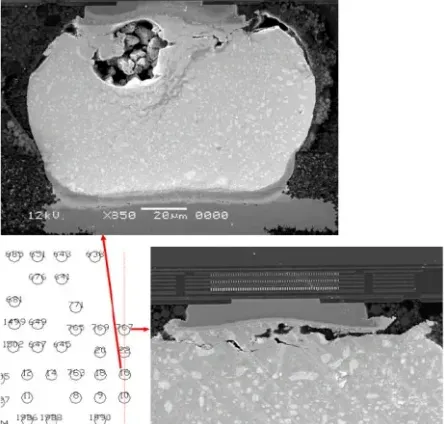
Reliability under continuous operation challenges IoT hotel PCBs, exposed to varying humidity and temperatures in guest rooms. Vibration from HVAC systems or door slams can induce mechanical stress, leading to solder joint fatigue. Designers counter this with underfill or conformal coatings, selecting materials per IPC-6012E specifications for rigid board qualification. Interoperability among connected devices requires standardized interfaces, avoiding proprietary pinouts that hinder scalability. These factors demand iterative prototyping to validate performance across deployment scenarios.
Best Practices for Overcoming PCB Design Challenges
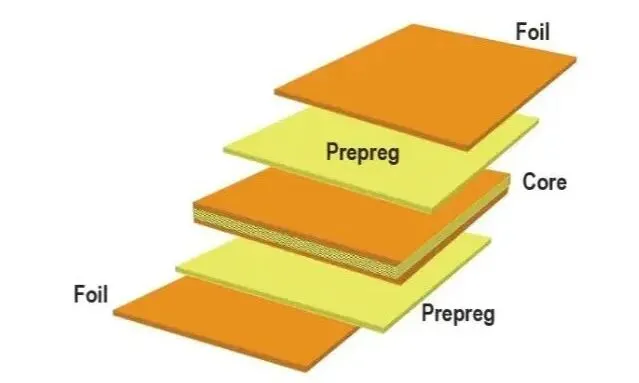
To enhance data security in IoT hotel PCBs, engineers should prioritize segregated zones for cryptographic operations, using dedicated power rails to prevent side-channel attacks. Implementing hardware root-of-trust from the schematic stage ensures firmware integrity throughout the lifecycle. For power efficiency, select components with ultra-low quiescent current and employ dynamic voltage scaling tied to activity levels. PCB stackups with dedicated power and ground planes reduce noise, supporting stable operation of connected devices. Thorough power integrity simulations guide capacitor placement near ICs, minimizing voltage droops during radio transmissions.
Thermal management best practices include copper pours and heat sinks integrated into the board, coupled with airflow modeling in design tools. J-STD-020E guidelines for moisture sensitivity classification are crucial during assembly, preventing reflow defects in humid hotel settings. EMI control involves controlled impedance traces and ferrite beads on antenna feeds, verified through pre-compliance testing. Modular designs facilitate field upgrades, aligning with the evolving needs of smart room controls. Collaboration between design and manufacturing teams ensures manufacturability, incorporating design for assembly (DFA) rules early.
Routine reliability testing, such as thermal cycling and vibration profiles, validates PCB robustness. Selecting laminates with low CTE mismatch reduces warpage risks. These practices collectively yield IoT hotel PCBs that withstand hospitality demands while advancing Internet of Things integration.

Troubleshooting Common Issues in IoT Hotel Deployments
Electric engineers often encounter intermittent connectivity in smart room controls due to poor antenna placement on IoT hotel PCBs. Troubleshooting involves reviewing ground plane integrity and ensuring 50-ohm impedance matching to prevent reflections. Signal integrity issues from crosstalk arise in dense layouts; solutions include length-matched pairs and stitching vias. Overheating during peak loads signals inadequate heatsinking; adding thermal pads under MCUs resolves this. Firmware glitches post-update may stem from insufficient flash partitioning, addressed by secure bootloader verification.
Data security breaches manifest as unauthorized access logs; root cause analysis points to weak key management, fixed by rotating certificates. Power instability affects battery-powered sensors, traced to inefficient regulators, remedied by buck-boost topologies. Field failures from humidity ingress require enhanced edge seals and IP-rated enclosures. Systematic logging via debug interfaces accelerates diagnosis, ensuring rapid iterations.
Conclusion
IoT profoundly impacts hotel room control PCBs, driving trends like edge computing and multi-protocol support while introducing challenges in security, power, and reliability. Electric engineers must leverage best practices, from secure zoning to thermal optimization, to deliver resilient designs. Standards like IPC-2221 and IPC-6012E provide foundational guidance for quality. As connected devices proliferate, IoT hotel PCBs will evolve to enable more intuitive smart room controls. Prioritizing these elements ensures systems that enhance guest satisfaction and operational efficiency in the Internet of Things era.
FAQs
Q1: What are the main data security challenges for IoT hotel PCBs?
A1: Data security in IoT hotel PCBs involves protecting connected devices from tampering and cyberattacks, requiring hardware security modules and encrypted communications. Engineers must design isolated zones for keys and implement secure boot to prevent firmware exploits. Compliance with best practices reduces risks in smart room controls, ensuring guest privacy amid constant network exposure. Proactive measures like anti-tamper meshes further safeguard operations.
Q2: How does power management affect IoT hotel PCB design?
A2: Power management challenges IoT hotel PCBs due to diverse loads from wireless modules and sensors in always-connected environments. Efficient DC-DC converters and sleep modes optimize battery life for remote nodes. Thermal vias and low-loss materials prevent efficiency drops, supporting reliable smart room controls. Engineers balance these with simulations for stable performance across varying hotel conditions.
Q3: What trends are influencing connected devices on hotel PCBs?
A3: Trends in connected devices for IoT hotel PCBs include miniaturization via HDI and edge AI for local processing, reducing cloud dependency. Multi-protocol support enables seamless integration of lights, locks, and thermostats. Sustainability drives low-power designs, aligning with hospitality energy goals. These shifts demand precise PCB layouts for signal integrity in dense smart room controls.
Q4: Why is reliability critical for Internet of Things hotel applications?
A4: Reliability in Internet of Things hotel PCBs ensures uninterrupted smart room controls despite humidity and vibration. Conformal coatings and robust solder joints per industry standards mitigate failures. Predictive maintenance via onboard sensors extends lifespan. Engineers focus on these to minimize downtime in high-occupancy settings.
References
IPC-2221B — Generic Standard on Printed Board Design. IPC, 2012
IPC-6012E — Qualification and Performance Specification for Rigid Printed Boards. IPC, 2017
J-STD-020E — Moisture/Reflow Sensitivity Classification of Nonhermetic Surface Mount Devices. JEDEC, 2014