Introduction
Mining operations face unique challenges from hazardous underground environments, including toxic gases, poor air quality, extreme temperatures, and fluctuating pressures. PCB sensors in mining equipment address these risks by delivering precise, real-time monitoring capabilities integrated into compact printed circuit boards. These systems enhance worker safety by detecting methane buildup or carbon monoxide spikes before they escalate into explosions or asphyxiation events. They also boost efficiency through predictive maintenance on drills, conveyors, and ventilation fans by tracking temperature and pressure anomalies. Electric engineers designing such systems must prioritize ruggedness, signal integrity, and compliance with reliability standards to ensure uninterrupted performance in dust-laden, high-vibration conditions. Industrial PCB sensors like gas detection PCBs, air quality monitoring PCBs, temperature sensors PCBs, and pressure sensors PCBs form the backbone of these critical applications.

Understanding PCB Sensors in Mining Equipment
PCB sensors in mining equipment refer to printed circuit boards populated with sensing elements tailored for harsh subsurface conditions. These boards host multiple sensor types, such as electrochemical cells for gas detection PCBs, particulate matter detectors for air quality monitoring PCBs, thermistors or RTDs for temperature sensors PCBs, and piezoresistive transducers for pressure sensors PCBs. In coal or metal mines, gas sensors identify combustible methane or noxious hydrogen sulfide, while air quality units measure respirable dust levels that contribute to black lung disease. Temperature monitoring prevents spontaneous combustion in coal seams or overheating in hydraulic systems, and pressure sensors detect roof instability or ventilation blockages. The integration of these sensors onto a single PCB allows for miniaturized, low-power designs suitable for battery-powered wearables or fixed installations. Engineers value this modularity, as it simplifies deployment across vast mine networks while maintaining data accuracy under thermal cycling and mechanical stress.
The relevance of these sensors extends beyond immediate safety to long-term efficiency gains. Real-time data feeds into control systems, enabling automated shutdowns or evacuations that minimize downtime. For instance, pressure anomalies in boreholes signal potential collapses, allowing preemptive reinforcement. Studies in mining engineering highlight how such proactive monitoring reduces incident rates by correlating sensor outputs with historical failure patterns. Overall, PCB sensors transform reactive maintenance into predictive strategies, cutting operational costs and extending equipment life in abrasive environments.
Extending this concept to smart-grid sensor PCBs, similar principles apply at a distributed energy scale, where sensing, communication, and control are embedded directly into grid infrastructure nodes such as transformers, substations, and smart meters. These PCB-based sensors continuously monitor voltage fluctuations, current harmonics, temperature rise, and load balancing conditions, feeding data into SCADA or distributed energy management systems.
Technical Principles of PCB Sensors for Mining Applications
Gas detection PCBs operate on principles like electrochemical oxidation or catalytic combustion to quantify hazardous vapors. An electrochemical sensor generates a current proportional to gas concentration via electrolyte reactions, with the PCB amplifying and digitizing the microampere signal for transmission. Semiconductor variants change resistance in the presence of reducing gases like methane, requiring precise biasing circuits on the PCB to compensate for humidity cross-sensitivity. These boards incorporate low-noise amplifiers and analog-to-digital converters to achieve parts-per-million resolution amid electromagnetic interference from nearby motors. Air quality monitoring PCBs use optical scattering for dust particles or metal oxide semiconductors for volatile organic compounds, demanding multilayer stackups for shielding sensitive traces.
Temperature sensors PCBs employ resistance temperature detectors or thermocouples, where Seebeck effect voltage or platinum resistance variations provide linear outputs over wide ranges. The PCB layout isolates analog front-ends from digital processors to avoid self-heating errors, often using Kelvin connections for four-wire accuracy. Pressure sensors PCBs leverage piezoresistive bridges strained by diaphragms, converting mechanical deflection into Wheatstone bridge imbalances readable by onboard instrumentation amps. In mining, these must withstand overpressures from blasts, so PCBs feature reinforced vias and ground planes for mechanical stability. Vibration damping via potting compounds protects solder joints during continuous operation.

Signal processing on these PCBs involves microcontrollers that fuse multi-sensor data, applying Kalman filters to reject noise from shocks or EMI. Power management circuits ensure low quiescent current for extended deployments, critical in remote shafts. Environmental sealing via conformal coatings prevents ionic migration from condensation, a common failure mode in humid mines.
Design and Manufacturing Best Practices
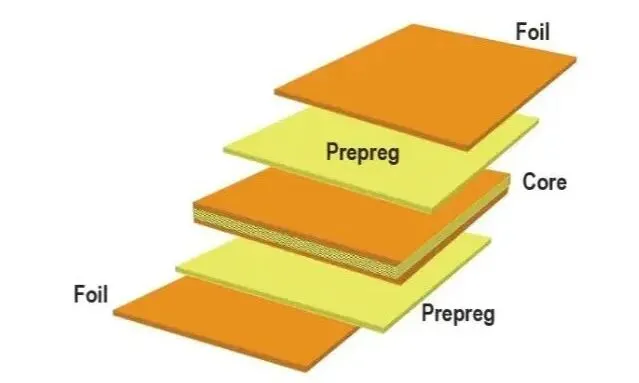
Designing PCB sensors for mining starts with material selection for thermal and mechanical resilience. High glass transition temperature FR-4 laminates resist warpage under temperature swings from 0°C to 85°C, while polyimide options suit flexible installations in irregular spaces. Trace routing follows controlled impedance guidelines to preserve sensor signal fidelity, with differential pairs for pressure outputs and ground pours for EMI suppression. Component placement segregates high-heat sensors from precision analog sections, incorporating thermal vias for dissipation. For explosive risks, intrinsic safety designs limit energy per IEC 60079 standards, using zener barriers on power rails.
Manufacturing adheres to rigorous processes for high-reliability Class 3 assemblies. Bare boards qualify under IPC-6012E specifications for rigid printed boards, ensuring minimal voids in plating and consistent dielectric thickness. Solder paste application via stencils precedes reflow, with post-process cleaning to IPC-J-STD-001 cleanliness levels, preventing dendritic growth in dusty atmospheres. Conformal coatings like parylene or urethane encapsulate the assembly, tested for adhesion and thickness uniformity. Automated optical inspection verifies joint integrity, while functional testing simulates mine conditions like 10g vibrations per IPC-TM-650 methods.

Troubleshooting focuses on common pitfalls like sensor drift from contamination or trace delamination from fatigue. Engineers diagnose via boundary scan for opens and insulation resistance checks for moisture ingress. Firmware updates via wireless interfaces allow field recalibration, extending service life. Potting with epoxy fills voids, enhancing shock resistance for pressure sensors PCBs on drill rigs.
Real-World Applications and Troubleshooting Insights
In underground coal mines, gas detection PCBs mount in ventilation ducts, triggering alarms at 1% methane thresholds to prevent ignitions. Air quality monitoring PCBs on personal dosimeters track silica dust exposure, integrating GPS for worker mapping. Temperature sensors PCBs embed in conveyor bearings, predicting failures from friction rises and scheduling lubrication. Pressure sensors PCBs in hydraulic supports detect leaks, averting roof falls by modulating fluid volumes.
A practical troubleshooting scenario involves intermittent gas readings from EMI coupling. Isolate by adding ferrite beads on sensor lines and shielding cans over amplifiers. For temperature drift in high-humidity zones, replace electrolytic caps with ceramics and bake out moisture pre-assembly. Pressure sensor hysteresis from overloads requires diaphragm checks and bridge rebalancing via trimpots. These fixes, grounded in assembly standards, restore reliability without full redesigns.
Predictive analytics from fused data optimize blast timing via pressure profiles or energy use via temperature baselines, yielding efficiency uplifts.
Conclusion
PCB sensors in mining equipment stand as vital enablers of safety and productivity in perilous environments. Gas detection PCBs, air quality monitoring PCBs, temperature sensors PCBs, and pressure sensors PCBs deliver actionable intelligence through robust engineering. Adhering to standards like IPC-6012E, J-STD-001, and IEC 60079 ensures durability against extremes. Electric engineers benefit from modular designs that scale from wearables to fixed arrays. Implementing these systems not only safeguards lives but drives sustainable operations with data-driven decisions.
FAQs
Q1: What key factors should electric engineers consider when designing gas detection PCBs for mining equipment?
A1: Gas detection PCBs require electrochemical or catalytic sensors with low-power amplification to handle methane and CO in explosive atmospheres. Prioritize multilayer boards with EMI shielding and conformal coatings for dust resistance. Comply with IEC 60079 for intrinsic safety, using zener diodes to limit spark energy. Test for cross-sensitivity to humidity via environmental chambers. This approach ensures reliable detection down to 0.5% LEL thresholds in ventilation flows.
Q2: How do temperature sensors PCBs contribute to efficiency in mining machinery?
A2: Temperature sensors PCBs using RTDs or thermistors monitor bearings and motors, detecting rises from misalignment or lubrication failure. PCBs integrate ADCs for precise 0.1°C resolution, feeding data to PLCs for predictive alerts. High-Tg materials prevent warpage during thermal cycles. Vibration-resistant mounting and thermal vias maintain accuracy. This setup minimizes unplanned downtime by forecasting issues early.
Q3: What are best practices for pressure sensors PCBs in mine structural monitoring?
A3: Pressure sensors PCBs employ piezoresistive elements with Wheatstone bridges for borehole or roof support readings. Design for overpressure survival with reinforced substrates per IPC-6012E. Include signal conditioning to counter vibration noise. Potting enhances sealing against water ingress. Regular calibration via onboard references prevents drift, supporting real-time stability assessments.
Q4: Why are air quality monitoring PCBs essential for miner health in dusty environments?
A4: Air quality monitoring PCBs detect PM2.5 and respirable dust via laser scattering or beta attenuation. Compact SMD designs fit personal monitors, logging exposure for compliance. Humidity compensation circuits avoid false highs. Rugged enclosures per assembly standards protect optics. Data logging aids ventilation adjustments, reducing silicosis risks.
References
IPC-6012E - Qualification and Performance Specification for Rigid Printed Boards. IPC, 2015
J-STD-001GS - Requirements for Soldered Electrical and Electronic Assemblies. IPC/JEDEC, 2018
IEC 60079-0 - Explosive atmospheres - Part 0: Equipment - General requirements. IEC, 2011