Introduction
Engine control units (ECUs) serve as the central nervous system for modern vehicles, managing critical functions like fuel injection, ignition timing, and emissions control. These PCBs operate in harsh automotive environments, facing extreme temperatures, vibrations, electromagnetic interference, and high power demands. Designing ECU PCBs requires balancing performance, reliability, and compactness, where physical prototypes alone prove costly and time-consuming. Simulation emerges as a vital tool in this process, allowing engineers to predict and mitigate potential failures early in the design cycle. Automotive PCB simulation enables virtual testing of complex interactions, ensuring compliance with stringent reliability requirements before manufacturing. By leveraging ECU PCB simulation tools, designers reduce iterations, accelerate time-to-market, and enhance overall vehicle safety.
The integration of advanced electronics in ECUs has increased signal speeds and power densities, amplifying risks like signal degradation and thermal hotspots. Traditional trial-and-error methods fall short for such high-stakes applications. Simulation provides data-driven insights into signal integrity simulation automotive challenges, power delivery, and heat dissipation. This approach aligns with industry demands for robust designs that withstand real-world stresses over the vehicle's lifecycle.
Why Simulation Matters in ECU PCB Design
ECU PCBs must deliver flawless performance under continuous operation, where failures can lead to engine malfunctions or safety hazards. Simulation identifies issues like crosstalk or voltage droops that empirical testing might overlook until late stages. It supports iterative optimization, cutting development costs by up to significant margins through virtual validation. In automotive applications, where recalls prove expensive, proactive simulation ensures designs meet functional safety goals.
Compliance with standards such as ISO 26262 underscores the need for verifiable design processes. This standard emphasizes risk assessment and fault-tolerant architectures, areas where simulation quantifies probabilistic failures. For instance, thermal models predict junction temperatures during peak loads, preventing degradation. Similarly, power integrity analyses confirm stable supply rails amid dynamic currents from actuators and sensors.
Beyond cost savings, simulation fosters innovation in ECU layouts, enabling denser integrations without compromising integrity. Electrical engineers rely on it to explore trade-offs between trace routing, layer stackups, and component placement. Ultimately, automotive PCB simulation bridges the gap between theoretical designs and production-ready boards, enhancing reliability in demanding conditions.
Core Principles of ECU PCB Simulation
Simulation in ECU design relies on physics-based models that replicate real-world behaviors. Electromagnetic field solvers compute wave propagation for high-speed signals, while finite element analysis handles thermal flows. These methods draw from Maxwell's equations and heat transfer principles, providing accurate predictions without physical builds. Engineers define geometries, materials, and boundary conditions to simulate operational scenarios like engine bay heat or electrical noise.
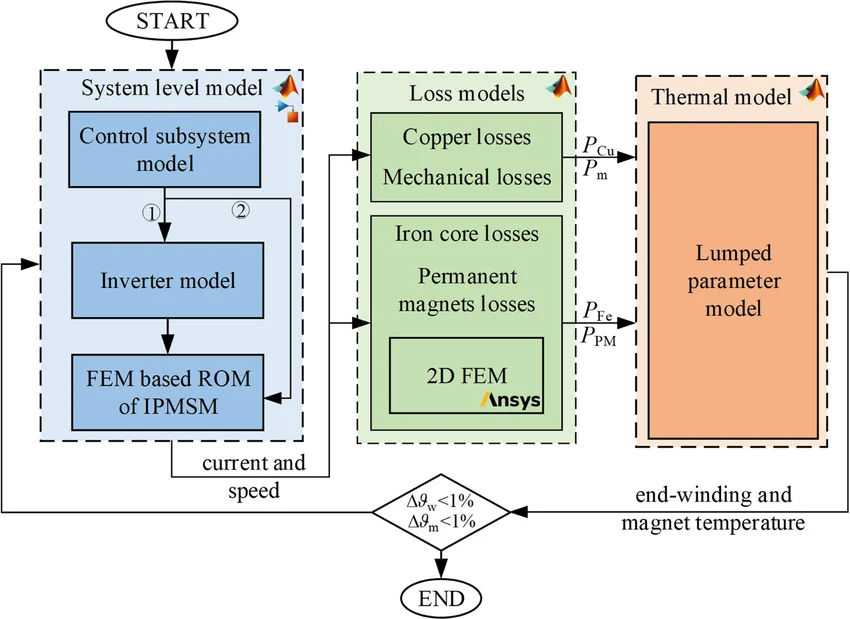
Key challenges stem from multi-physics coupling: signal reflections induce currents that generate heat, affecting impedance. Simulation tools couple these domains for holistic views. Material properties, such as dielectric constants and thermal conductivities, play crucial roles, influencing outcomes. Validation against prototypes refines model fidelity over time.
Adherence to IPC-2221 guidelines ensures simulations align with proven design rules for spacing, vias, and current capacities. This standard provides baseline parameters that simulations verify and extend for automotive extremes.
Signal Integrity Simulation in Automotive Applications
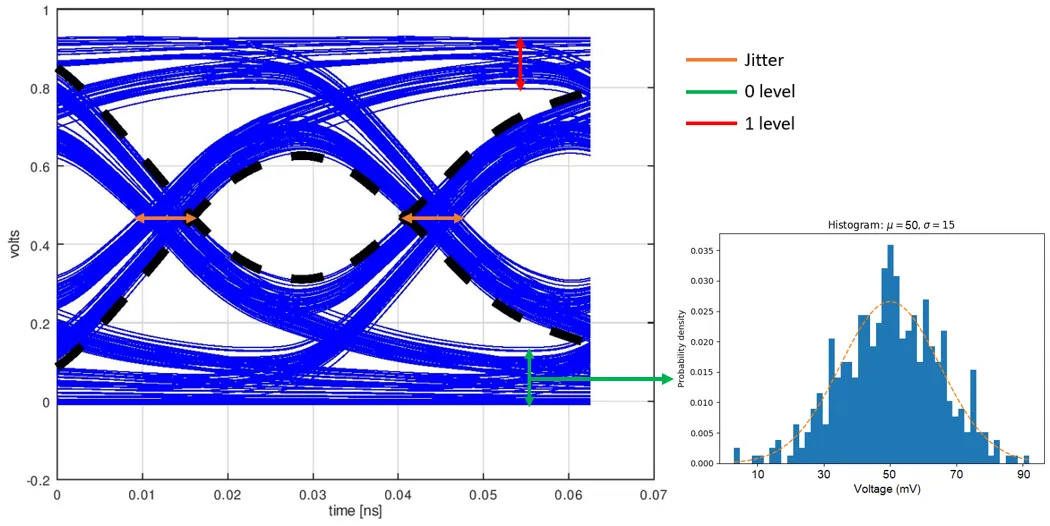
Signal integrity simulation automotive focuses on preserving waveform quality across high-speed interfaces like CAN, FlexRay, and Ethernet in ECUs. Reflections from impedance mismatches distort edges, causing timing errors or data corruption. Crosstalk between adjacent traces couples noise, degrading eye diagrams at gigabit rates. Pre-layout simulations scan topologies, recommending stub lengths or terminations.
Post-layout extraction models the full board, including vias, bends, and connectors. S-parameter analyses reveal insertion losses and return losses up to 10 GHz. Engineers iterate stackups to control differential pair skews below picoseconds. These efforts prevent bit errors in control loops critical for engine management.
Vibration-induced microcracks exacerbate SI issues, so dynamic simulations incorporate mechanical stresses. Compliance with IPC-6012 performance specs demands low defect rates, achieved through SI-optimized routing. Overall, signal integrity simulation automotive safeguards communication reliability in noisy environments.
Power Integrity Simulation for ECU PCBs
Power integrity simulation for ECU addresses voltage stability in power distribution networks (PDNs). Switching currents from processors and drivers create droops and ripples, starving components. Decoupling capacitors and plane splits must minimize impedance peaks across frequencies. Simulations compute target impedances, like 1 mOhm at 100 kHz, guiding cap placement.
DC analysis predicts IR drops under max loads, ensuring headroom for regulators. AC sweeps identify resonances from parasitic inductances. In ECUs, power integrity simulation for ECU handles dual supplies for analog and digital domains, preventing ground bounce. Layer allocation, such as dedicating inner planes, reduces loop areas.
Automotive transients, like load dumps, test PDN robustness. Simulations incorporate automotive waveforms to verify margins. This prevents latch-ups or resets during cranking.
Thermal Simulation in Engine Control PCB Design
Thermal simulation engine control PCB manages heat from power MOSFETs, inductors, and MCUs in ECUs. Junction temperatures exceed limits under sustained loads, accelerating electromigration. Conduction through copper, convection via airflow, and radiation model heat paths. Simulations reveal hotspots, prompting via stitching or thicker planes.
Stackup thermal resistance, per IPC-2221 principles, influences viability. Multi-layer boards spread heat effectively but require modeling interlayer effects. Boundary conditions mimic under-hood flows at 125°C ambient.
Coupled electro-thermal sims link power dissipation to rising impedances. Engineers optimize heatsink interfaces and TIMs virtually. Thermal simulation engine control PCB ensures lifetimes beyond 15 years.
Best Practices for Integrating Simulations in ECU Design
Start simulations early with schematic-level models, transitioning to layout extractions. Use hierarchical approaches: SI first, then PI, followed by thermal. Validate models with measurements from test coupons. Collaborate across teams for consistent material data.
Automotive workflows mandate traceability per ISO 26262, logging sim setups and results. Sensitivity analyses explore tolerances like etch variations. Automate via scripts for design-of-experiments.
Combine with DFM checks against IPC-6012 to flag manufacturability risks. Iterate until margins exceed requirements by 20%. Document assumptions for audits.
Insights from ECU Simulation Applications
Consider a typical ECU redesign where initial SI sims revealed crosstalk exceeding 5% on sensor lines. Routing adjustments and shielding closed the eye by 30%. Subsequent PI analysis uncovered a 200 mV droop; adding low-ESR caps resolved it. Thermal sims then showed a 20°C junction rise, fixed via thermal vias.
Such chained simulations prevented a respin, saving months. Vibration sims confirmed no resonance amplification. These cases highlight simulation's role in achieving ASIL-B compliance.
Conclusion
Simulation transforms ECU PCB design from empirical to predictive, tackling signal integrity simulation automotive, power integrity simulation for ECU, thermal simulation engine control PCB, and more. It ensures robust performance amid automotive rigors, aligning with standards like IPC-2221 and ISO 26262. Electrical engineers gain confidence through quantifiable margins, reducing risks and costs. As ECUs evolve toward electrification, multi-physics automotive PCB simulation remains indispensable for innovation and reliability.
FAQs
Q1: What are key ECU PCB simulation tools used by electrical engineers?
A1: ECU PCB simulation tools model signal propagation, power delivery, and heat transfer for automotive designs. They enable pre- and post-layout analyses to verify integrity. Focus on coupling SI, PI, and thermal domains for comprehensive validation. This approach optimizes layouts without prototypes, ensuring compliance with high-reliability standards.
Q2: How does signal integrity simulation automotive improve ECU performance?
A2: Signal integrity simulation automotive detects reflections, crosstalk, and EMI in high-speed nets. It generates eye diagrams and S-parameters to quantify margins. Engineers adjust terminations and stackups iteratively. Results prevent communication failures in engine controls.
Q3: Why is thermal simulation engine control PCB critical for reliability?
A3: Thermal simulation engine control PCB predicts hotspots from power components under load. It models conduction, convection, and radiation for accurate junction temps. Optimizations like via farms maintain devices below derating curves. This extends ECU lifespan in hot engine bays.
Q4: What role does power integrity simulation for ECU play in design?
A4: Power integrity simulation for ECU analyzes PDN impedance and droops from transients. It guides decoupling and plane strategies for stable rails. Simulations handle automotive pulses, preventing resets. Integration with SI ensures holistic stability.
References
IPC-2221B — Generic Standard on Printed Board Design. IPC, 2012
IPC-6012F — Qualification and Performance Specification for Rigid Printed Boards. IPC, 2023
ISO 26262:2018 — Road vehicles – Functional safety. ISO, 2018