Introduction
Router and switch PCBs operate in demanding environments where high-speed data processing generates significant heat. Components such as application-specific integrated circuits, Ethernet PHYs, and power management devices dissipate power that can exceed tens of watts in dense layouts. Effective router PCB thermal management ensures stable performance, prevents throttling, and extends operational lifespan. Switch PCB heat dissipation strategies address similar challenges, particularly in multilayer boards with fine-pitch components. Poor thermal design leads to hotspots that compromise signal integrity and reliability. This article explores engineering principles and practical techniques tailored for electric engineers designing these critical network hardware PCBs.
Why Thermal Management Matters in Router and Switch PCBs
In routers and switches, thermal management directly impacts network uptime and efficiency. High-power components like processors and transceivers produce heat through resistive losses and switching transients, raising junction temperatures. Elevated temperatures accelerate electromigration, degrade solder joints, and reduce mean time between failures. IPC-2221 provides guidelines for thermal considerations in PCB design, emphasizing the need to model heat flow early. Without proper switch PCB heat dissipation, boards may require derating, limiting throughput in data centers or enterprise setups. Engineers must prioritize thermal efficiency to meet performance specs under full load conditions.
Overheating also affects electromagnetic compatibility, as hot components alter dielectric properties. Compliance with thermal limits ensures adherence to reliability standards across product lifecycles. In compact enclosures, airflow restrictions amplify challenges, making proactive design essential. Router PCB thermal management mitigates these risks by distributing heat evenly, supporting 24/7 operation.
Fundamental Principles of Heat Dissipation in PCBs
Heat in router and switch PCBs arises primarily from Joule heating in traces, vias, and active devices. Conduction transfers heat through copper layers and substrates, convection relies on airflow over surfaces, and radiation plays a minor role at typical operating temperatures. Thermal resistance, denoted as theta (θ), quantifies opposition to heat flow, with lower values indicating better dissipation. JEDEC standards like JESD51-12 outline methods for characterizing package-to-ambient thermal performance on standardized test boards. Engineers calculate junction temperatures using θJA = (Tj - Ta) / P, where power dissipation drives the gradient.
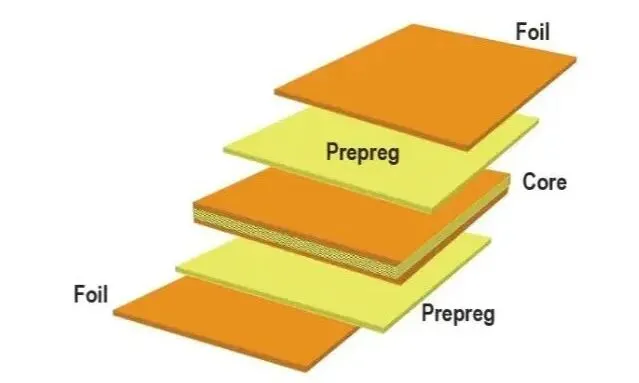
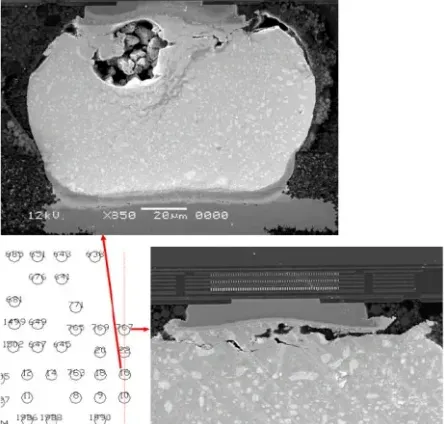
Multilayer constructions enhance conduction via inner plane layers acting as heat spreaders. Copper's high thermal conductivity, around 400 W/mK, outperforms FR-4 substrate by orders of magnitude. Voids or delamination disrupt paths, underscoring the importance of fabrication quality. Simulations validate designs by predicting isotherms and gradients before prototyping.
Key Techniques for Effective Heat Dissipation
Thermal Vias for Vertical Heat Transfer
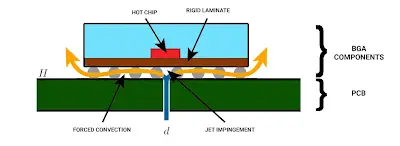
Thermal vias provide low-resistance paths from surface components to inner layers or the opposite side. Arrays of 0.3 mm diameter vias under exposed pads efficiently conduct heat away from hotspots. Filling vias with conductive epoxy improves performance but increases cost. In router PCB thermal management, place via tents or plugs to prevent solder wicking during assembly. Arrays should cover the full thermal pad footprint, with pitch optimized for density versus capacitance.
Stitching vias around peripheries tie planes together, minimizing lateral spreading resistance. Simulations confirm via count impacts θJC by up to 50 percent in high-power QFNs. Switch PCB heat dissipation benefits from staggered patterns to avoid milling during depaneling.
Heat Sink Placement Strategies
Heat sink placement targets high-dissipation devices like voltage regulators and ASICs. Position sinks on board edges for mechanical attachment and airflow access. Fins oriented parallel to dominant airflow maximize convective cooling. Interface materials such as thermal pads or greases reduce contact resistance. Component placement for thermal efficiency pairs sinks with spaced hot components.
In multilayer switch PCBs, embedded heat pipes or vapor chambers offer advanced options for chassis-level spreading. Mechanical clips ensure consistent pressure without board stress. Testing validates attachment under vibration.

Component Placement for Thermal Efficiency
Strategic component placement optimizes router PCB thermal management by minimizing stack-up effects. Locate power-hungry devices away from sensitive analog sections and near board edges. Orient packages to align thermal pads with airflow paths. Group heat sources to share sinks, but space them to prevent mutual roasting.
Layer assignment influences efficiency, with hot components on outer layers for direct convection. Traces from power pins should widen progressively to reduce I-squared-R losses, per IPC-2152 guidelines for current capacity. Airflow modeling predicts velocities around obstacles like tall capacitors.
Best Practices in Design and Implementation
Integrate thermal vias early in layout, simulating arrays under all >1W devices. Use copper pours connected via stitching for plane-level spreading. Select board thicknesses balancing rigidity and via aspect ratios. Enclosure co-design incorporates vents and fans, with ducts channeling air over hotspots.
Fabrication notes specify via plating thickness for thermal conductance. Assembly processes avoid flux residues that impede dissipation. Reliability testing includes thermal cycling per IPC-TM-650 methods to verify margins.
For high-density routers, hybrid cooling combines passive sinks with localized fans. Material choices favor low-CTE cores to prevent warpage under thermal stress. Iterative FEA refines designs, correlating to empirical IR camera data.
Troubleshooting Common Thermal Issues
Hotspots often trace to inadequate via density or plane disconnects. Inspect via fill completeness post-assembly via X-ray. Excessive θJA signals poor sink attach; reapply TIM and torque checks. Signal skew from temperature gradients requires symmetric routing.
Board-level simulations versus hardware validate models, adjusting for real airflow. Delamination risks prompt bake-outs before reflow.
Conclusion
Router PCB thermal management and switch PCB heat dissipation demand integrated design approaches from layout to enclosure. Techniques like thermal vias, strategic heat sink placement, and component placement for thermal efficiency form the core arsenal. Adhering to standards ensures robust, reliable networks. Engineers achieve optimal performance by simulating, prototyping, and iterating. Proactive thermal strategies safeguard against failures in mission-critical applications.
FAQs
Q1: What role do thermal vias play in router PCB thermal management?
A1: Thermal vias transfer heat vertically from components to inner copper planes or the bottom side, reducing junction temperatures. Place arrays under exposed pads with diameters around 0.3 mm and pitches of 1 mm for balance. Filling enhances conductivity but requires process controls. This technique is essential for dense layouts in routers handling gigabit traffic.
Q2: How does heat sink placement affect switch PCB heat dissipation?
A2: Optimal heat sink placement positions them on high-power ICs near board edges, aligning fins with airflow. Use thermal interface materials to minimize gaps. Mechanical fasteners prevent loosening under shock. Proper placement can lower θJA significantly, supporting full-speed operation in switches.
Q3: Why is component placement for thermal efficiency critical in network PCBs?
A3: Component placement influences heat spreading and convection by spacing hotspots and aligning with airflow. Place power devices on outer layers and away from temperature-sensitive parts. Wide power traces reduce resistive heating. This efficiency prevents derating and maintains signal integrity.
Q4: What standards guide thermal design in router and switch PCBs?
A4: IPC-2221 offers guidelines for thermal management, including vias and reliefs. IPC-2152 addresses trace heating from currents. JEDEC JESD51-12 standardizes thermal characterization for accurate modeling. These ensure designs meet reliability thresholds.
References
IPC-2221B — Generic Standard on Printed Board Design. IPC
IPC-2152 — Standard for Determining Current Carrying Capacity in Printed Board Traces. IPC
JEDEC JESD51-12 — Guidelines for Reporting and Using Electronic Package Thermal Information. JEDEC