Introduction
In PCB manufacturing, managing heat dissipation has become increasingly critical as electronic devices pack more power into smaller footprints. High-density designs often lead to hotspots that can degrade performance and reliability if not addressed properly. Thermal vias provide a direct path for heat to move from inner layers to the surface, where it can be dissipated more effectively. Filling these vias with conductive via filling materials significantly improves thermal conductivity compared to unfilled or air-plated vias. Selecting the optimal thermal via filling materials requires balancing thermal performance, mechanical stability, and manufacturability. This guide delves into the principles, options, and best practices for engineers focused on robust PCB designs.

What Is Thermal Via Filling and Why It Matters
Thermal via filling involves introducing a thermally conductive material into plated through-holes designed to channel heat away from components. These vias, typically arrays under power devices, connect heat-generating layers to outer copper planes or heatsinks. Without filling, the air gap inside reduces effective thermal conductivity, limiting heat flow. Conductive via filling eliminates voids, creating a solid thermal bridge that aligns with factory standards for high-reliability boards.
The importance of thermal via filling materials lies in their role in preventing thermal failures during operation. In applications like power supplies or RF modules, inadequate heat transfer raises junction temperatures, accelerating electromigration and reducing lifespan. Factory-driven processes ensure filled vias meet IPC-2221 guidelines for thermal management in PCB design. Properly chosen epoxy filling for vias also avoids issues like solder wicking during assembly, maintaining planarity for surface-mount components. Ultimately, optimal filling supports compliance with performance specs while enabling compact layouts.
Technical Principles of Heat Transfer in Filled Vias
Heat transfer through a thermal via follows Fourier's law, where flux is proportional to the thermal conductivity gradient across the material. Unfilled vias rely on thin copper plating, which offers good conductivity but leaves insulating air pockets that bottleneck performance. Conductive via filling replaces air with materials boasting higher bulk thermal conductivity, such as metal-particle-loaded epoxies. The fill material must also match the coefficient of thermal expansion to the PCB laminate, minimizing stress during thermal cycling.
Key factors influencing performance include via diameter, length, and array density. Smaller diameters increase resistance unless filled completely, while longer vias in thick boards demand low-viscosity fills for uniform coverage. Thermal conductivity values vary by material type, with silver-filled epoxies providing superior paths compared to standard solders in non-reflow scenarios. In PCB manufacturing, plating thickness per IPC-6012E standards ensures baseline conductivity before filling. Simulations often reveal that filled via arrays can reduce hotspot temperatures by creating parallel heat paths.

Epoxy filling for vias works through particle percolation, where conductive fillers like silver or copper form networks within the resin matrix. Cure processes solidify the fill, locking in thermal properties without voids. Compared to solder, epoxies offer better gap-filling in high-aspect-ratio holes but lower peak conductivity. Factory tests verify fill density to confirm no air entrapment, which could create thermal barriers.
Types of Thermal Via Filling Materials
Several thermal via filling materials cater to different PCB manufacturing needs, each with trade-offs in thermal conductivity, cost, and process compatibility. Conductive epoxies, often silver-filled, excel in high-thermal-demand applications due to their ability to achieve network conductivity exceeding that of pure resin. These materials dispense easily via screen printing or needle, curing at moderate temperatures to form robust plugs. Non-conductive epoxies provide mechanical support with adequate thermal paths when combined with thick plating, suiting cost-sensitive designs.
Solder filling leverages reflow processes for metallic conductivity but risks wicking in via-in-pad setups. Copper electroplating or slugs offer the highest thermal conductivity, ideal for extreme power densities, though they require advanced plating cycles. Hybrid approaches, like plated-then-epoxy filled, balance electrical isolation with heat transfer. Selection hinges on board thickness and component proximity, as deeper vias favor low-viscosity conductive via filling.

Material compatibility with plating ensures adhesion, preventing delamination under IPC-4761 via protection guidelines. Silver-filled epoxies stand out for their isotropic conductivity, unlike anisotropic pastes limited to vertical flow. Engineers must consider cure shrinkage, which could induce microcracks if mismatched to laminate properties.
Practical Solutions and Best Practices in PCB Manufacturing
Choosing thermal via filling materials starts with defining thermal requirements via junction-to-ambient modeling. For power ICs exceeding certain dissipation levels, opt for conductive via filling with proven particle loading. Arrays of 0.2 to 0.4 mm vias under thermal pads maximize paths without excessive drill time. In manufacturing, tent solder mask over unfilled vias before filling to control overflow.
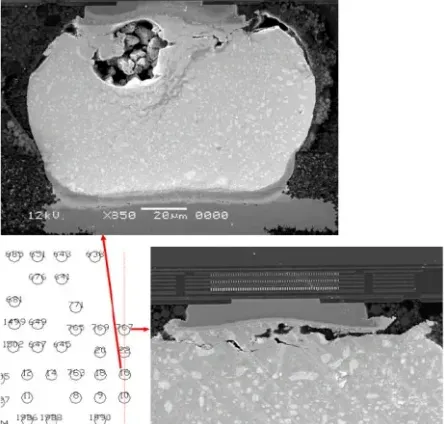
Dispensing methods include stencil printing for high-volume runs and jetting for precision in prototypes. Post-fill planarization via grinding ensures flatness for BGA assembly. Cure profiles align with laminate specs to avoid warpage. Validation involves cross-sectioning samples to inspect fill completeness per IPC-6012E qualification.
Best practices emphasize via aspect ratios below 6:1 for reliable filling, reducing voids. Pair filling with copper pours on outer layers for horizontal spreading. In multilayer boards, stagger via patterns to avoid drill breakout. Factory process controls monitor viscosity and cure times for consistency.
Troubleshooting common issues like incomplete fills involves adjusting dispense pressure or preheat steps. For high-reliability apps, conductive epoxy outperforms solder in vibration-prone environments due to lower brittleness. Simulate interactions with JEDEC thermal test conditions to predict real-world behavior.
Conclusion
Thermal via filling is a cornerstone of effective PCB thermal management, transforming standard vias into high-performance heat conduits. Conductive via filling materials like silver-epoxy variants offer the best balance for most applications, enhancing thermal conductivity while supporting manufacturability. Adhering to standards such as IPC-2221 and IPC-4761 ensures designs translate reliably to production. Engineers should prioritize array optimization and process validation for peak results. By selecting the right epoxy filling for vias, PCB manufacturing achieves superior heat transfer, bolstering device longevity and performance.
FAQs
Q1: What are the most effective thermal via filling materials for high-power PCBs?
A1: Conductive via filling materials, particularly silver-filled epoxies, provide excellent thermal conductivity for power applications. These outperform non-conductive fills by forming percolating networks that efficiently transfer heat. In PCB manufacturing, they fill high-aspect vias uniformly without wicking risks. Selection depends on cure compatibility and cost, with factories verifying via cross-sections for quality.
Q2: How does epoxy filling for vias improve thermal conductivity over unfilled designs?
A2: Epoxy filling for vias eliminates air gaps, replacing them with solid conductive matrices that boost heat flux. Silver or copper particles within the epoxy create paths rivaling plated walls alone. This aligns with IPC standards for thermal relief in multilayer boards. Manufacturing processes ensure complete void-free fills, reducing hotspot risks in dense layouts.
Q3: What role do standards play in selecting thermal via filling materials?
A3: Standards like IPC-2221 guide thermal via design, emphasizing material choices for reliable heat transfer. IPC-4761 specifies protection methods including filling to prevent failures. In PCB manufacturing, compliance ensures qualification for harsh environments. Engineers use these to match fills with plating and laminate properties.
Q4: When should conductive via filling be used in PCB manufacturing?
A4: Use conductive via filling when thermal demands exceed unfilled via capacity, such as under high-power components. It excels in via-in-pad designs needing planarity and dissipation. Factories apply it via printing for arrays, curing to lock properties. Avoid in low-cost boards where non-conductive suffices.
References
IPC-2221B — Generic Standard on Printed Board Design. IPC
IPC-4761 — Qualification and Performance Specification for Via Protection and Coverage. IPC
IPC-6012E — Qualification and Performance Specification for Rigid Printed Boards. IPC, 2015