Introduction
The RoHS directive has fundamentally shaped PCB fabrication by restricting hazardous substances like lead, mercury, cadmium, and certain flame retardants since its widespread adoption. While initial lead-free transitions focused on basic compliance through tin-based solders and standard FR-4 laminates, modern applications demand materials that exceed these minimum requirements. High-reliability sectors such as automotive electronics, telecommunications, and power management now require RoHS compliant PCB materials that handle elevated temperatures, improved thermal stability, and enhanced durability. This evolution pushes fabricators toward advanced laminates, surface finishes, and protective coatings that maintain performance under demanding conditions. In this article, we explore these next-generation options for lead-free PCB fabrication, providing engineers with insights into material selection and process integration.
The Imperative for Advanced Materials in RoHS Compliance
Basic lead-free compliance addressed solder alloys but exposed limitations in PCB base materials during higher reflow profiles around 260 degrees Celsius. Standard laminates can suffer from delamination, warpage, or via failures when exposed to such thermal stress repeatedly. Advanced RoHS compliant PCB materials mitigate these issues by incorporating resins with superior thermal and mechanical properties. Engineers must prioritize these materials to ensure long-term reliability in assemblies subjected to vibration, humidity, and power cycling. Factory processes have adapted accordingly, emphasizing material qualification per established specifications to avoid field failures. The shift matters because it aligns fabrication with the growing complexity of multilayer boards in dense, high-speed designs.

High-Temperature PCB Laminates: Core of Robust Fabrication
High-temperature PCB laminates represent a critical advancement in RoHS compliant PCB materials, featuring resins like modified epoxies or polyimides that resist degradation during lead-free soldering. These laminates offer elevated glass transition temperatures and low coefficients of thermal expansion, reducing risks of board warpage or copper peel during assembly. In multilayer constructions, they maintain dielectric integrity under thermal excursions, supporting high-layer counts without compromising signal integrity. Fabricators select these based on application needs, such as power electronics where thermal management is paramount. Compared to standard FR-4, high-temperature variants provide better Z-axis stability, crucial for press-fit components or heavy copper traces. IPC-4101 specifications guide qualification, ensuring consistency in resin content and reinforcement fabrics.
Selection involves balancing cost with performance, as these laminates demand precise lamination cycles to achieve uniform cure. Engineers evaluate decomposition temperatures and moisture absorption rates during design reviews to preempt assembly challenges. In high-volume production, drill and plate processes must account for harder materials, often requiring specialized tooling. These laminates excel in environments exceeding standard operating limits, enabling lead-free PCB fabrication for harsh conditions.
Alternative PCB Finishes: Enhancing Solderability and Longevity
Alternative PCB finishes have evolved to replace hot air solder leveling with options better suited to fine-pitch components in lead-free processes. Electroless nickel immersion gold provides a flat, uniform surface with excellent solder wettability and wire bondability, ideal for high-density interconnects. Immersion silver offers cost-effective protection against oxidation while maintaining compatibility with lead-free solders. Organic solderability preservatives create a thin, self-limiting film that preserves copper reactivity during reflow. Each finish influences shelf life, contact resistance, and intermetallic formation, demanding careful process control.
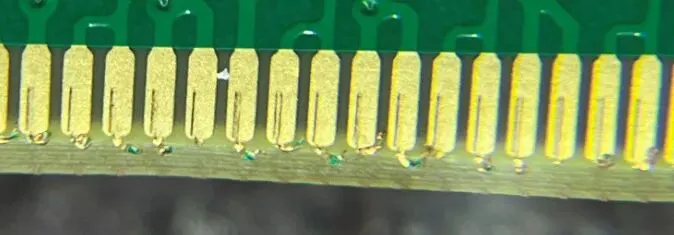
Hard gold plating suits edge connectors needing wear resistance, though it requires underlayers for adhesion. Fabricators apply these finishes post-pattern plating, followed by baking to remove residues. RoHS compliance ensures no restricted metals are introduced, with thickness controls preventing brittleness in solder joints. Engineers compare finishes via solder float tests and contact resistance measurements to match assembly methods.

RoHS Compliant Solder Mask: Protection and Reliability
RoHS compliant solder mask formulations use non-halogenated resins to meet flame retardancy without brominated compounds. Liquid photoimageable masks dominate for their resolution on fine features, enabling precise coverage over traces as narrow as 75 microns. These masks provide electrical insulation, environmental protection, and solder dam functions critical in lead-free PCB fabrication. Advanced versions incorporate UV blockers for improved color stability and flexibility to accommodate board flexing.
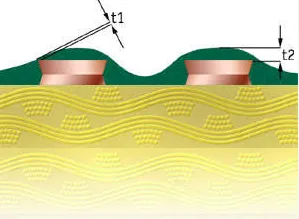
Application involves screen printing or direct imaging, followed by exposure and development for sharp edges. Cure profiles must align with laminate properties to avoid cracking during thermal cycling. Thickness uniformity, typically 15 to 25 microns, prevents voids that could lead to contamination. In high-temperature applications, masks with high pencil hardness resist abrasion during assembly.

Best Practices for Integrating Advanced Materials
Successful lead-free PCB fabrication starts with material datasheets reviewed against assembly profiles, ensuring compatibility across the supply chain. Fabricators conduct bake-out processes to minimize moisture, following JEDEC J-STD-020 guidelines for handling sensitivity. Lamination pressures and temperatures require optimization for high-temperature PCB laminates to achieve void-free cores. Surface preparation before alternative PCB finishes involves micro-etching for consistent adhesion.
Assembly trials validate joint integrity, focusing on voiding and fillet formation with lead-free pastes. Quality checks include X-ray inspection for barrel fills and dye penetrant for mask defects. Documentation of material lots supports traceability, aiding root cause analysis if issues arise. Engineers collaborate with fabricators early to specify CAF resistance and ionic cleanliness per IPC standards.
Challenges in Advanced RoHS Compliant Fabrication
Advanced materials introduce trade-offs, such as higher costs for high-temperature laminates or black pad risks in certain finishes. Warpage control demands symmetric stackups and constrained processing. Solder mask adhesion failures can occur if cure mismatches laminate shrinkage. Mitigation involves design for manufacturability rules, like teardrop pads and balanced copper distribution.
Conclusion
Advancing beyond basic lead-free compliance unlocks superior performance through RoHS compliant PCB materials, high-temperature laminates, alternative finishes, and robust solder masks. These selections enable reliable fabrication for demanding electronics, reducing failure modes in thermal and mechanical stress. Engineers benefit from standard-aligned processes that ensure consistency and quality. By prioritizing these materials, designs achieve extended lifecycles in lead-free environments. Future trends will further refine these options for even higher densities and sustainability.
FAQs
Q1: What are the key benefits of high-temperature PCB laminates in RoHS compliant PCB materials?
A1: High-temperature PCB laminates provide superior thermal stability, reducing delamination and warpage during lead-free reflow processes. They support multilayer boards with heavy copper, maintaining mechanical integrity under power cycling. Factory qualification per industry specs ensures reliability in automotive and telecom applications. Selection enhances overall assembly yield by matching reflow profiles precisely.
Q2: How do alternative PCB finishes improve lead-free PCB fabrication?
A2: Alternative PCB finishes like ENIG and immersion silver offer better solderability than lead-free HASL, minimizing defects on fine-pitch pads. They extend shelf life and resist oxidation, crucial for just-in-time assembly. Process controls ensure uniform thickness for consistent joint formation. Engineers choose based on cost, reliability, and end-use requirements.
Q3: Why is RoHS compliant solder mask essential for modern PCBs?
A3: RoHS compliant solder mask uses halogen-free formulations for safety and environmental compliance while providing insulation and protection. It enables precise patterning for high-density designs, preventing shorts and contamination. Flexibility accommodates board bending, and durability withstands multiple reflows. Integration improves long-term reliability in harsh environments.
Q4: What considerations apply to RoHS compliant PCB materials selection?
A4: RoHS compliant PCB materials must balance thermal, mechanical, and electrical properties for specific applications. Review laminate Tg, finish solderability, and mask adhesion during design. Factory trials validate performance under actual assembly conditions. Compliance documentation supports certification and traceability.
References
IPC-6012E — Qualification and Performance Specification for Rigid Printed Boards. IPC, 2017
JEDEC J-STD-020E — Moisture/Reflow Sensitivity Classification. JEDEC, 2014
IPC-4101E — Specification for Base Materials for Rigid and Multilayer Printed Boards. IPC, 2017