Introduction
In the world of printed circuit boards, cost constraints often drive material selection, especially for single-layer designs in consumer electronics. CEM-1 PCB emerges as a compelling option, offering substantial savings compared to standard FR4 substrates while meeting basic performance needs. Engineers evaluating CEM-1 PCB cost vs FR4 quickly note its appeal for volume production where high mechanical strength or multilayer complexity is unnecessary. This material supports straightforward fabrication processes, making it ideal for low-cost PCB manufacturing. As electrical engineers prioritize efficiency in designs for household devices and simple appliances, understanding CEM-1 PCB material properties becomes essential. This article explores its composition, advantages, applications, and design guidelines to help you decide if it fits your project requirements.
CEM-1 PCBs thrive in scenarios demanding affordability without compromising essential functionality. Factory insights reveal that its composite structure enables faster production cycles and reduced material expenses. For single-layer PCB design guide considerations, CEM-1 simplifies routing and assembly. However, its limitations in thermal and mechanical endurance warrant careful application selection. By examining these aspects, engineers can leverage CEM-1 for optimal value in consumer-focused projects.
What Is a CEM-1 PCB and Why Does It Matter?
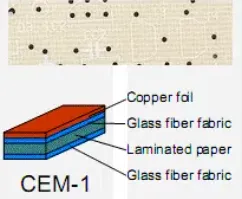
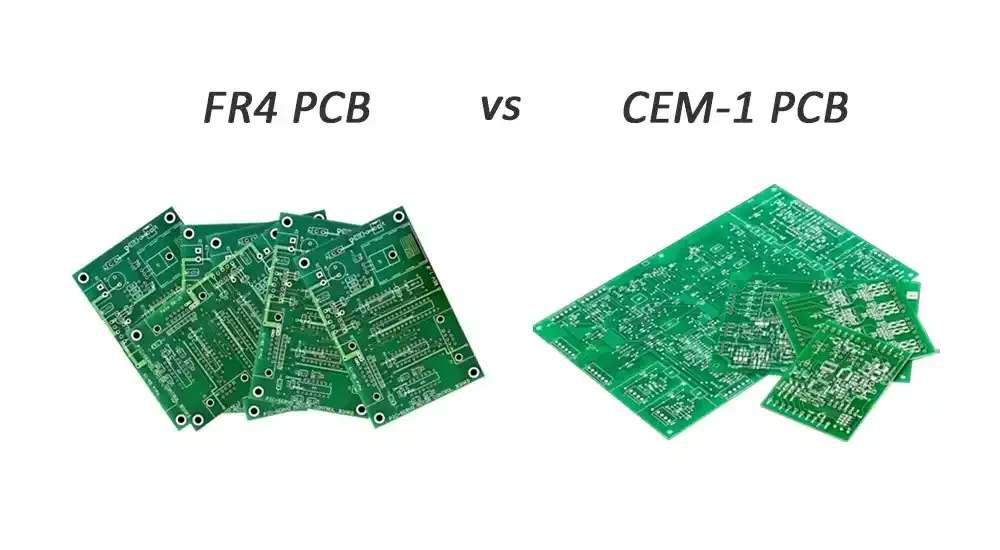
CEM-1, or Composite Epoxy Material 1, consists of a cellulose paper core impregnated with epoxy resin, reinforced by a thin layer of woven glass cloth on the copper-clad side. This hybrid construction provides better dimensional stability than pure paper-based materials while keeping costs low. Unlike FR4, which uses continuous glass fiber throughout, CEM-1 prioritizes punchability and ease of processing for single-sided boards. Industry specifications like IPC-4101 outline its baseline requirements, ensuring consistency in base material performance.
The relevance of CEM-1 stems from its role in democratizing electronics production. In high-volume consumer markets, where margins are tight, selecting CEM-1 reduces overall bill of materials costs significantly. It matters for electrical engineers because it allows focus on functionality rather than premium durability in low-stress environments. Factory-driven processes benefit from its compatibility with simple etching and soldering steps. Moreover, CEM-1 PCB applications consumer electronics highlight its practicality in devices like remote controls and basic power adapters.
Why choose CEM-1 over alternatives? Its balance of electrical insulation and mechanical integrity suits non-critical circuits. Engineers appreciate how it aligns with low-cost PCB manufacturing goals without frequent failures in ambient conditions. As supply chains emphasize affordability, CEM-1 remains a staple for prototyping and scaling single-layer designs.
CEM-1 PCB Material Properties
CEM-1 PCB material properties center on its composite makeup, delivering adequate performance for basic applications. The epoxy resin ensures flame retardancy meeting UL94 V-0 standards, while the paper core contributes to lightweight construction. Mechanical properties include sufficient flexural strength for handling during assembly, though lower than FR4's glass-epoxy reinforcement. Electrical characteristics provide moderate insulation resistance and dielectric strength suitable for low-voltage circuits. Thermal stability supports standard soldering, but engineers must account for its lower glass transition temperature in prolonged heat exposure.
Compared to FR4, CEM-1 exhibits higher flexibility, aiding in punch-through fabrication rather than routing. Its surface glass layer enhances copper adhesion and reduces warpage during lamination. Moisture resistance is reasonable for indoor use, though not ideal for humid environments. Factory tests per IPC-TM-650 methods confirm these traits, guiding qualification. Density remains low, contributing to overall board lightness in consumer products.
Key properties include good punchability for cost-effective edge finishing and compatibility with hot air leveling finishes. Electrical engineers value its current-carrying capacity for simple traces, typically handling household currents without issue. However, for high-frequency signals, its dielectric constant may introduce minor losses. These attributes position CEM-1 as a targeted choice rather than a universal substitute.
In detailed evaluations, CEM-1's epoxy system bonds layers effectively, minimizing delamination risks under IPC-6012 guidelines. Its properties support lead-free processes with proper profiling. Engineers designing for longevity note the need for conformal coatings in variable climates.
CEM-1 PCB Cost vs FR4: A Practical Breakdown
CEM-1 PCB cost vs FR4 reveals clear savings, often 20 to 30 percent lower per square meter due to simpler raw materials and processing. FR4's glass fabric demands more expensive weaving and resin impregnation, inflating laminate prices. CEM-1 leverages abundant cellulose paper, streamlining supply and reducing fabrication steps like drilling precision. For single-layer boards, this translates to quicker turnaround and lower tooling costs in volume runs.
Factors influencing CEM-1 economics include board size and copper weight, where its lightweight nature cuts shipping expenses. Low-cost PCB manufacturing thrives on CEM-1's punchability, eliminating routing tools and minimizing waste. Engineers calculate total ownership costs, factoring assembly simplicity over premium material premiums. In prototypes, CEM-1 panels yield more boards per sheet, amplifying savings.
FR4 justifies its premium in demanding apps, but for CEM-1 PCB applications consumer electronics, the trade-off favors budget. Factory data shows reduced scrap rates from easier handling. Procurement teams optimize by specifying standard thicknesses, avoiding custom surcharges.
CEM-1 PCB Applications in Consumer Electronics
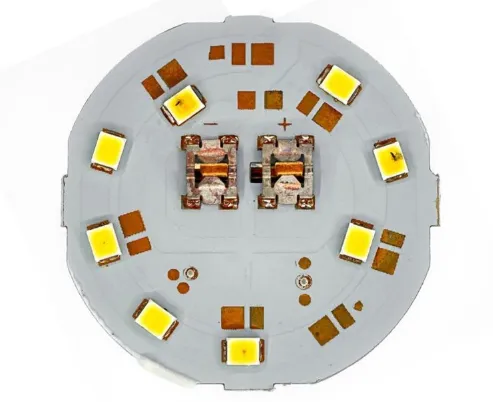
CEM-1 PCB applications consumer electronics dominate in low-end devices prioritizing affordability. Remote controls, calculators, and toy circuits exemplify its use, where single-layer topology suffices. LED indicators and basic timers in household gadgets benefit from its electrical reliability and light weight. Power supply modules for chargers also employ CEM-1, handling moderate currents without excess heat.
In white goods like fans and clocks, CEM-1 supports control panels with minimal components. Its flame retardancy ensures safety in enclosed spaces. Automotive dash indicators occasionally use it for non-critical functions. Factory assembly lines favor CEM-1 for wave soldering compatibility in these volumes.
Consumer trends toward disposable electronics amplify CEM-1's role. Engineers integrate it seamlessly with through-hole parts, reducing SMT needs. Durability meets everyday stresses, from button presses to vibrations.
Single-Layer PCB Design Guide for CEM-1
A single-layer PCB design guide for CEM-1 emphasizes simplicity and trace optimization. Place components to minimize jumper wires, routing signals radially from power inputs. Maintain 0.2 mm minimum trace width for standard currents, widening for higher loads to prevent overheating. Avoid dense areas prone to shorts, spacing pads at least 0.5 mm apart. Ground planes, if used, fill unused copper on the component side for noise reduction.
Thermal management involves spacing heat-generating parts from edges, leveraging CEM-1's moderate dissipation. Silk screen legends aid assembly, using clear fonts for polarity. Design for punchable outlines, incorporating tabs for handling. Simulate signal integrity early, as CEM-1's properties suit DC and low-frequency AC.
Best practices include panelization for efficiency, with V-scoring for separation. Test points facilitate in-circuit verification. Engineers iterate layouts to balance density and manufacturability.
(Insert image: 'Single-Layer CEM-1 PCB Layout Example' · ALT: 'CAD screenshot of optimized single-sided board design with traces and components')
Factory alignment with IPC-A-600 ensures acceptability, checking for warpage under 0.75% post-lamination. Fiducials improve pick-and-place accuracy if hybrid assembly.
Low-Cost PCB Manufacturing Processes for CEM-1
Low-cost PCB manufacturing with CEM-1 exploits its forgiving nature. Lamination bonds the glass-epoxy surface to paper core under controlled pressure and heat. Photolithography patterns single-sided copper, followed by etching and stripping. Punching defines contours, bypassing milling for speed. Solder mask application protects traces, with optional legend printing.
Plating skips vias, focusing on edge connectors if needed. Electrical testing verifies continuity per netlist. Baking preconditions boards for soldering, mitigating moisture. These steps yield high throughput at reduced energy use.
CEM-1's stability minimizes rework, cutting yields to over 95 percent in optimized lines.
Best Practices and Limitations
Adopt conservative profiles for reflow, respecting CEM-1's thermal limits. Conformal coat for humidity protection in consumer apps. Inspect per IPC standards for defects like mouse bites. Avoid multilayer conversions, sticking to single-sided strengths.
Limitations include reduced rigidity for large panels and lower Tg for high-temp environs. Pair with robust enclosures for mechanical support.
Conclusion
CEM-1 PCB stands as a budget-friendly powerhouse for single-layer electronics, excelling in cost-sensitive consumer applications. Its material properties and manufacturing ease deliver value where FR4 overkill prevails. Engineers armed with design guides maximize its potential, ensuring reliable performance. For low-cost PCB manufacturing, CEM-1 optimizes the balance of economy and function. Evaluate your project's demands to harness this versatile substrate effectively.
FAQs
Q1: What are the main CEM-1 PCB material properties that affect design choices?
AX: CEM-1 features a paper-epoxy core with glass reinforcement, offering good punchability, flame retardancy, and moderate electrical insulation. Its lower mechanical strength compared to FR4 suits single-layer use, while thermal properties support standard soldering. Factory insights emphasize its lightweight nature for consumer electronics. Designers prioritize trace spacing to leverage these traits fully.
Q2: How does CEM-1 PCB cost vs FR4 impact low-cost PCB manufacturing?
A2: CEM-1 typically costs 20 to 30 percent less than FR4 due to cheaper base materials and simpler processes like punching. This savings scales in volume production for single-layer boards. Engineers benefit from faster fabrication without quality trade-offs in basic apps. It idealizes budget projects in consumer sectors.
Q3: What are key tips in a single-layer PCB design guide for CEM-1?
A3: Optimize layouts for radial routing, minimum 0.2 mm traces, and spaced pads to avoid shorts. Incorporate ground fills and test points for reliability. Design punchable shapes and panelize for efficiency. Align with IPC standards for warpage control. These practices ensure manufacturability in CEM-1 applications consumer electronics.
Q4: Where do CEM-1 PCB applications consumer electronics shine most?
A4: CEM-1 excels in remotes, toys, calculators, and basic power supplies needing affordability and single-layer simplicity. Its properties handle everyday voltages and assembly stresses. Volume production benefits from low waste and quick cycles. Avoid high-heat or flexible uses for best results.
References
IPC-4101 — Specification for Base Materials for Rigid and Multilayer Printed Boards. IPC.
IPC-6012E — Qualification and Performance Specification for Rigid Printed Boards. IPC, 2015.
IPC-A-600K — Acceptability of Printed Boards. IPC, 2020.