Introduction
In the competitive landscape of electronic product development, testing remains one of the largest cost drivers in manufacturing. Design for Testability (DFT) emerges as a strategic approach to streamline testing processes while maintaining high reliability. By integrating DFT principles early in the design phase, engineers can significantly achieve DFT cost reduction without compromising product quality. This article explores how DFT optimization enhances overall production efficiency for electric engineers working on complex printed circuit boards (PCBs). Understanding DFT economics allows teams to allocate resources more effectively, balancing upfront design efforts against long-term savings in test and rework expenses. As electronic assemblies grow denser, mastering DFT budgeting becomes essential for sustainable project outcomes.
What Is DFT and Why It Matters in Electronic Products
Design for Testability refers to methodologies incorporated during the PCB design stage to facilitate efficient detection of manufacturing defects and functional issues. DFT ensures that test equipment can access critical nodes with minimal physical probing, reducing the complexity of test fixtures and programming time. For electric engineers, DFT matters because it directly impacts yield rates and time-to-market in high-volume production. Without proper DFT, testing can consume up to half of manufacturing costs due to extended debug cycles and escaped defects reaching the field. DFT ROI becomes evident when optimized strategies cut test cycle times by enabling automated in-circuit testing (ICT) and boundary-scan applications. In essence, DFT shifts the burden from exhaustive post-assembly testing to proactive design features that pay dividends throughout the product lifecycle.
The relevance of DFT intensifies with shrinking component pitches and multilayer boards, where traditional bed-of-nails testing faces physical limitations. Engineers must consider DFT optimization to support flying probe testers or JTAG chains, which offer flexibility for low-volume runs. This approach aligns with industry demands for faster iterations in prototyping and scaling. Ultimately, neglecting DFT leads to inflated DFT budgeting as teams scramble with custom fixtures and manual inspections.
Core Technical Principles of DFT in PCB Design
DFT principles revolve around accessibility, controllability, and observability of circuit nodes to maximize fault coverage. Accessibility demands placing test points at nets with greater than 98% fault coverage potential, spaced adequately for probe tips typically around 1.27 mm apart. Controllability involves adding scan chains or multiplexers to force signals into known states, simplifying pattern generation for stuck-at faults. Observability ensures outputs can be monitored without loading the circuit, often through dedicated observation points or embedded test logic. These mechanisms collectively reduce the test vector count, directly contributing to DFT cost reduction by minimizing handler throughput time.
In multilayer PCBs, engineers apply DFT by reserving inner layers for test structures like daisy chains, avoiding conflicts with signal integrity. Guard traces around high-impedance nodes prevent crosstalk during probing, maintaining measurement accuracy. Component orientation standardization aids fixture design, as aligned leads allow uniform probe contact. Adhering to these principles prevents common pitfalls like via-in-pad obstructions that block probe access.
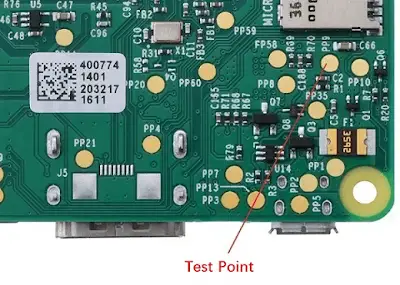
Boundary-scan techniques, compliant with established protocols, integrate seamlessly into DFT frameworks for digital ICs. This method serializes pin access, eliminating the need for dense probe fields on high-pin-count devices. Analog sections require dedicated bed-of-nails for parametric measurements, such as resistance and capacitance checks. Balancing digital and analog DFT strategies ensures comprehensive coverage across mixed-signal boards. Electric engineers benefit from these principles by simulating test coverage early, using tools to predict fixture costs and identify redesign hotspots.
Thermal considerations play a role in DFT, as test fixtures must dissipate heat from power devices without warping boards. Vias under test points can introduce inductance, so surface pads remain preferable for high-frequency signals. These technical nuances underscore the need for iterative DFT reviews during schematic capture and layout.
Implementing DFT Optimization for Cost-Effective Testing
Practical DFT optimization begins with defining test strategy based on product complexity and volume. For high-volume runs, prioritize ICT fixtures with 90-degree probe angles and compliance tips to handle coplanarity variations. Low-volume prototypes favor flying probes, so DFT budgeting should allocate space for fiducials and edge connectors. Engineers optimize by clustering test points in accessible zones, reducing fixture real estate by up to 30% in dense layouts. Standardizing test point diameters to 0.8 mm facilitates universal probe libraries, streamlining procurement.
Layer stackup influences DFT economics; dedicating a layer for power/ground planes frees surface area for tests. Avoid placing bypass capacitors directly over nets requiring probing, opting for nearby placements instead. Silkscreen markings for test nodes aid operators during functional validation. These best practices enhance DFT ROI through faster fixture builds and higher first-pass yields.

Collaboration between design and test teams during DFT reviews uncovers optimization opportunities. Simulate probe interference using 3D models to preempt clashes with tall components. Incorporate pull-up resistors on open-drain nets to stabilize measurements. For fine-pitch BGAs, underfill processes must not impede backside access if scanning from below. IPC J-STD-001 guidelines ensure soldered joints support reliable probing without damage.
Advanced DFT includes built-in self-test (BIST) for subsystems, reducing external test dependency. Engineers budget for DFT by estimating test time per unit against target throughput. Regular audits of DFT compliance maintain long-term savings as designs evolve.
Case Study: DFT in High-Density Consumer Electronics
Consider a typical high-density consumer electronic board with mixed analog-digital signals and BGAs. Initial design lacked sufficient test points, leading to prolonged flying probe tests averaging 15 minutes per board. Implementing DFT optimization added 50 test points and JTAG chains, slashing test time to under 5 minutes while achieving 95% fault coverage. Fixture costs dropped as simpler bed-of-nails sufficed for production ramps. DFT cost reduction manifested in 25% lower overall test expenses, validating the upfront investment.
Challenges arose from dense routing, resolved by relocating non-critical traces. Yield improved post-DFT, minimizing field returns. This case highlights DFT economics in action, where strategic planning yields measurable ROI for electric engineers.
Conclusion
Optimizing test strategies through DFT delivers substantial cost savings across electronic product lifecycles. Electric engineers achieve DFT cost reduction by embedding accessibility and observability from the outset, enhancing ROI and simplifying DFT budgeting. Practical implementation balances technical principles with manufacturing realities, ensuring scalable solutions. As per IPC-6012E qualification specs, robust designs withstand rigorous testing, amplifying benefits. Embracing DFT positions teams for efficient, reliable production in an era of increasing complexity.
FAQs
Q1: How does DFT cost reduction impact overall PCB manufacturing budgets?
A1: DFT cost reduction lowers expenses by shortening test cycles and minimizing rework through early defect detection. Engineers optimize probe access and scan chains to cut fixture development time, directly improving throughput. This shifts DFT budgeting toward design investments that yield higher first-pass yields, ensuring economic viability for high-volume runs. Comprehensive fault coverage reduces escaped defects, safeguarding long-term profitability.
Q2: What metrics best measure DFT ROI in electronic testing?
A2: DFT ROI metrics include test time per unit, fault coverage percentage, and fixture amortization costs. Electric engineers track yield improvements and debug hours saved post-DFT implementation. Comparing pre- and post-DFT economics reveals payback periods often within months for complex boards. Optimization focuses on balancing upfront efforts against sustained reductions in test escapes and handler bottlenecks.
Q3: How can engineers achieve DFT optimization without increasing board size?
A3: DFT optimization leverages efficient test point clustering and boundary-scan integration to maintain compact layouts. Prioritize high-coverage nets and use vias judiciously for access. Collaborate early with test teams to simulate coverage, avoiding space hogs like excessive guards. This approach enhances DFT economics within existing footprints, aligning with J-STD-001 assembly requirements for reliable testing.
Q4: Why is DFT budgeting critical for mixed-signal PCB projects?
A4: DFT budgeting in mixed-signal projects accounts for specialized analog probing alongside digital scans, preventing coverage gaps. Allocate resources for parametric test points and isolation techniques to handle noise sensitivity. This foresight boosts DFT ROI by enabling unified fixtures, reducing custom tooling needs. Engineers ensure compliance with performance standards like IPC-6012E for enduring reliability.
References
IPC J-STD-001H — Requirements for Soldered Electrical and Electronic Assemblies. IPC, 2018
IPC-6012E — Qualification and Performance Specification for Rigid Printed Boards. IPC, 2017
J-STD-001GS — Requirements for Soldered Electrical and Electronic Assemblies. IPC/JEDEC, 2020