Introduction
Double-sided PCB material selection plays a critical role in determining the performance, reliability, and cost-effectiveness of electronic assemblies. Engineers often start with FR-4 double-sided PCBs due to their widespread availability and balanced properties, but demanding applications push the boundaries toward alternative double-sided PCB materials. High-temperature double-sided PCBs, for instance, require substrates that withstand elevated thermal stresses without compromising electrical integrity. This article compares FR-4 against key alternatives like high-Tg variants, polyimide, and ceramic substrates, focusing on factory-driven insights for electric engineers. By understanding these trade-offs, teams can optimize designs for specific environmental and operational challenges. Visual aids throughout highlight material differences in real-world contexts.
Understanding Double-Sided PCBs and Material Importance
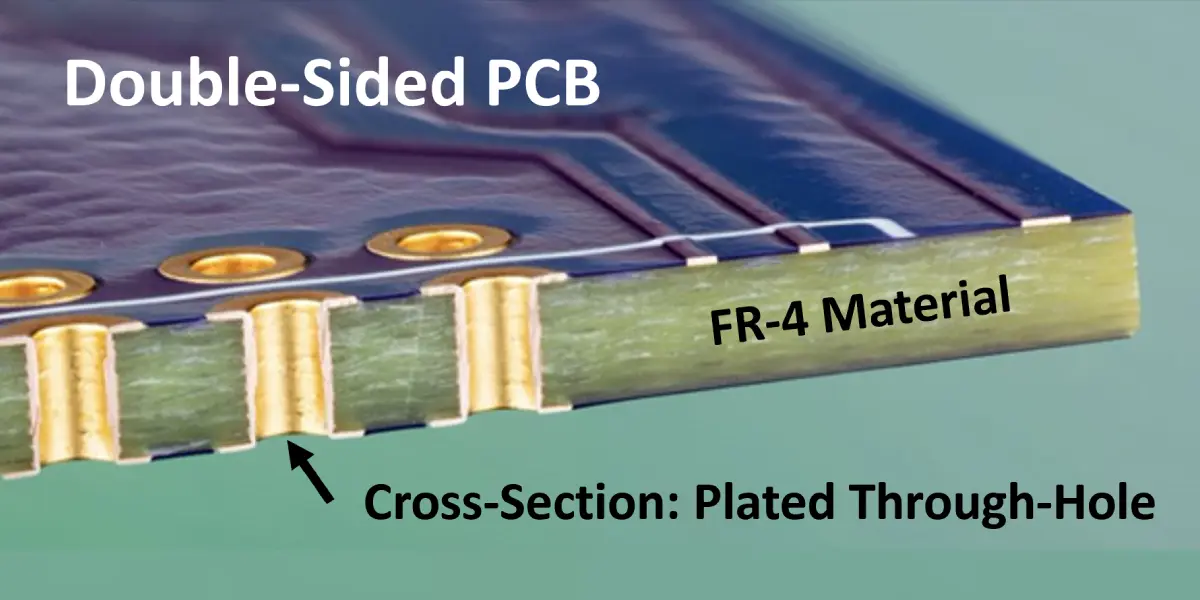
Double-sided PCBs feature conductive traces and components on both sides of the substrate, connected via plated through-holes, making them ideal for moderately complex circuits. Material choice directly influences key attributes such as thermal management, mechanical stability, and signal integrity. In manufacturing, the substrate must endure lamination, drilling, plating, and soldering processes while meeting qualification standards like IPC-6012 for rigid printed boards. Poor material selection leads to issues like delamination, warpage, or reduced lifespan under thermal cycling. For electric engineers, aligning material properties with application needs ensures compliance and performance. Factory experience shows that FR-4 dominates due to its process compatibility, yet alternatives shine in niche high-stress scenarios.
FR-4 in Double-Sided PCB Applications: Strengths and Limitations
FR-4 double-sided PCBs use a fiberglass-reinforced epoxy resin laminate, providing excellent mechanical strength and flame retardancy suitable for most consumer and industrial electronics. This material offers good dielectric properties and dimensional stability under standard operating conditions, making it a baseline for double-sided PCB material selection. During fabrication, FR-4 supports standard processes like electroless plating and solder mask application without special handling. However, its glass transition temperature limits use in prolonged high-temperature environments, where softening can cause warpage or via failures. Acceptability criteria in IPC-A-600 guide inspections for defects like voids or resin-rich areas in FR-4 boards. Engineers value FR-4 for cost-efficiency in prototypes and low-to-medium volume production.
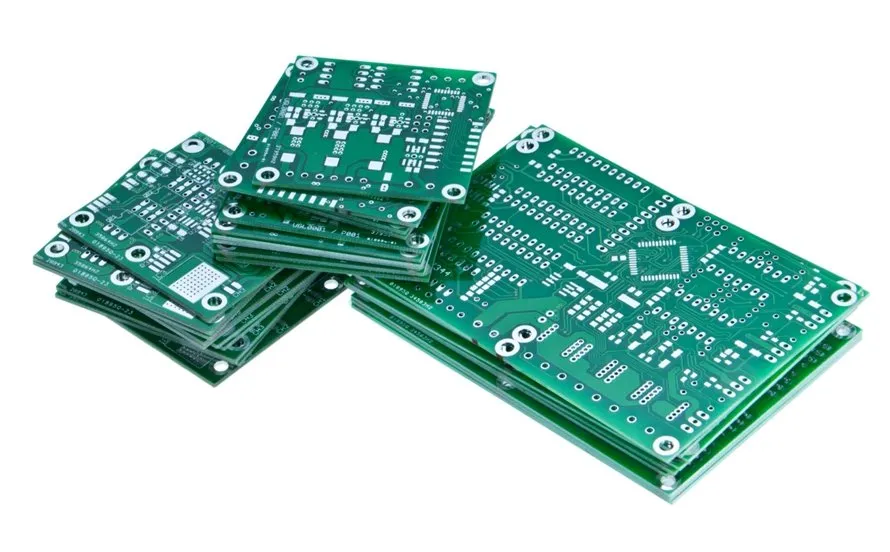
Standard FR-4 performs reliably up to typical reflow soldering profiles, but repeated thermal excursions reveal its limitations compared to alternatives. Factory data indicates higher rejection rates in high-heat assemblies due to CTE mismatch with copper. Despite this, enhancements like high-Tg FR-4 grades extend usability by improving heat resistance during assembly.
Alternative Double-Sided PCB Materials for Enhanced Performance
Alternative double-sided PCB materials address FR-4 shortcomings in thermal, electrical, or mechanical demands. Polyimide substrates excel in high-temperature double-sided PCB applications, maintaining integrity beyond standard epoxy limits due to superior thermal stability and flexibility. These materials suit aerospace or automotive environments with flex requirements alongside double-sided routing. Ceramic double-sided PCBs, often based on alumina or similar inorganic substrates, provide exceptional thermal conductivity for power electronics, dissipating heat far better than organic laminates. Metal-core options integrate a thick metal base for heat spreading in LED or power modules, though they demand careful via design to avoid shorts.
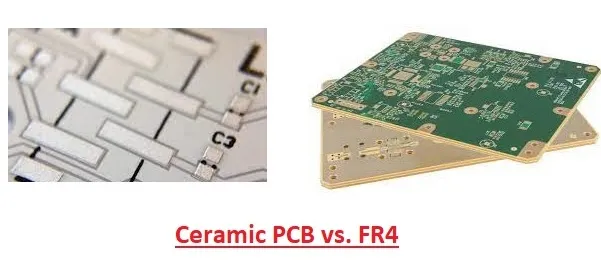
PTFE-based materials offer low-loss dielectrics for RF double-sided designs, minimizing signal attenuation at high frequencies. Each alternative requires adjusted fabrication parameters, such as specialized drilling for ceramics or controlled lamination pressures for polyimides. Factory insights emphasize pre-qualification testing to match process capabilities.
Key Comparison Factors in Double-Sided PCB Material Selection
When evaluating FR-4 double-sided PCB against alternatives, thermal properties top the list for electric engineers. FR-4's moderate conductivity suffices for general use, but ceramics outperform in high-power scenarios by rapidly transferring heat from components. Mechanical aspects like CTE influence reliability; mismatches cause stress in plated through-holes during temperature swings. Electrical performance varies, with polyimide retaining low dissipation factors at elevated temperatures unlike FR-4. Cost escalates from FR-4 to ceramics, impacting scalability in production.
- Thermal Conductivity - FR-4: Moderate; Polyimide: Good; Ceramic: Excellent.
- High-Temp Suitability - FR-4: Standard; Polyimide: High; Ceramic: Extreme.
- Cost - FR-4: Low; Polyimide: Medium-High; Ceramic: High.
- Process Compatibility - FR-4: High; Polyimide: Medium; Ceramic: Low.
- Flex Capability - FR-4: Rigid; Polyimide: Flexible; Ceramic: Rigid.
This comparison aids quick double-sided PCB material selection, balancing application needs against manufacturing feasibility. Visual warpage tests often reveal ceramic stability post-reflow.
Dimensional stability under humidity also differs; ceramics resist moisture absorption better than epoxy-based FR-4.
Best Practices for Selecting and Implementing Materials
Start double-sided PCB material selection by defining operational extremes like maximum temperature and power density. Consult IPC-4101 specifications for laminate qualification to ensure supplier consistency. Prototype with FR-4 for validation, then scale to alternatives only if metrics like thermal resistance demand it. In factories, qualify processes for each material, adjusting etchants or soldermask cures as needed. Collaborate with fabrication partners early to avoid surprises in yield or lead times. For high-temperature double-sided PCB designs, incorporate thermal vias and modeling to predict hotspots.
Conduct reliability tests simulating end-use conditions, focusing on solder joint integrity. Document trade-offs to inform future projects.
Conclusion
FR-4 remains the cornerstone for FR-4 double-sided PCB applications due to its versatility and economy, but alternatives like polyimide and ceramic double-sided PCBs unlock performance in harsh environments. Electric engineers benefit from weighing thermal, mechanical, and cost factors against standards like IPC-6012. Strategic double-sided PCB material selection enhances reliability while controlling expenses. Factory-driven choices prevent common pitfalls like thermal failures. As designs evolve, blending materials in hybrid stacks offers further optimization.
FAQs
Q1: What factors drive double-sided PCB material selection for electric engineers?
A1: Key drivers include operating temperature, power dissipation, frequency needs, and mechanical stress. FR-4 suits general applications, while high-temperature double-sided PCB demands polyimide or ceramics for stability. Standards like IPC-A-600 ensure visual and functional acceptability post-fabrication. Evaluate CTE mismatch to avoid via cracking.
Q2: When should I choose ceramic double-sided PCB over FR-4?
A2: Opt for ceramic double-sided PCB in high-power or extreme thermal scenarios where superior conductivity prevents hotspots. FR-4 falls short in prolonged heat exposure, risking delamination. Factory processes for ceramics involve thin-film deposition, suiting specialized production. Confirm design compatibility early.
Q3: How does high-temperature double-sided PCB using alternatives improve reliability?
A3: Alternatives like polyimide maintain dielectric strength at elevated temperatures, reducing failures in automotive or industrial use. They exhibit lower warpage during reflow compared to standard FR-4. IPC-6012 qualification verifies performance under stress. This extends assembly yields and field life.
Q4: Is FR-4 always sufficient for double-sided PCB prototypes?
A4: Yes, for most low-to-medium complexity prototypes, FR-4 double-sided PCB offers quick turnaround and low cost. Transition to alternatives only if thermal simulations predict exceedance. Factory alignment prevents redesigns.
References
IPC-6012E - Qualification and Performance Specification for Rigid Printed Boards. IPC, 2017
IPC-A-600K - Acceptability of Printed Boards. IPC, 2020
IPC-4101D - Specification for Base Materials for Rigid and Multilayer Printed Boards. IPC, 2006