Introduction
Epoxy conformal coating stands out in printed circuit board protection due to its exceptional durability against harsh conditions. Electric engineers often select this coating for applications where exposure to aggressive chemicals or mechanical wear is inevitable. Unlike softer alternatives, epoxy forms a hard, protective barrier that maintains circuit integrity over extended periods. This article explores epoxy conformal coating properties, application techniques, removal processes, and ideal uses in demanding industrial settings. Understanding these aspects ensures optimal performance in real-world deployments. By adhering to established guidelines, engineers can leverage epoxy's strengths effectively.
What Is Epoxy Conformal Coating and Why It Matters
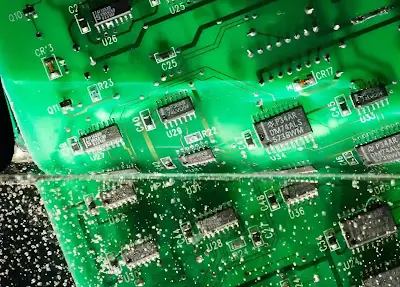
Epoxy conformal coating, classified as Type ER in industry classifications, consists of a two-component resin system that cures into a rigid, thermoset film. Applied in thin layers over assembled PCBs, it conforms to component contours while providing insulation and environmental shielding. This coating excels where other materials like acrylic or silicone fall short in toughness. In industrial environments, PCBs face solvents, acids, abrasion from handling, and contaminants that can degrade unprotected boards. Epoxy conformal coating properties address these threats directly, extending operational life and reducing failure rates. Its relevance grows in sectors such as oil and gas, automotive, and marine electronics, where reliability under stress is paramount.
Engineers value epoxy for its balance of protection without excessive thickness, typically aligning with standard coating specifications. Compliance with IPC-CC-830 ensures the material withstands dielectric breakdown, thermal cycling, and moisture ingress tests. Why it matters becomes clear when considering downtime costs from unprotected circuits. Selecting epoxy prevents issues like corrosion-induced shorts or mechanical damage during vibration-heavy operations. This makes it a strategic choice for long-term deployments.
Key Epoxy Conformal Coating Properties
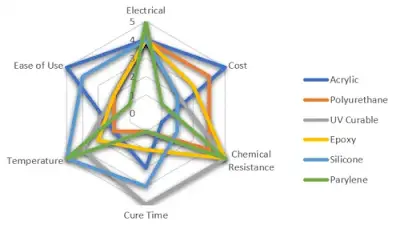
Epoxy conformal coating properties include superior resistance to a wide range of chemicals, including acids, alkalis, fuels, and solvents. The cured film creates an impermeable barrier that prevents penetration and degradation of underlying traces and components. Abrasion resistance ranks highest among common coating types, thanks to its hardness and toughness, making it ideal for PCBs subject to frequent handling or rubbing contacts. Dielectric strength remains robust, supporting high-voltage applications without arcing risks.
Moisture and humidity resistance is strong, though not as flexible as silicone variants, which suits static industrial setups. Adhesion to substrates like FR-4 laminates and metal leads is excellent, minimizing delamination under thermal expansion. Compared to polyurethane, epoxy offers better solvent resistance but lower elasticity, influencing selection based on mechanical flex needs. These properties align with performance criteria in IPC/HDBK-830, guiding qualification for demanding uses.
Thermal stability provides good protection up to moderate temperatures, though engineers monitor glass transition points during design. Salt spray resistance further enhances suitability for coastal or de-icing fluid-exposed equipment. Overall, epoxy conformal coating properties deliver unmatched defense in abrasive, chemically aggressive scenarios.
Epoxy Conformal Coating Application Methods
Epoxy conformal coating application requires precise preparation to achieve uniform coverage and avoid defects like bubbles or fisheyes. Start by cleaning the PCB thoroughly with isopropyl alcohol to remove fluxes and contaminants, ensuring strong bonding. Mask sensitive areas such as connectors and test points using tape or fixtures to prevent coating migration. Common methods include selective spraying for targeted coverage, dipping for full immersion on complex boards, and brushing for repairs or prototypes.
Spraying demands a controlled booth with proper ventilation, applying multiple thin passes to build 25 to 75 micron thickness. Dipping involves lowering the board into the mixed epoxy resin at controlled speed, followed by drainage and curing. Cure times vary by formulation, often requiring elevated temperatures for full cross-linking, typically 24 hours at room temperature post-bake. Engineers optimize viscosity with thinners if needed, maintaining IPC-A-610 class criteria for edge coverage and holidays.
Post-application inspection uses UV fluorescence or wet holiday detection to verify continuity. Humidity control during mixing prevents premature reactions. These steps ensure reliable epoxy conformal coating application in production flows.
Epoxy Conformal Coating Removal Techniques
Epoxy conformal coating removal poses challenges due to its thermoset nature and strong adhesion, demanding careful methods to avoid board damage. Mechanical abrasion serves as a primary approach, using fine abrasives, scraping tools, or micro-blasters on localized areas. This technique suits rework where precision matters, though it risks substrate scratches if overdone. Always protect nearby components with masking.
Chemical strippers formulated for epoxies, such as methylene chloride-based solutions, soften the film for peeling or wiping. Soak times extend longer than for acrylics, often requiring agitation or ultrasonics for efficacy. Neutralize residues post-removal to prevent corrosion. Thermal methods involve heating to degrade the coating, but limit to low temperatures to safeguard components.
Plasma etching offers a clean, dry alternative for high-value boards, selectively removing layers without residues. Combine methods for efficiency, like chemical preheat followed by abrasion. Epoxy conformal coating removal demands operator skill and safety protocols, prioritizing minimal impact on circuit performance.
Best Epoxy Conformal Coating for Harsh Chemicals in Industrial Environments
Selecting the best epoxy conformal coating for harsh chemicals involves evaluating resistance profiles against specific threats like hydraulic fluids or cleaning agents. Two-part epoxies with high cross-link density outperform in prolonged exposure, forming barriers that resist permeation. For industrial environments rife with abrasion and corrosives, epoxy surpasses softer coatings in longevity. Applications in petrochemical plants or heavy machinery benefit from this robustness.
Conformal coating for industrial environments must handle vibration and thermal cycling alongside chemicals. Epoxy's rigidity provides stability, though hybrid formulations improve flexibility if flexing occurs. Test compatibility with assembly processes, ensuring cure schedules fit production timelines. Field performance data underscores epoxy's edge in oil rigs or chemical processing equipment.
Pair with robust enclosures for synergistic protection. Engineers specify based on exposure spectra, prioritizing abrasion and solvent holdouts.
Practical Best Practices and Troubleshooting
Implement best practices by qualifying coatings per IPC-CC-830 protocols, verifying dielectric, adhesion, and flexibility post-cure. Control mixing ratios precisely to avoid weak spots from incomplete curing. Store components in dry conditions to prevent moisture entrapment during application. For troubleshooting, address pinholes by recoating thinned areas promptly.
Monitor cure ovens for uniform heating, preventing soft spots. In high-volume production, automate selective application to reduce variability. Test for compatibility with potting compounds if multilayer protection applies. Common issues like cracking stem from thermal mismatch; select low-stress epoxies accordingly.
Document processes for repeatability, aiding audits. These steps maximize epoxy conformal coating properties in real applications.
Conclusion
Epoxy conformal coating delivers unmatched chemical and abrasion resistance, making it indispensable for electric engineers tackling industrial challenges. Its properties, from impermeable barriers to tough surfaces, safeguard PCBs effectively. Proper application, removal techniques, and best practices ensure success. In harsh environments, epoxy outperforms alternatives reliably. Integrate these insights into designs for enhanced durability and performance.
FAQs
Q1: What are the main epoxy conformal coating properties that suit industrial use?
A1: Epoxy conformal coating properties feature exceptional resistance to chemicals, abrasion, and moisture, forming a hard protective layer. This rigidity excels in environments with solvents or mechanical wear, outperforming flexible types like silicone. Adhesion and dielectric strength support reliable operation. Standards like IPC-CC-830 validate these traits for qualification.
Q2: How is epoxy conformal coating application best performed?
A2: Epoxy conformal coating application involves cleaning, masking, and methods like spraying or dipping for uniform thin films. Mix two-part resins accurately, apply in passes, and cure under controlled heat. Inspect for defects using holiday detection. This ensures conformance to IPC-A-610 criteria, minimizing voids in production. Ventilation and PPE are essential.
Q3: What techniques work for epoxy conformal coating removal?
A3: Epoxy conformal coating removal uses mechanical abrasion, chemical strippers, or plasma for precision rework. Abrade carefully to avoid substrate damage, or soak in epoxy-specific solvents with agitation. Thermal softening aids peeling but limits heat exposure. Mask components and neutralize residues post-process. These methods preserve board integrity during repairs.
Q4: When is the best epoxy conformal coating for harsh chemicals recommended?
A4: The best epoxy conformal coating for harsh chemicals applies in industrial environments with acids, fuels, or abrasives. Its superior resistance prevents degradation where acrylics fail. Select for static, high-stress setups prioritizing durability over rework ease. Pair with testing for specific exposures to optimize protection.
References
IPC-CC-830 — Qualification and Performance of Electrical Insulation and Protection Materials for Printed Wiring Boards. IPC
IPC/HDBK-830 — Guidelines for Design, Selection, and Application of Conformal Coatings. IPC
IPC-A-610 — Acceptability of Electronic Assemblies. IPC