Introduction
In the world of printed circuit board design and manufacturing, material selection plays a pivotal role in determining performance, reliability, and cost-effectiveness. FR-4 remains the go-to substrate for the majority of applications due to its balanced properties and affordability, while polyimide emerges as a premium choice for demanding environments. Electrical engineers often face the challenge of balancing thermal demands, mechanical stresses, and budget constraints when specifying PCB materials. This article compares polyimide and FR-4 in depth, highlighting their properties, applications, and trade-offs to guide informed decision-making. By understanding polyimide PCB advantages and disadvantages alongside FR-4 limitations, engineers can optimize designs for high-reliability sectors. Factory-driven insights reveal how these materials align with production processes and industry standards.
Understanding FR-4: The Industry Standard
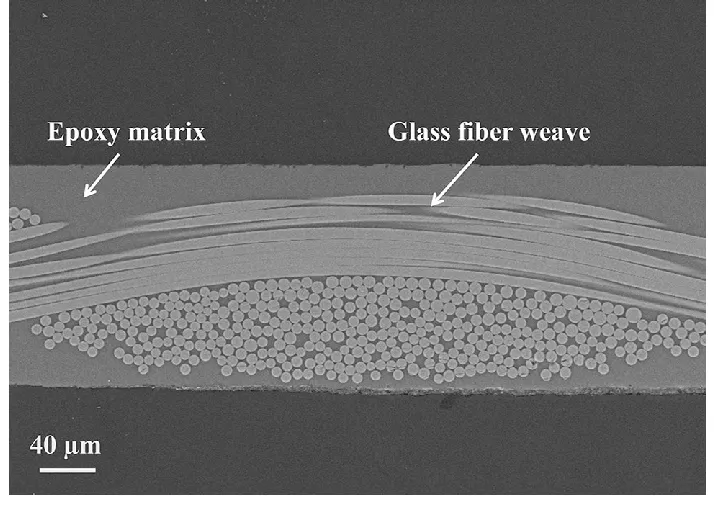
FR-4, defined under IPC-4101 as a flame-retardant epoxy resin reinforced with woven glass fabric, serves as the baseline for rigid PCBs in most consumer, automotive, and industrial electronics. Its composition provides excellent mechanical strength, dimensional stability, and electrical insulation at a low cost, making it suitable for volumes from prototypes to mass production. The material exhibits a dielectric constant around 4.5 and good solderability, which supports standard surface-mount assembly processes. However, FR-4's performance degrades above its glass transition temperature, typically ranging from 130°C to 170°C depending on the grade, leading to increased CTE and potential warpage. In manufacturing, FR-4 laminates undergo straightforward pressing at moderate temperatures, enabling high yields and scalability. Engineers appreciate its predictability in signal integrity for frequencies up to several GHz.
Polyimide: A High-Performance Alternative
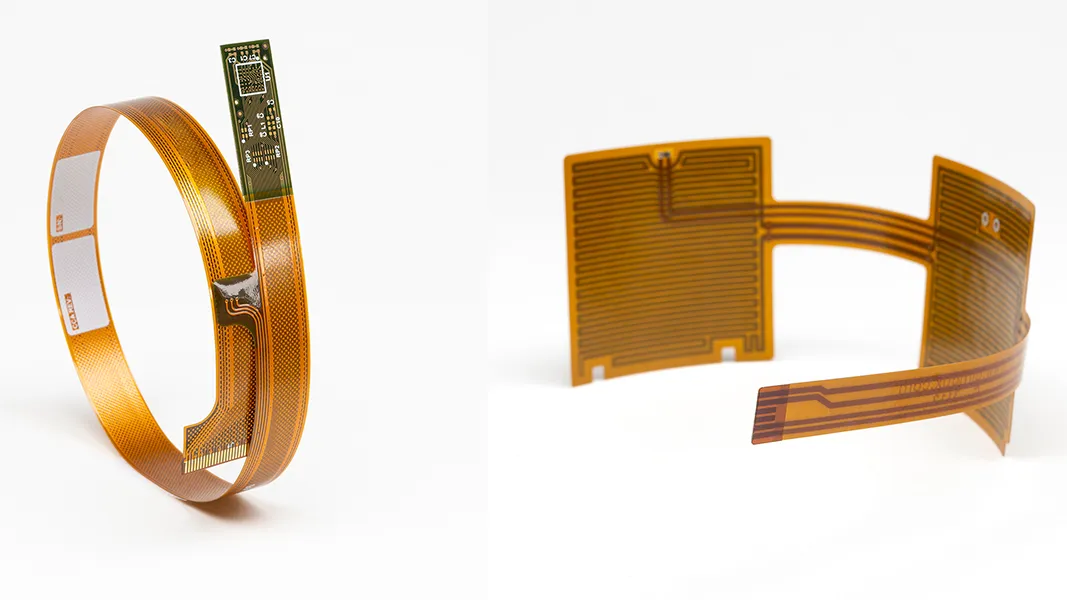
Polyimide PCBs utilize a thermoset polymer known for exceptional thermal stability, often specified in IPC-4101 slash sheets for high-temperature laminates. This material forms either rigid boards or flexible circuits, offering superior resistance to heat, chemicals, and radiation compared to epoxy-based substrates. Its structure allows operation in environments exceeding 200°C continuously, with decomposition temperatures well above 400°C. Polyimide's lower coefficient of thermal expansion minimizes stress on components during thermal cycling, a critical factor in multilayer designs. From a factory perspective, processing polyimide requires elevated lamination temperatures and specialized handling to prevent voids or delamination. Electrical engineers value its use in applications where FR-4 would fail prematurely.
Key Material Properties Comparison
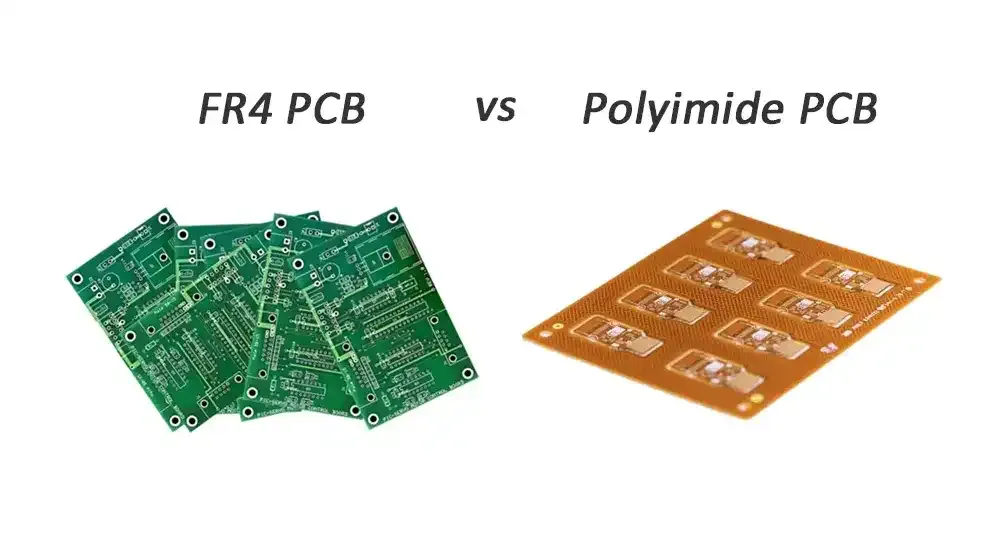
When evaluating FR-4 PCB alternatives, engineers must scrutinize thermal, mechanical, and electrical properties. FR-4 demonstrates robust tensile strength around 300-400 MPa but suffers from higher Z-axis CTE, approximately 50-70 ppm/°C below Tg, which spikes dramatically afterward, risking via failures in reflow soldering. Polyimide counters this with a CTE closer to 20-40 ppm/°C across a broader temperature range, enhancing reliability in mismatched CTE assemblies like those with ceramic packages. Dielectric properties favor FR-4 for low-loss applications at room temperature, though polyimide maintains stability at elevated temperatures. Moisture absorption poses a challenge for polyimide, potentially altering electrical characteristics if not baked out properly per IPC-6012 guidelines. Overall, these differences dictate material choice based on operational extremes.
- Glass Transition Temp (Tg): FR-4 typical 130-170°C; Polyimide typical >250°C
- CTE (Z-axis, ppm/°C): FR-4 50-70 (below Tg); Polyimide 20-40
- Operating Temp Range: FR-4 -55°C to 130°C; Polyimide -269°C to 300°C+
- Dielectric Constant (1 MHz): FR-4 ~4.5; Polyimide ~3.5
- Flexural Strength: FR-4 high (rigid); Polyimide excellent (flex/rigid)
Polyimide PCB Advantages and Disadvantages
Polyimide PCB advantages shine in high-temperature reliability, where it withstands prolonged exposure without softening or degrading, unlike FR-4 which warps under similar conditions. Its chemical inertness resists solvents and fuels encountered in aerospace or automotive under-hood applications, reducing corrosion risks during assembly or service. Flexibility enables compact, vibration-resistant designs in rigid-flex formats, ideal for wearables or sensors. Low outgassing supports vacuum environments, a boon for space electronics. However, polyimide PCB disadvantages include higher moisture sensitivity, necessitating stringent baking protocols to avoid popcorn effects in reflow per J-STD-020 guidelines. Processing complexities, such as longer cure times, can extend lead times in production.
From a manufacturing standpoint, polyimide demands precise control over pressure and temperature during lamination to achieve uniform adhesion. Engineers report challenges in drilling finer vias due to its toughness, potentially increasing tool wear. Despite these hurdles, the material's longevity offsets rework costs in mission-critical systems. Signal propagation benefits from consistent dielectric properties over temperature swings. Balancing these factors ensures optimal performance without over-specification.
Polyimide PCB Cost vs FR-4: Economic Considerations
Polyimide PCB cost vs FR4 reveals a stark premium, often several times higher due to raw material expenses and specialized fabrication steps. FR-4's economies of scale keep per-square-inch pricing low, supporting high-volume runs with minimal tooling adjustments. Polyimide incurs added costs from high-temperature presses, extended cycle times, and yield sensitivities during etching or plating. Engineers must justify the investment through lifecycle analysis, where polyimide's durability reduces field failures and replacements. In prototypes, FR-4 enables rapid iteration at a fraction of the expense. Factory data underscores that polyimide suits low-to-medium volumes in high-reliability niches, not commodity products.
Budget-conscious designs explore hybrid approaches, blending FR-4 cores with polyimide flex extensions. Procurement teams factor in total ownership costs, including testing for IPC-6012 compliance. While initial outlay deters casual use, polyimide delivers ROI in harsh environments. Cost modeling tools help quantify thresholds for switching materials.
FR-4 PCB Alternatives: When to Consider Polyimide
FR4 PCB alternatives become essential for applications pushing thermal or mechanical limits, with polyimide leading for extreme conditions. High-Tg FR-4 variants extend usability to 180°C but fall short of polyimide's 250°C+ threshold. BT resins or ceramics offer other paths for RF or power, yet polyimide excels in combined flex and heat demands. Engineers assess via thermal simulations, ensuring material matches component specs. Standards like IPC-4101 guide slash-sheet selection for precise property matching.
Transitioning involves design reviews for impedance control and solder joint integrity. Prototyping validates assumptions before scaling.
Applications and Best Practices
FR-4 dominates telecommunications, computing, and consumer devices where ambient temperatures stay below 100°C. Polyimide thrives in avionics, downhole drilling, and electric vehicles' power modules, enduring 200°C+ with vibration. Hybrid PCBs leverage both for cost-performance optimization.
Best practices start with defining environmental profiles: max temp, humidity, mechanical shock. Select per IPC-4101 specs, prioritizing Td over Tg for lead-free processes. Bake polyimide pre-assembly to <0.1% moisture. Use controlled impedance stacks to mitigate Dk variations. Factory audits ensure Class 3 compliance per IPC-6012.
Conclusion
Choosing between polyimide and FR-4 hinges on application demands, with FR-4 suiting standard electronics and polyimide excelling in extremes. Polyimide PCB advantages in thermal stability and flexibility justify its cost premium for high-reliability needs, while FR-4 offers versatility at scale. Engineers benefit from standards-aligned selection to avoid pitfalls like delamination or warpage. Factory insights emphasize process compatibility for yields. Ultimately, lifecycle reliability guides the decision, ensuring robust performance.
FAQs
Q1: What are the main polyimide PCB advantages and disadvantages compared to FR-4?
A1: Polyimide offers superior thermal stability up to 300°C, low CTE for better component matching, and flexibility for compact designs, making it ideal for harsh environments. Disadvantages include higher polyimide PCB cost vs FR4, increased moisture absorption requiring baking, and complex processing with longer cycles. FR-4 provides cost-effective rigidity for moderate temps but degrades above 170°C. Select based on thermal profiles per IPC standards.
Q2: How does polyimide PCB cost vs FR4 impact project budgets?
A2: Polyimide significantly exceeds FR-4 costs due to premium resins and specialized manufacturing, often by factors of 3-10 for equivalent boards. FR-4 enables low prototype expenses and high-volume scaling. Use polyimide when reliability savings offset upfront costs, such as in aerospace. Conduct total cost of ownership analysis including testing and rework.
Q3: Is polyimide a viable FR4 PCB alternative for high-temperature applications?
A3: Yes, polyimide serves as a premier FR4 PCB alternative for operations above 200°C, offering unmatched stability and chemical resistance. It aligns with IPC-6012 for qualification in multilayers. Consider hybrids for cost control. Validate via thermal cycling tests.
Q4: When should electrical engineers choose polyimide over FR-4?
A4: Opt for polyimide in flex circuits, >200°C environments, or vibration-heavy uses where FR-4 risks failure. FR-4 suffices for <130°C standard boards. Reference IPC-4101 for specs and perform FEA for CTE mismatch.
References
IPC-4101E - Specification for Base Materials for Rigid and Multilayer Printed Boards. IPC, 2017
IPC-6012E - Qualification and Performance Specification for Rigid Printed Boards. IPC, 2018
J-STD-020E - Moisture/Reflow Sensitivity Classification for Nonhermetic Solid State Surface Mount Devices. JEDEC, 2014