Introduction
Small-batch PCB manufacturing presents unique challenges compared to high-volume production, where statistical process controls and economies of scale help mitigate defects. In runs of just tens or hundreds of boards, every unit must meet stringent reliability requirements without the buffer of large sample sizes to average out variations. Effective pcb quality control becomes paramount, as even minor inconsistencies can lead to field failures in critical applications like medical devices or aerospace systems. Factory teams focus on rigorous upfront planning and individualized inspections to uphold standards. This approach ensures that small batches deliver the same performance as mass-produced ones. Engineers benefit from tailored pcb testing methods that verify functionality early in the process.

Challenges of Small-Batch PCB Production and Why Quality Matters
Small-batch PCB manufacturing involves producing limited quantities, often customized for prototypes or niche markets, which limits opportunities for process optimization through repetition. Without extensive data from repeated runs, factories rely heavily on manual oversight and precise equipment calibration to catch defects. Variations in material lots or environmental conditions during fabrication can amplify risks, making pcb quality control essential for consistent outcomes. Reliability directly impacts end-product performance, as a single faulty board in a batch can disrupt entire projects. Procurement teams and engineers demand assurance that boards withstand operational stresses like thermal cycling and vibration. Prioritizing quality in small batches prevents costly rework and builds trust in the supply chain.
In high-volume settings, automated statistical sampling suffices, but small batches require 100% inspection where feasible. Factory insights reveal that early detection through visual and electrical checks reduces scrap rates significantly. Adhering to established guidelines ensures boards meet performance criteria despite low volumes. This factory-driven emphasis on precision separates reliable providers from others.
Core PCB Testing Methods for Small-Batch Reliability
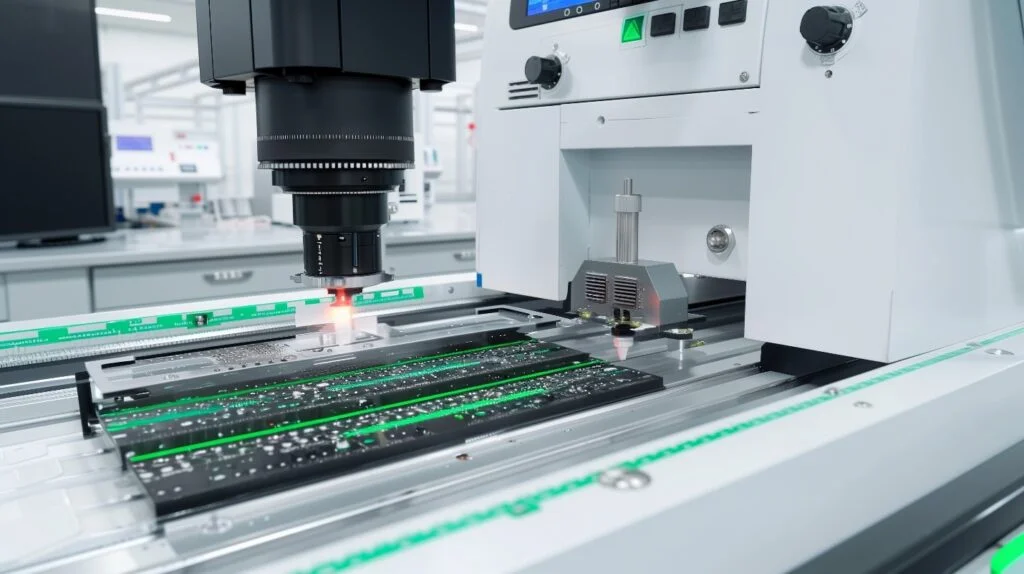
Pcb testing methods in small-batch production emphasize a combination of non-destructive and functional verifications to confirm board integrity without excessive handling. Automated optical inspection (AOI) scans surfaces for defects like opens, shorts, and solder mask issues, providing rapid feedback during fabrication. X-ray inspection reveals hidden flaws in vias, barrels, and multilayer alignments, crucial for dense designs common in engineering prototypes. Electrical testing, including flying probe for in-circuit checks, verifies continuity and resistance on unwired boards. These methods adapt well to small volumes, as they do not rely on fixtures designed for mass production.
Functional testing simulates real-world operation post-assembly, exposing intermittent issues under power. Boundary scan techniques test interconnections without physical probes, ideal for complex boards. Thermal imaging during stress tests identifies hot spots from poor traces or vias. Factories sequence these tests to balance thoroughness and turnaround time. Engineers appreciate this layered approach, as it correlates directly to field performance.
Environmental stress screening accelerates failure modes through temperature cycling and humidity exposure. Vibration testing per relevant guidelines simulates mechanical stresses. Each method contributes to pcb reliability testing by quantifying margins against expected lifecycles. Small-batch workflows integrate these without diluting focus.
IPC Standards PCB: Guiding Quality in Every Batch
Ipc standards pcb provide the backbone for quality assurance, defining acceptability criteria applicable regardless of production scale. IPC-A-600M outlines visual and dimensional standards for bare boards, from conductor width to hole registration. Factories train operators to these class levels, ensuring small-batch boards match larger runs in conformance. IPC-6012F specifies qualification tests for rigid boards, including plating thickness and solderability. Compliance verifies that processes yield reliable products under operational loads.
These standards promote uniformity across suppliers, aiding engineers in design validation. Factories document adherence through internal audits, bridging gaps in small-batch data scarcity. Non-adjacent application avoids redundancy while reinforcing key principles.
Developing a Robust PCB Inspection Checklist
A comprehensive pcb inspection checklist streamlines quality control in small-batch manufacturing by systematizing checks at each stage. Incoming material review verifies laminate quality, copper foil uniformity, and drill entry specs against purchase orders. In-process inspections cover etching tolerances, plating uniformity, and solder mask alignment using micrometers and microscopes. Final bare board checks include bow and twist measurements, annular ring integrity, and cleanliness assessments.
Post-assembly, the checklist extends to solder joint fillet shapes, component placement, and contamination-free zones. Digital templates allow traceability, logging defects for root cause analysis. Engineers use this as a reference during supplier audits.
- Incoming - Key checks: Laminate thickness, copper weight, glass transition temp. Tools/Methods: Calipers, weighing scales, DSC.
- Fabrication - Key checks: Via fill, trace width, panel warpage. Tools/Methods: CMM, optical comparators.
- Final Bare Board - Key checks: Hole wall integrity, marking legibility, edge board quality. Tools/Methods: Cross-sectioning, visual under 10x mag.
- Assembly - Key checks: Solder voids, tombstoning, bridge-free joints. Tools/Methods: X-ray, AOI.
This table aids quick reference in factory settings. Regular updates align with evolving requirements.
PCB Reliability Testing Strategies for Small Batches
Pcb reliability testing in small batches focuses on accelerated life tests to predict long-term performance without exhaustive sampling. Thermal cycling between -40°C and 125°C exposes CTE mismatches in laminates and copper. Humidity bias testing combines 85% RH with voltage to detect ionic contamination effects. Mechanical shock and vibration profiles mimic handling and in-use dynamics.
Burn-in screening at elevated temperatures weeds out early failures. Data logging captures parametric shifts pre- and post-stress. Factories correlate results to mission profiles, providing engineers with confidence intervals. These tests ensure boards endure without degradation.
Highly accelerated stress tests (HAST) compress years of exposure into days, validating encapsulation integrity. Fracture mechanics assessments on samples predict fatigue life. Integration of these methods upholds reliability despite batch constraints.
Best Practices from Factory Floors
- Implement full traceability with lot coding from raw materials to shipment, enabling precise failure isolation.
- Operator certification to relevant standards minimizes human error.
- Preventive maintenance on equipment like etchers and ovens sustains process stability.
- Collaborate with design teams early to flag manufacturability issues.
- Custom fixturing for electrical tests accommodates unique layouts.
- Post-production feedback loops refine future runs.
Conclusion
Ensuring reliability in small-batch PCB manufacturing hinges on meticulous pcb quality control, diverse pcb testing methods, adherence to ipc standards pcb, structured pcb inspection checklists, and targeted pcb reliability testing. Factory-driven strategies overcome volume limitations, delivering boards that perform under real-world demands. Engineers gain dependable components for innovation. Prioritizing these elements secures quality without quantity.
FAQs
Q1: What are the primary pcb testing methods used in small-batch manufacturing?
A1: Pcb testing methods include AOI for surface defects, X-ray for internal features, flying probe electrical testing for continuity, and functional verification post-assembly. Environmental stresses like thermal cycling and vibration simulate operational conditions. These ensure comprehensive coverage despite low volumes, aligning with factory efficiency goals.
Q2: How do ipc standards pcb influence quality control processes?
A2: Ipc standards pcb, such as IPC-A-600M and IPC-6012F, define acceptability criteria for visual, dimensional, and performance aspects. Factories apply them across classes to standardize inspections and qualifications. This uniformity supports reliable small-batch production without scale dependencies.
Q3: What should a pcb inspection checklist include for reliability?
A3: A pcb inspection checklist covers incoming materials, in-process metrics like trace integrity, final bare board dimensions, and assembly solder joints. It incorporates bow/twist limits, cleanliness, and via quality checks. This systematic approach minimizes escapes in small batches.
Q4: Why is pcb reliability testing critical in low-volume runs?
A4: Pcb reliability testing accelerates failure modes through HAST, shock, and cycling to predict field performance. Small batches lack statistical averaging, so targeted tests provide essential data. Factories use results to validate processes and assure engineers of longevity.
References
IPC-A-600M - Acceptability of Printed Boards. IPC, 2025
IPC-6012F - Qualification and Performance Specification for Rigid Printed Boards. IPC, 2023
IPC-A-610H - Acceptability of Electronic Assemblies. IPC, 2019