Introduction
The RoHS Directive imposes strict limits on hazardous substances in electrical and electronic equipment to protect human health and the environment. Engineers designing printed circuit boards and electronic systems must navigate these restrictions while ensuring functionality and reliability. Exemptions allow continued use of certain substances like lead under specific conditions, but they come with time limits and renewal requirements. Understanding the RoHS exemptions list is crucial for compliance, especially as expiry dates approach and design choices impact manufacturability. This article breaks down the RoHS exemptions list, focuses on the RoHS exemption for lead, reviews RoHS exemption expiry dates, and outlines applying for RoHS exemption processes. Electric engineers will gain practical insights to integrate these into their workflows.

What Are RoHS Exemptions and Why Do They Matter for Electronic Design?
RoHS exemptions permit the use of restricted substances in applications where no feasible substitutes exist, balancing environmental goals with technical needs. These exemptions appear in Annex III for all electrical and electronic equipment categories and Annex IV for specific categories like medical devices and monitoring instruments. They undergo periodic review to assess substitute availability, reliability, and socioeconomic impacts. For electronic design, exemptions enable reliable solder joints, alloys, and ceramics that lead-free alternatives may not match in high-stress environments. Factory-driven perspectives emphasize that ignoring exemptions risks production delays or redesigns when materials exceed limits.
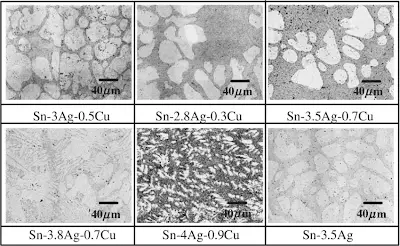
In PCB manufacturing, exemptions directly affect component selection and assembly processes. Lead-based solders, for instance, provide superior wetting and fatigue resistance compared to tin-silver-copper alloys in certain high-reliability applications. Engineers must verify exemption applicability per equipment category to avoid non-compliance during certification. Standards like IPC-6012E guide qualification of rigid printed boards, ensuring RoHS-compliant designs meet performance specs amid exemption constraints.
The RoHS Exemptions List: Key Entries and Focus on Lead
The RoHS exemptions list encompasses over 240 entries, primarily addressing mercury in lamps, lead in alloys and solders, and other substances in specialized uses. Annex III covers general applications across categories 1 through 11, while Annex IV targets categories 8, 9, and 11. Key lead exemptions include 6(a) for steel alloys up to 0.35% lead by weight, 6(b) for aluminum up to 0.4%, and 6(c) for copper alloys up to 4%. These support connectors, housings, and pins common in PCB assemblies.
The RoHS exemption for lead dominates electronics due to its role in solders and dielectrics. Exemption 7(a) allows lead-based alloys with 85% or more lead in high-melting solders for die attach and sealing. Exemption 7(c)-I permits lead in glass or ceramic matrix compounds, vital for capacitors and piezo devices. Recent delegated acts have split some exemptions, like 7(a)-I through VII for narrow applications, refining scope while maintaining usability. Factory insights reveal that these exemptions prevent reliability failures in thermal cycling, where lead-free options prone to tin whiskering underperform.
- 6(a)-I — Lead in steel for machining, up to 0.35% | Galvanized components, shields
- 6(c) — Copper alloy up to 4% lead | Connectors, terminals
- 7(a) — High-melt lead solders (≥85% Pb) | Hermetic seals, high-temp joints
- 7(c)-I — Lead in glass/ceramic compounds | Capacitors, high-voltage parts
RoHS Exemption Expiry Dates: Critical Timelines for 2026 and Beyond
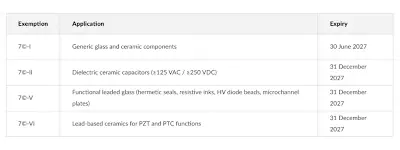
RoHS exemption expiry dates vary by entry and equipment category, with many lead exemptions renewed through 2027 but facing further scrutiny. Recent updates from November 2025 set June 30, 2027, as expiry for 7(a), 7(c)-I, 6(a)-I, 6(b)-II, and 6(c), applicable from July 1, 2026. However, new renewal requests submitted in December 2025 extend validity until decisions, potentially adding 12-18 months transition. Exemption 6(a) was not renewed for categories 8, 9, 11, expiring December 11, 2026.
Engineers must track category-specific dates: category 11 often sees earlier expiries like July 21, 2024, now rolled forward. Non-renewed items like 6(b)-I for categories 1-7,10 expire December 11, 2026, urging material swaps. J-STD-020E provides moisture sensitivity classification to validate lead-free transitions without exemptions. Proactive monitoring prevents supply chain disruptions as factories requalify assemblies.
Understanding RoHS Exemptions: Mechanisms in PCB and Component Design
Exemptions address technical barriers where substitutes compromise performance, such as lead's ductility in solders reducing voids during reflow. In PCB design, exemption 7(a) supports high-reliability joints in power electronics, where lead-free solders exhibit higher melting points and brittleness. Alloy exemptions like 6(c) ensure machinability in brass connectors without cracking. Ceramic lead in 7(c)-II maintains capacitance stability under voltage stress.
From a factory view, exemptions align with process controls under IPC-A-600K for board acceptability, verifying homogeneous material compliance. Designers evaluate life-cycle impacts, as required for exemptions, comparing tin-lead versus SAC305 solders in thermal fatigue. Substitutes must prove equivalent reliability via accelerated testing. Exemptions evolve with innovation, narrowing as nano-solders emerge.
Applying for RoHS Exemption: The Official Process
Applying for RoHS exemption demands comprehensive justification submitted to the European Commission. Start 18 months before expiry for renewals or when no substitute exists for new requests. Use the standard form detailing substance function, annual EU market volume, and alternatives analysis with life-cycle assessments per ISO 14040/14044. Include reliability data, supplier availability, and socioeconomic effects.
The process spans 18-24 months: completeness check, technical study with stakeholder consultation, draft directive review by Parliament and Council. Submit via email to ENV-ROHS@ec.europa.eu with supporting docs like test results. Decisions amend Annexes via Official Journal publication. Engineers collaborate with supply chains for evidence, ensuring factory data supports claims.
Best Practices for Navigating RoHS Exemptions in Electronic Design
Integrate exemption checks early in design reviews, mapping bill-of-materials to Annex III/IV entries. Prioritize category 1-7,10 exemptions nearing expiry, modeling alternatives in simulations. Collaborate with manufacturers for material declarations confirming exemption reliance. Transition plans include requalifying lead-free per IPC-6012E, mitigating warpage from higher reflow temps.
Monitor EU updates quarterly, as renewals like 2025's extend but refine scopes. Use closed-loop recycling for alloys under exemptions to minimize impurities. Document compliance for audits, balancing cost with risk. Factory insights stress pilot runs validating substitutes before scale-up.
Conclusion
RoHS exemptions provide essential flexibility for electronic design, particularly the RoHS exemption for lead in critical solders and alloys. Tracking the RoHS exemptions list and expiry dates ensures timely adaptations amid 2026-2027 changes. Applying for RoHS exemption requires rigorous data, but yields compliance security. Engineers leveraging these insights alongside standards like J-STD-020E and IPC-A-600K optimize sustainable, reliable PCBs. Stay vigilant on renewals to future-proof designs.
FAQs
Q1: What is the current RoHS exemptions list?
A1: The RoHS exemptions list in Annex III covers all EEE categories with entries like 6(a)-6(c) for lead alloys and 7(a) for solders, while Annex IV targets medical and monitoring gear. Recent 2025 updates renewed several to 2027, but new requests extend them further. Engineers access it via EU resources for precise applicability.
Q2: What are the key RoHS exemption expiry dates for lead?
A2: RoHS exemption expiry dates for lead include June 30, 2027, for 7(a), 6(c), and others post-2025 renewals, with extensions pending decisions. Some like 6(a) expire December 2026 for certain categories. Category 11 faces earlier risks. Monitor for transitions to avoid disruptions.
Q3: How does the RoHS exemption for lead impact PCB design?
A3: The RoHS exemption for lead enables high-melt solders in 7(a) for reliable joints and alloys in 6 series for machinable parts. Without it, lead-free shifts raise reflow challenges per IPC standards. Designs must specify exemptions to guide manufacturing.
Q4: What is involved in applying for RoHS exemption?
A4: Applying for RoHS exemption starts with the EU form, justifying no viable substitutes via LCA and reliability data, submitted 18 months early. Expect 18-24 month reviews with consultations. Success hinges on comprehensive evidence from design and factory tests.
References
IPC-6012E — Qualification and Performance Specification for Rigid Printed Boards. IPC, 2017
J-STD-020E — Moisture/Reflow Sensitivity Classification. JEDEC, 2014
IPC-A-600K — Acceptability of Printed Boards. IPC, 2020