Introduction
Small-batch PCB manufacturing plays a pivotal role in advancing wearable technology by enabling rapid prototyping and customization for emerging designs. Engineers working on wearables often require low-volume production runs, typically from one to a few hundred units, to test innovative features without the high costs of mass production. This approach supports wearable PCB design challenges, such as integrating sensors into compact, body-conforming forms that withstand daily movement and environmental exposure. Flexible substrates and miniaturized components become feasible in small batches, allowing teams to iterate quickly on prototypes for fitness trackers, health monitors, and smart textiles. As wearable devices evolve toward more sophisticated biometric capabilities, small-batch processes ensure that factories can handle unique specifications efficiently. The agility of this manufacturing method fuels innovation, bridging the gap between concept and market-ready products.

What Is Small-Batch PCB Manufacturing and Why It Matters for Wearable Technology
Small-batch PCB manufacturing refers to the production of printed circuit boards in limited quantities, often optimized for prototypes, pilot runs, or niche applications rather than high-volume output. Unlike mass production, which relies on automated lines for economies of scale, small-batch workflows emphasize flexibility in materials, layer counts, and feature sizes to accommodate custom requirements. Factories achieve this through modular tooling, shorter setup times, and manual oversight for precision tasks. In the context of wearables, this method matters because devices demand unconventional form factors that rigid, standard PCBs cannot provide. Flexible PCB manufacturing in small batches allows for polyimide-based boards that bend and fold, essential for seamless integration into clothing or accessories.
The relevance intensifies with the push for multifunctionality in wearables, where space constraints and user comfort dictate design choices. Small-batch production minimizes upfront investments, enabling electric engineers to refine wearable PCB design iteratively based on real-world testing. It also supports sustainability by reducing waste from overproduction during development phases. Without this capability, innovation in areas like continuous health monitoring would stall, as teams could not affordably validate complex assemblies. Ultimately, small-batch manufacturing aligns factory capabilities with the dynamic needs of wearable R&D, ensuring reliable performance in dynamic, human-contact environments.
Key Technical Principles in Small-Batch PCB Production for Wearables
Flexible PCB manufacturing begins with selecting appropriate substrates like polyimide or polyester films, which offer high thermal stability and ductility for repeated flexing. In small batches, processes such as adhesive lamination and coverlay application ensure uniform thickness and adhesion, critical for preventing delamination under strain. Photolithography and laser ablation create fine-line traces down to 50 microns, accommodating the density required in wearables. Factories control warpage through precise curing cycles and material matching, as excessive bending can lead to trace cracks. Compliance with IPC-6013 standards guides qualification, specifying performance criteria for flex and rigid-flex constructions to guarantee reliability.
Miniaturization drives miniaturized PCB assembly in wearables, where component pitches shrink to 0.3 mm or less for BGAs and QFNs. Small-batch lines use high-resolution stencil printing for solder paste deposition, followed by reflow soldering under nitrogen atmospheres to minimize voids. Advanced inspection via automated optical systems verifies joint integrity, addressing challenges like head-in-pillow defects common in fine-pitch parts. Engineers must account for thermal management, as dense layouts generate localized heat that could affect skin contact. These principles enable stacking of ASICs, passives, and sensors in volumes under 1 cubic centimeter.

Conformal coating PCB processes protect assemblies from moisture, sweat, and chemicals prevalent in wearable use. Materials like acrylics, silicones, or urethanes are selectively applied via spraying, dipping, or brushing in small batches to avoid bridging sensitive areas. Cure times vary by chemistry, with UV-curable options speeding throughput for prototypes. IPC-CC-830 outlines qualification tests for insulation resistance and thickness uniformity, ensuring coatings withstand humidity cycles without cracking. Proper masking of connectors and test points maintains functionality while enhancing durability.
For PCB for biometric sensors, integration focuses on signal integrity and low noise. Sensors for heart rate, ECG, or SpO2 require shielded traces and ground planes to isolate bioelectric signals from motion artifacts. Small-batch fabrication supports embedded vias and blind vias for multilayer stacks, optimizing routing in constrained spaces. Power delivery networks incorporate decoupling capacitors near sensors to stabilize voltage under varying loads. These PCBs often combine rigid-flex hybrids, where sensor islands remain rigid for mounting while interconnects flex.
Best Practices for Small-Batch Wearable PCB Manufacturing
Start with design for manufacturability in wearable PCB design, prioritizing bend radii greater than three times the board thickness to avoid stress concentrations. Simulate flex cycles using finite element analysis to predict failure points, adjusting trace widths accordingly. Panelize single prototypes on carrier frames to share setup costs, enabling economical etching and plating. Select copper weights of 1/2 oz for fine features, balancing conductivity with etch precision.
In flexible PCB manufacturing, maintain cleanroom conditions to prevent contamination on thin dielectrics. Use plasma etching for desmear after drilling, ensuring via reliability in high-density interconnects. Post-lamination, perform cross-section analysis to verify layer alignment within 50 microns.
For miniaturized PCB assembly, qualify components per JEDEC moisture sensitivity levels, baking boards pre-reflow to prevent popcorn effects. Employ fiducials for pick-and-place accuracy under 25 microns, and X-ray inspection for hidden joints. Underfill epoxies stabilize BGAs against mechanical shock from user movements.
Conformal coating PCB best practices include thickness mapping with eddy current gauges, targeting 25-75 microns per IPC-A-610 criteria. Test for adhesion via tape pull and thermal shock, simulating wearable sterilization cycles. Avoid pinholes by preheating boards to drive off volatiles.

Streamline small-batch workflows with digital twins of production lines, forecasting yields from Gerber data. Collaborate early with factories on stackups, specifying impedance controls for high-speed sensor interfaces.
Real-World Insights: PCBs for Biometric Sensors in Wearables
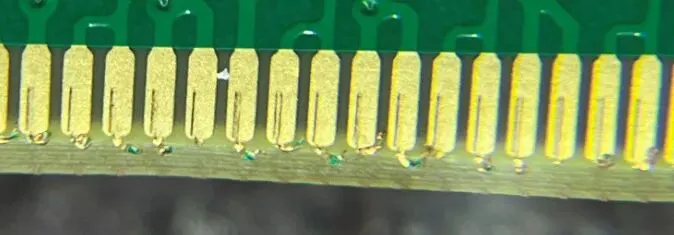
Developing PCB for biometric sensors in small batches reveals common pitfalls like EMI coupling in flex regions. Engineers mitigate this by routing analog signals on inner layers with dedicated shields. A typical ECG patch PCB uses four-layer flex with gold finger contacts for skin electrodes, assembled in runs of 50 units. Factories apply parylene coating for biocompatibility, passing 168-hour salt fog tests. Iteration focuses on reducing power to microamperes in sleep modes, extending battery life. These insights underscore how small-batch flexibility accelerates sensor fusion in next-gen wearables.
Conclusion
Small-batch PCB manufacturing empowers wearable innovation through adaptable processes for flexible, miniaturized, and protected designs. By adhering to core principles and best practices, engineers achieve reliable wearable PCB design outcomes. This approach not only supports prototyping but also scales insights for future production, driving advancements in biometric and health tech.
FAQs
Q1: What are the main challenges in flexible PCB manufacturing for wearables?
A1: Flexible PCB manufacturing demands precise control over material flex life and trace integrity to endure repeated bending. Small-batch runs benefit from standards like IPC-6013 for performance verification. Engineers address warpage via optimized lamination and select polyimides for high-temperature reflow compatibility. This ensures durability in dynamic wearable applications.
Q2: How does miniaturized PCB assembly impact wearable device performance?
A2: Miniaturized PCB assembly enables dense integration of sensors and processors, but requires fine-pitch soldering to avoid defects. JEDEC guidelines prevent moisture-related failures during reflow. Best results come from nitrogen soldering and AOI inspection, enhancing signal fidelity for biometric data. Wearables gain from lower power and smaller footprints.
Q3: Why is conformal coating essential for PCBs in wearables?
A3: Conformal coating PCB protects against sweat, humidity, and abrasion in body-worn devices. IPC-CC-830 qualifies materials for insulation and adhesion under environmental stress. Selective application preserves component access while adding moisture resistance. This extends reliability for continuous biometric sensor operation.
Q4: What considerations apply to PCB design for biometric sensors?
A4: Wearable PCB design for biometric sensors prioritizes low-noise routing and shielding to capture accurate signals. Multilayer flex stacks support sensor arrays with minimal crosstalk. Factories in small batches verify impedance for analog paths, ensuring data integrity amid motion.
References
IPC-6013DS — Qualification and Performance Specification for Flexible and Rigid-Flex Printed Boards. IPC, 2023
IPC-CC-830C — Qualification and Performance of Electrical Insulation and Conductor Covering Materials for Printed Boards. IPC, 2020
IPC-A-610H — Acceptability of Electronic Assemblies. IPC, 2020
JEDEC J-STD-020E — Moisture/Reflow Sensitivity Classification for Nonhermetic Surface Mount Devices. JEDEC, 2014