Introduction
Printed electronics are increasingly used in compact sensors, wearable devices, automotive interfaces, medical equipment, and other products that require lightweight and space-efficient circuitry. As these applications become more complex, manufacturers need printing processes that can create clear conductive patterns while maintaining stable production quality.
Fine line screen printing is one of the techniques used to produce detailed conductive features on flexible and rigid substrates. By controlling the screen, conductive ink, printing motion, and substrate condition, manufacturers can form circuit patterns without relying exclusively on traditional subtractive processes.
However, printing fine conductive features on flexible materials presents additional challenges. Flexible films may move during printing, surface energy may vary, and the ink must balance fine-line definition with reliable conductivity. These factors become even more important when the process is used for high-volume screen printing for flexible circuits.
This guide explains the main technical considerations, process controls, and quality checks involved in fine-line screen printing for printed electronics and flexible circuits.
What Is Fine Line Silkscreen?
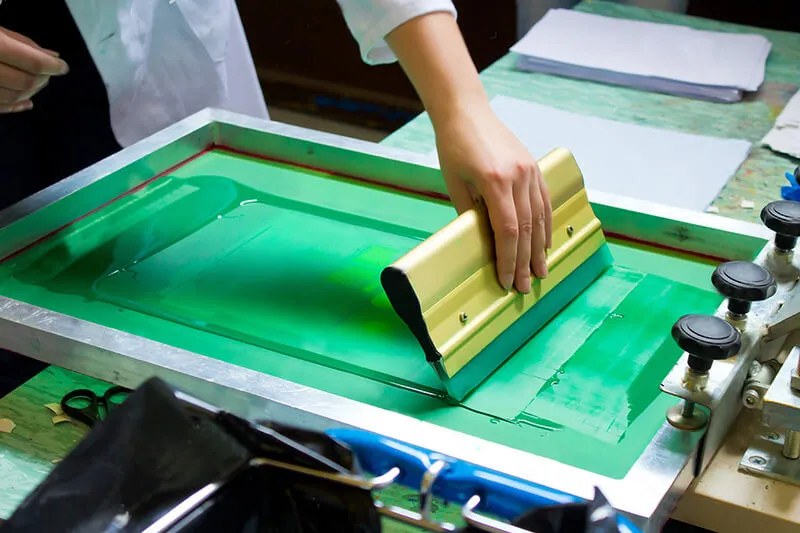
Fine line screen printing, often referred to as fine line silkscreen in printed electronics contexts, involves forcing conductive ink through a finely meshed screen onto a substrate to form intricate patterns. The process uses a stencil created on the screen to define the printed areas, where ink passes through open apertures while blocked elsewhere. This technique differs from traditional silkscreen on PCBs, which primarily applies non-conductive legend inks, by focusing on electrically functional layers with conductive ink printing. High-resolution printed electronics demand meshes with high thread counts and thin wires to achieve sharp edges and minimal spreading. Engineers appreciate how this method scales from prototypes to high-volume printed circuit manufacturing without specialized cleanroom environments. The result is durable circuitry integral to modern flexible electronics.
High-Volume Screen Printing for Flexible Circuits
Moving from a successful prototype to high-volume screen printing for flexible circuits requires much more than reproducing the same printed pattern repeatedly. The process must remain stable across production batches, ink lots, screen cleaning cycles, and changes in environmental conditions.
Flexible substrates make this more challenging because thin films can bend or shift under printing pressure. Dimensional changes caused by temperature or moisture can also affect registration, especially when multiple printed layers need to align with one another. At the same time, screen contamination, ink buildup, changes in ink condition, and screen wear can gradually affect print quality.
The first priority is therefore to establish a stable substrate-support system. Depending on the film and product geometry, manufacturers may use vacuum tables, rigid carriers, or custom fixtures to keep the printing area flat. The support should hold the substrate securely without stretching it or creating wrinkles. It should also maintain the same reference position when the substrate moves between printing, curing, inspection, and subsequent assembly processes.
Registration must be controlled in parallel. Fiducials and optical alignment systems can help the printer locate the substrate and maintain the intended pattern position, but the substrate itself must remain dimensionally stable. If the film expands, contracts, or shifts during the process, even a highly accurate vision system cannot completely eliminate the resulting variation. For volume production, registration should therefore be monitored throughout the run rather than checked only during initial setup.
The overall process should also be developed around a practical process window. Squeegee pressure, printing speed, screen tension, snap-off behavior, ink condition, screen cleaning, substrate support, and curing conditions all interact with one another. There is rarely one setting that works equally well for every flexible circuit. The objective is to identify a stable range in which the process continues to produce acceptable results despite normal production variation.
Why Fine Line Screen Printing Matters in Printed Circuit Manufacturing
High-resolution printed electronics enable smaller form factors and higher component densities, critical for next-generation devices constrained by space. Fine line screen printing reduces material waste compared to etching-based methods, aligning with sustainable manufacturing goals in PCB production. It supports rapid iteration, as screens can be quickly modified for design changes, accelerating time-to-market for electrical engineers. Conductive ink printing via this technique accommodates diverse substrates like polyimide films or glass, expanding applications in automotive and medical sectors. Factory-driven processes highlight its throughput advantages, producing thousands of units per hour with consistent quality. Ultimately, mastering advanced screen printing techniques ensures compliance with performance specs while lowering costs.
Technical Principles of Fine Line Silkscreen
The core of fine line screen printing lies in the interplay between screen construction, ink rheology, and printing dynamics. Screens feature high-tension meshes coated with photoemulsion, where ultraviolet exposure hardens areas outside the pattern, creating precise stencils. Conductive inks, formulated with metal particles suspended in binders, must exhibit pseudoplastic behavior to shear-thin under pressure and recover viscosity post-print. During printing, a squeegee sweeps across the screen at controlled angles and speeds, controlling ink transfer volume and minimizing distortion. Snap-off distance, the gap between screen and substrate, prevents smearing while ensuring clean release. These principles allow advanced screen printing techniques to produce features with sharp definition, vital for signal integrity in high-resolution printed electronics.
Mesh selection profoundly influences resolution in conductive ink printing. Finer threads and higher counts reduce aperture size, limiting ink flow to tighter patterns. Emulsion thickness and resolution determine stencil wall profiles, impacting ink deposition uniformity. Ink particle size must align with feature dimensions to avoid clogging or rough edges. Substrate surface energy affects wetting, where plasma treatments enhance adhesion without compromising conductivity. Factory experience shows that optimizing these elements per IPC-A-600 acceptability criteria yields reliable layers across production runs.
Advanced Screen Printing Techniques for High Resolution
Several refinements elevate standard screen printing to advanced levels for printed electronics. Electroformed nickel stencils offer superior edge definition over traditional emulsions, reducing undercutting in fine features. High-tension frames minimize deflection during printing, maintaining registration accuracy across large substrates. Multi-pass printing builds thicker conductive layers, enhancing current-carrying capacity without sacrificing resolution. Vacuum-assisted tables hold flexible substrates flat, countering warpage during ink curing. These techniques, combined with precise environmental controls like humidity and temperature, enable conductive ink printing at densities suitable for RF circuits. Electrical engineers benefit from their scalability in printed circuit manufacturing setups.
Registration systems using fiducials and optical alignment ensure layer-to-layer precision, crucial for multilayer high-resolution printed electronics. Rheology modifiers in inks prevent settling, sustaining print quality over extended runs. Post-print sintering, via infrared or convection ovens, densifies particles for optimal conductivity. Advanced screen printing techniques also incorporate hybrid approaches, like combining screen with aerosol jet for ultra-fine vias. Standards such as IPC-6012 guide qualification, verifying performance under thermal and mechanical stress. Factory protocols emphasize validation through cross-sections and resistance measurements.
Best Practices for Achieving High Resolution in Conductive Ink Printing
Start with ink-substrate compatibility testing to predict spreading or dewetting issues. Select meshes matched to ink viscosity, balancing resolution with throughput. Maintain squeegee durometer and pressure within narrow tolerances to avoid flooding or starvation. Clean screens ultrasonically between runs to prevent ghosting. Implement inline inspection for defects like pinholes or bridges, using automated optical systems. Document process windows, adjusting for batch variations in ink lots. These practices, rooted in factory-driven optimization, support consistent fine line screen printing outcomes.
Curing profiles must align with ink specifications, avoiding oxidation that degrades conductivity. Handle substrates with anti-static measures to prevent particle contamination. For high-volume flexible circuit manufacturing, automate squeegee paths and ink dispensing for repeatability. Collaborate with suppliers on custom formulations tailored to target resolutions. Adherence to IPC-2221 design guidelines ensures silkscreen and conductive layers coexist without interference. Regular calibration of printing equipment sustains long-term precision.
Suggested Reading: Silkscreen Placement: Optimizing Space in Compact PCB Designs
Quality Control and Inspection for Printed Electronics
Quality control should evaluate both the appearance of the printed pattern and its functional performance. Visual inspection is often the first step because it can quickly identify broken lines, uneven edges, pinholes, smearing, contamination, missing areas, or obvious registration problems.
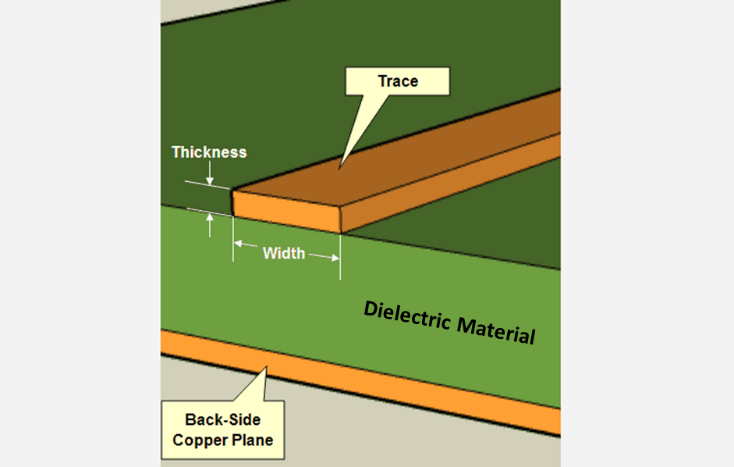
Dimensional inspection provides a more objective evaluation of the printed pattern. Depending on the application, manufacturers may measure line width, spacing, pattern position, edge definition, printed area, and alignment between layers. The inspection method should be selected according to the actual design requirements rather than applying the same measurement approach to every printed circuit.
Electrical testing provides another level of verification. Resistance, continuity, short-circuit, and conductivity measurements can determine whether the printed pattern performs as intended after curing. For printed sensors, electrodes, antennas, or other functional structures, additional application-specific testing may also be required.
For high-volume production, the most useful quality-control system is one that monitors changes over time. A gradual shift in line width, registration, resistance, or defect frequency may indicate screen wear, ink variation, fixture movement, environmental changes, or curing instability. Tracking these trends allows engineers to identify process drift before it affects a larger production quantity.
Troubleshooting Common Challenges in Fine Line Silkscreen
Ink bleeding often stems from excessive snap-off or high humidity, resolved by drying screens pre-print. Poor adhesion on low-energy substrates improves with corona treatment, enhancing ink wetting. Misregistration in multilayer builds corrects via fiducial-based alignment tweaks. Pinholes from air entrapment diminish with degassed inks and slower squeegee speeds. Conductivity variability post-cure indicates incomplete sintering, addressed by profiled heating ramps. Factory troubleshooting logs track root causes, applying statistical process control for prevention. These insights empower engineers to refine advanced screen printing techniques iteratively.
Applications of Fine Line Screen Printing
Flexible Sensors
Printed conductive patterns can be used in flexible sensors for pressure, touch, temperature, and other measurements. The printed geometry and conductive material should be selected according to the sensor's operating principle.
Wearable Electronics
Wearable products require lightweight and flexible structures. Screen printing may be used in flexible PCBs for wearable devices to create conductive patterns, electrodes, and interface elements, provided that the ink and substrate can withstand the intended mechanical and environmental conditions.
Printed Antennas
Fine-line conductive printing can support printed antenna structures on flexible materials. Pattern accuracy, conductivity, substrate properties, and RF performance should be evaluated together.
Medical Electronics
Printed electrodes and sensor patterns may be used in selected medical and diagnostic applications. These products require additional attention to material compatibility, cleanliness, reliability, and application-specific regulatory requirements.
Automotive Flexible Electronics
Flexible printed patterns may be used in flexible PCB for automotive applications, including vehicle interfaces, sensors, lighting systems, and other compact electronic assemblies. The process must be evaluated against the relevant thermal, mechanical, and environmental conditions.
Conclusion
Fine line screen printing combines screen design, conductive ink behavior, substrate preparation, printing control, curing, and inspection. Each factor influences the quality and repeatability of the final printed pattern.
For high-volume screen printing for flexible circuits, production stability is just as important as achieving fine printed features. A reliable process should keep the substrate stable, maintain consistent ink transfer, control registration, monitor curing, and identify defects before they affect a larger production run.
By validating the complete process rather than relying on a single parameter, manufacturers can improve print consistency and support the production of flexible sensors, wearable electronics, printed antennas, and other printed electronic products.
FAQs
Q1: What is fine line screen printing in the context of high-resolution printed electronics?
A1: Fine line screen printing uses high-thread-count meshes and precise stencils to deposit conductive inks with sharp, narrow features on substrates. This advanced screen printing technique achieves resolutions suitable for dense circuitry, outperforming traditional methods in flexibility. Factory processes emphasize ink rheology and printing parameters for consistent results. It integrates seamlessly into printed circuit manufacturing workflows.
Q2: How do advanced screen printing techniques improve conductive ink printing?
A2: Advanced techniques like high-tension screens and electroformed stencils minimize distortion, enabling finer lines in conductive ink printing. Controlled squeegee dynamics and registration systems ensure layer accuracy for multilayer high-resolution printed electronics. Environmental controls prevent defects, boosting yield. Electrical engineers apply these for reliable performance in demanding applications.
Q3: What role do industry standards play in fine line silkscreen quality control?
A3: Standards such as IPC-A-600 define acceptability criteria for printed features, guiding inspection in fine line screen printing. They specify tolerances for edge definition and adhesion in printed circuit manufacturing. Compliance verifies durability under operational stresses. Factory teams use them to standardize processes across production.
Q4: Why is substrate preparation critical for high-resolution printed electronics?
A4: Proper substrate preparation, including surface treatments, optimizes ink adhesion and prevents spreading in fine line screen printing. It ensures uniform deposition for conductive paths. Cleanliness controls contamination risks. This step enhances overall resolution and reliability in advanced applications.
Q5: What is high-volume screen printing for flexible circuits?
A5: High-volume screen printing for flexible circuits is the use of a controlled screen printing process to produce conductive patterns on flexible substrates at production scale. It requires stable substrate support, consistent ink transfer, accurate registration, reliable curing, and regular inspection.
Q6: How can screen printing be used for flexible electronics?
A6: Screen printing can create conductive traces, sensor electrodes, antenna patterns, heating elements, and other functional structures on flexible films. The ink, screen, and curing process must be compatible with the selected substrate.
Q7: What affects the resolution of fine line screen printing?
A7: The main factors include screen mesh, emulsion thickness, aperture design, ink particle size, ink viscosity, squeegee control, substrate surface condition, and screen-to-substrate alignment.
Q8: How can screen printing defects be reduced?
A8: Defects can be reduced by stabilizing the substrate, selecting suitable screen and ink combinations, controlling printing parameters, maintaining screen cleanliness, validating curing conditions, and inspecting printed patterns before the next process step.
Q9: What is the role of curing in printed electronics?
A9: Curing or sintering develops the final properties of the printed conductive layer. It affects conductivity, adhesion, flexibility, and environmental resistance. The curing profile should match both the ink formulation and the flexible substrate.
References
IPC-A-600K — Acceptability of Printed Boards. IPC, 2020
IPC-6012E — Qualification and Performance Specification for Rigid Printed Boards. IPC, 2017
IPC-2221 — Generic Standard on Printed Board Design. IPC, 2012