Introduction
In printed circuit board (PCB) manufacturing, conformal coatings provide essential protection against environmental stressors like moisture, chemicals, and thermal cycling. Among various coating types, UV curable conformal coatings stand out for their ability to accelerate production cycles while maintaining robust reliability. The conformal coating UV cure process enables boards to move quickly through assembly lines, reducing bottlenecks and enhancing overall throughput. Factory engineers increasingly adopt these fast curing conformal coating solutions to meet demanding production schedules without compromising quality. This article explores how UV curable conformal coatings optimize speed and efficiency, drawing on established manufacturing practices.
What Is UV Curable Conformal Coating?
UV curable conformal coating consists of 100% solid polymer formulations that harden upon exposure to ultraviolet light, forming a thin protective layer over PCB assemblies. Unlike solvent-based alternatives, these coatings contain no volatile compounds, minimizing emissions and simplifying handling in production environments. The material typically includes photoinitiators that trigger rapid polymerization when activated by specific UV wavelengths. This results in a durable film that conforms to component contours, typically ranging from 25 to 250 microns in thickness depending on application needs. Engineers value this technology for its compatibility with high-volume manufacturing where cycle times are critical.
The distinction from other curing methods lies in the speed of the UV curing process, which transforms liquid resin into a solid barrier in seconds rather than hours. Factory-driven implementations often pair UV curable coatings with automated dispensing systems for precise coverage. Standards like IPC-CC-830B outline qualification tests for such materials, ensuring they meet performance criteria for insulation resistance and flexibility.
Why UV Curable Conformal Coatings Matter in PCB Production
Conformal coatings shield PCBs from contaminants that could lead to failures such as corrosion or short circuits in harsh operating conditions. UV curable conformal coating advantages include dramatically shortened cure times, allowing immediate handling post-exposure and boosting line efficiency by up to several times compared to thermal or ambient cures. In high-mix, high-volume factories, this translates to reduced work-in-progress inventory and faster turnaround for prototypes or production runs. Moreover, the process supports lean manufacturing principles by eliminating lengthy drying ovens, which consume significant floor space and energy.
Reliability remains paramount, as UV cured films exhibit strong adhesion, chemical resistance, and thermal stability suitable for automotive and aerospace applications. Production teams report fewer defects from handling wet coatings, minimizing rework. As electronics miniaturize, the pinpoint accuracy of UV systems prevents bridging on fine-pitch components. Overall, adopting fast curing conformal coating aligns with industry shifts toward automation and sustainability.
The UV Curing Process Explained
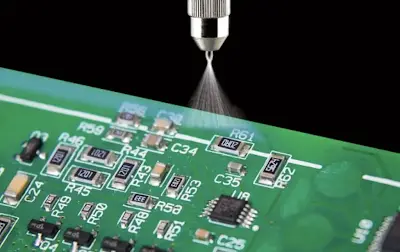
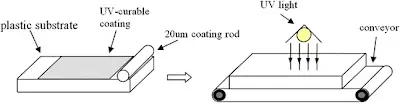
The UV curing process begins with thorough surface preparation, including plasma cleaning or solvent wiping to ensure optimal adhesion on bare copper, solder mask, and component leads. Coating is then applied via selective spraying, dipping, or brushing, targeting areas needing protection while avoiding connectors or test points. Immediately after, the assembly passes under UV lamps emitting wavelengths around 365 nm, where photoinitiators absorb energy and initiate free-radical polymerization. This chain reaction cross-links the resin molecules, forming a tough, pinhole-free film within seconds.
Many formulations incorporate dual-cure mechanisms, combining UV activation with secondary moisture cure for shadowed regions under tall components. Control of conveyor speed, lamp intensity, and distance from the board is crucial to achieve uniform thickness and avoid overexposure, which could embrittle the coating. Post-cure inspection verifies coverage per IPC-A-610 acceptability criteria, checking for holidays or dewetting. Factories optimize this sequence to integrate seamlessly with SMT lines, maintaining throughput.
UV Curable Conformal Coating Advantages
UV curable conformal coating advantages extend beyond speed to include environmental benefits from solvent-free compositions, reducing volatile organic compound emissions in compliance with factory ventilation standards. The rapid solidification minimizes dust attraction and handling damage, leading to higher first-pass yields. Chemically, the cured film offers superior resistance to solvents, salts, and thermal shock, outperforming some acrylic alternatives in accelerated aging tests.
Production efficiency gains are evident in reduced energy use, as no ovens are required, lowering operational costs in large-scale operations. Rework is straightforward, with the coating removable via solvents or abrasion without damaging underlying traces. For electric engineers, the predictability of cure times enables precise process modeling and Six Sigma improvements. These factors position UV systems as a cornerstone for modern PCB factories.
UV Conformal Coating Equipment and Setup
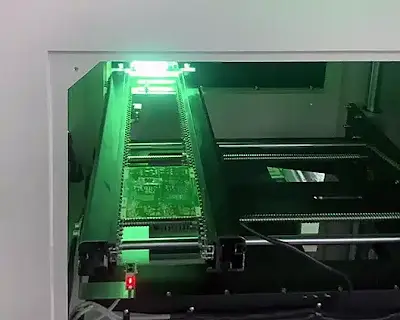
UV conformal coating equipment typically features automated spray valves mounted on XY gantries for programmed deposition, ensuring repeatability across panel sizes. Conveyor-integrated UV curing tunnels house arrays of mercury vapor or LED lamps, with adjustable heights and power outputs to match coating thickness. Nitrogen inerting in the cure zone enhances cure depth by displacing oxygen, which inhibits surface polymerization. Factories select modular systems that scale from lab benches to inline production, often with vision cameras for real-time defect detection.
Integration with upstream solder paste inspection and downstream AOI streamlines workflows. Lamp selection balances intensity against bulb life, with LEDs offering longer service and cooler operation to prevent component heating. Calibration routines verify dosage via radiometers, maintaining consistency batch-to-batch. Such setups exemplify factory-driven optimization for fast curing conformal coating deployment.
Best Practices for Application and Optimization
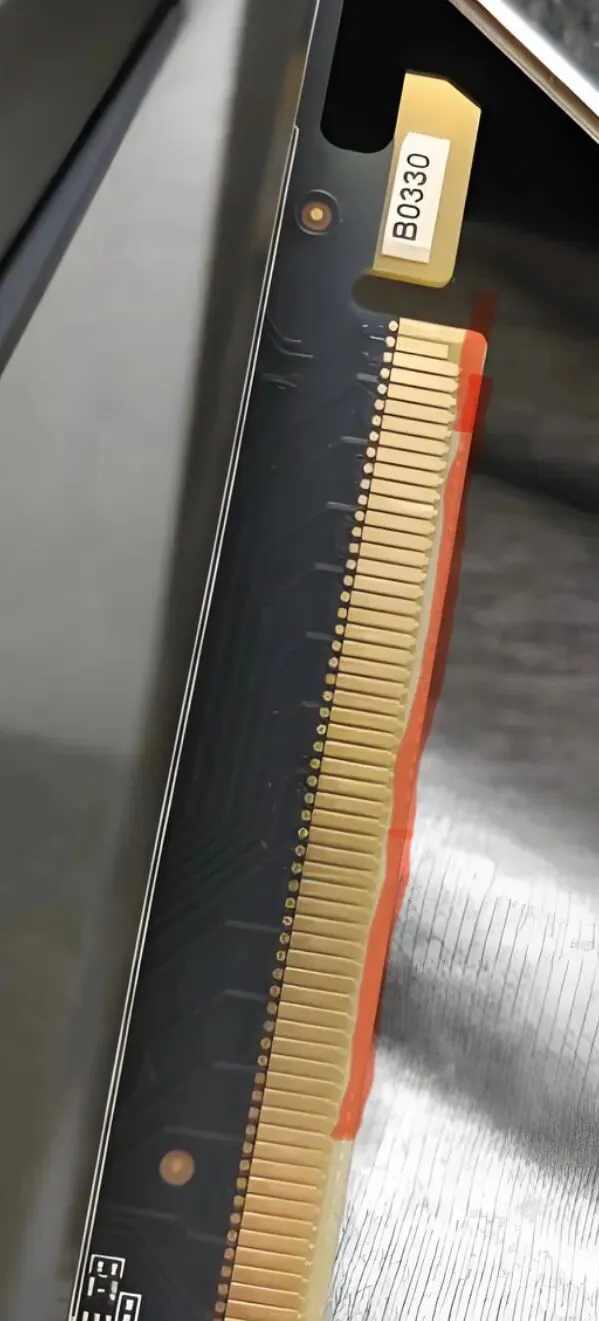
Prior to coating, mask critical areas like gold fingers and heat sinks using temporary tapes or latex masks, removable post-cure without residue. Maintain application thickness between 50-150 microns via programmed valve open times and viscosity control at 20-50 seconds in a Zahn cup. Preheat boards slightly if humidity exceeds 60% to drive off adsorbed moisture, preventing bubbles. During UV exposure, monitor irradiance at 100-500 mJ/cm2, adjusting line speed to 1-5 meters per minute for full cure.
Post-process baking at low temperatures accelerates secondary cure in dual systems. Implement statistical process control on film thickness using micrometers or beta gauges. Regular equipment maintenance, including lamp replacement per manufacturer schedules, sustains performance. Adhering to IPC-CC-830B qualification ensures long-term reliability under thermal cycling and humidity exposure.
Challenges and Troubleshooting in UV Curing
Shadowing under components remains a common issue, addressed by dual-cure formulations or tacky secondary lamps. Overly thick applications lead to incomplete cure, manifesting as tackiness; mitigate with multiple thin passes. Variations in solder mask reflectivity can cause uneven curing, requiring recipe adjustments per board type. Contamination from flux residues compromises adhesion, necessitating ultrasonic cleaning protocols.
Factory troubleshooting involves dose mapping with photochromic paper to visualize exposure uniformity. If fisheyes appear, check for silicone oils from handling gloves. Documenting process parameters in a control plan facilitates root cause analysis. These strategies maintain efficiency in demanding production environments.
Conclusion
UV curable conformal coatings revolutionize PCB production by delivering unmatched speed and efficiency through the rapid UV curing process. Key benefits include solvent-free application, superior protection, and seamless integration with automated lines, making them ideal for electric engineers focused on high-reliability assemblies. By following best practices and leveraging appropriate UV conformal coating equipment, factories achieve optimized throughput without sacrificing quality. As standards like IPC-A-610 guide inspection, these solutions ensure consistent performance in diverse applications. Embracing fast curing conformal coating positions manufacturers for competitive advantage in evolving electronics markets.
FAQs
Q1: What are the main UV curable conformal coating advantages for PCB production?
A1: UV curable conformal coating advantages include seconds-long cure times via the UV curing process, enabling high throughput and reduced energy use compared to thermal methods. They provide excellent chemical and moisture resistance while being 100% solids for eco-friendly operations. Factories benefit from immediate handling post-cure, minimizing defects and supporting lean manufacturing.
Q2: How does the UV curing process work in conformal coating?
A2: The UV curing process involves applying liquid resin containing photoinitiators, then exposing it to 365 nm UV light for rapid polymerization into a protective film. Dual-cure options handle shadowed areas with moisture activation. Line speed and lamp intensity control ensure uniform thickness. This fast curing conformal coating method aligns with high-volume PCB assembly needs.
Q3: What UV conformal coating equipment is essential for efficient production?
A3: Essential UV conformal coating equipment includes selective spray dispensers, conveyorized UV tunnels with LED or mercury lamps, and inline inspection cameras. Nitrogen purging enhances cure quality, while radiometers monitor dosage. Modular setups integrate with SMT lines for seamless workflow. Proper calibration optimizes speed in factory environments.
Q4: How can engineers optimize speed with fast curing conformal coating?
A4: Engineers optimize speed by selecting dual-UV formulations, automating application for precise thickness, and tuning conveyor parameters to match irradiance. Surface prep eliminates contaminants, preventing rework. Per IPC standards, post-cure verification ensures reliability. This approach boosts efficiency in PCB production lines.
References
IPC-CC-830B — Qualification and Performance of Electrical Insulating Compounds for Printed Wiring Boards. IPC
IPC-A-610 — Acceptability of Electronic Assemblies. IPC