Introduction
Printed circuit boards made with polytetrafluoroethylene, known as PTFE PCBs, play a crucial role in aerospace and defense sectors where reliability under harsh conditions is non-negotiable. These environments expose electronics to extreme temperatures, high vibrations, radiation, and chemical exposures that standard FR-4 materials cannot withstand. PTFE's unique properties make it the material of choice for high-frequency applications like radar systems and satellite communications. Engineers designing for PTFE PCB aerospace applications must prioritize signal integrity and long-term stability to ensure mission success. This article explores how PTFE PCBs deliver PTFE PCB high reliability while aligning with stringent industry requirements. Understanding these aspects helps technical teams select and implement solutions effectively.
What Are PTFE PCBs and Why Do They Matter in Aerospace and Defense?
PTFE PCBs use polytetrafluoroethylene as the core dielectric material, often reinforced with glass fibers or ceramics to enhance mechanical strength. Unlike epoxy-based laminates, PTFE offers a low dielectric constant and minimal dissipation factor, preserving signal quality at microwave frequencies. In aerospace and defense, where systems operate in vacuum, altitudes exceeding 100,000 feet, or subzero temperatures, these boards prevent failures that could compromise safety or performance. PTFE PCB military standards demand materials that resist delamination and maintain electrical properties across thermal cycles. Factory processes for these boards involve specialized lamination to control expansion coefficients and ensure uniform bonding. Their relevance stems from enabling compact, high-performance electronics in missiles, avionics, and unmanned vehicles.
Key Material Properties Enabling Extreme Environment Performance
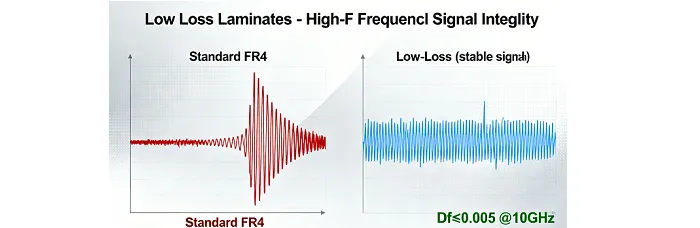
PTFE exhibits exceptional thermal stability, maintaining integrity from cryogenic lows to elevated temperatures without softening or degrading. Its low moisture absorption, typically under 0.02 percent, prevents issues like ionic contamination or dimensional changes in humid or vacuum conditions common in space applications. The material's chemical inertness shields circuits from fuels, hydraulics, and corrosive agents encountered in defense platforms. For high-frequency signals, PTFE's consistent dielectric constant around 2.1 to 2.5 and dissipation factor below 0.001 minimize insertion loss and phase distortion. These traits support PTFE PCB high reliability in radar phased arrays and electronic warfare systems. Reinforcement fillers adjust the coefficient of thermal expansion to match copper, reducing stress during operation.
Vibration and shock resistance further qualifies PTFE for aerospace use, as its ductility absorbs mechanical energy without cracking traces. Radiation hardness limits charge buildup, preserving functionality in nuclear or cosmic environments. Engineers value how these properties translate to longer mean time between failures compared to standard laminates. Processing challenges like higher lamination pressures are offset by the material's superior end-performance. Overall, PTFE's combination of electrical, thermal, and mechanical attributes directly addresses the multifaceted demands of extreme deployments.
PTFE PCB Aerospace Applications: From Avionics to Satellites
In avionics, PTFE PCBs handle data links and navigation at gigahertz speeds, where signal fidelity is critical for flight control. Satellite systems leverage their low outgassing to avoid contaminating optical components or solar panels in orbit. Defense radar applications require PTFE for transmit-receive modules enduring high power and rapid thermal swings. Missile guidance electronics benefit from the material's stability under acceleration forces exceeding 50g. These PTFE PCB aerospace applications demonstrate versatility across platforms, from fighter jets to deep-space probes. Integration with multilayer stacks allows complex RF front-ends in limited volumes.
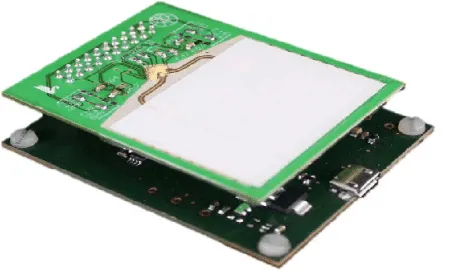
Unmanned aerial vehicles use PTFE for synthetic aperture radar, processing echoes without distortion from environmental noise. In electronic countermeasures, the boards support agile frequency hopping while resisting electromagnetic interference. Ground-based defense systems, like phased-array antennas, rely on PTFE for beam steering precision. Each application underscores the need for tailored stackups to optimize impedance control. Factory insights reveal that prepreg selection critically influences interlayer adhesion in these designs.
Aligning with PTFE PCB Military Standards for High Reliability
PTFE PCBs must conform to IPC-6012 qualification for rigid printed boards, ensuring performance in high-reliability assemblies. This standard outlines tests for thermal shock, vibration, and electrical continuity that mirror defense qualification protocols. IPC Class 3 provisions demand minimal defects, such as voids or resin smear, which PTFE processing achieves through optimized drilling and plating. Military environments necessitate boards that pass accelerated life testing without capacitance drift. Adherence to these benchmarks guarantees PTFE PCB high reliability under sustained stressors.
Beyond qualification, IPC-4103 specifications guide selection of PTFE-based laminates for high-speed applications, specifying filler content for dimensional stability. Compliance involves verifying glass transition temperature and Z-axis expansion via thermal mechanical analysis. Assembly processes follow IPC guidelines to prevent contamination during soldering, preserving low-loss characteristics. Engineers verify compliance through cross-section analysis and impedance testing. These standards provide a factory-driven framework for producing boards that exceed operational envelopes.
Manufacturing Best Practices for PTFE PCBs in Demanding Applications
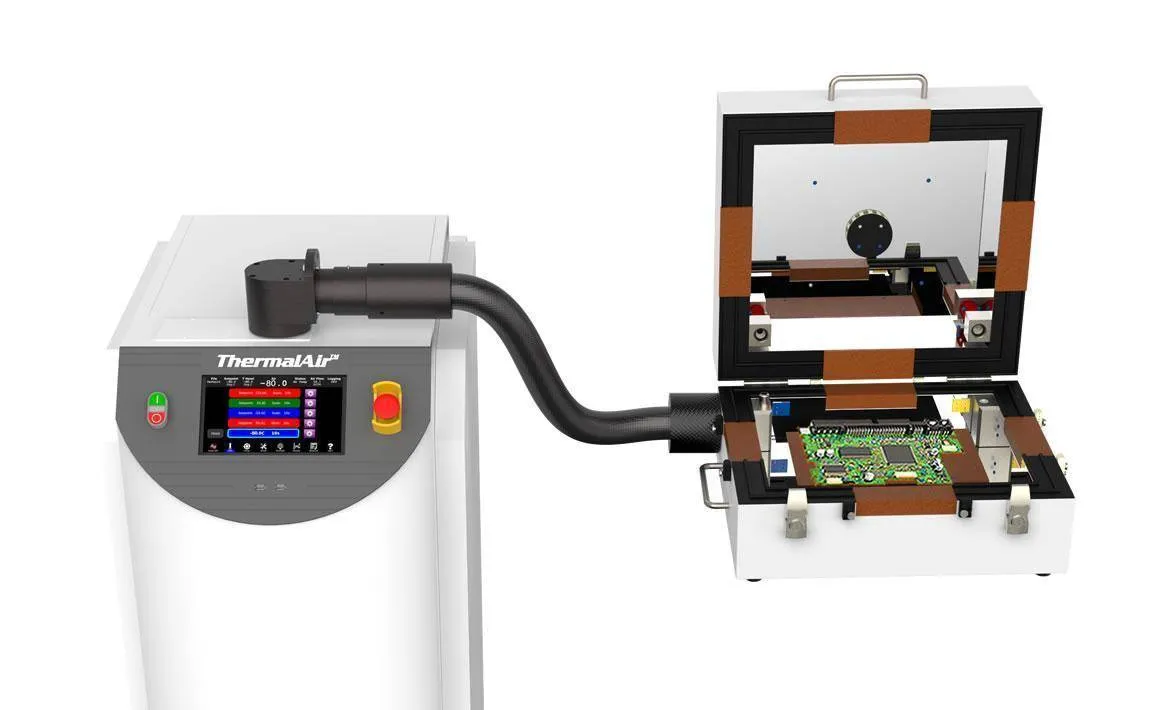
Fabrication starts with precise control of lamination cycles, using higher temperatures and pressures to bond PTFE's low-surface-energy surface. Sequential buildup processes mitigate via smear, common in high-aspect-ratio holes for multilayer boards. Plasma cleaning enhances copper adhesion, reducing peel strength failures post-reliability tests. Drilling parameters adjust for PTFE's abrasiveness, incorporating dwell times to clear resin dust. These steps ensure dimensional accuracy vital for high-density interconnects in defense electronics.
Plating involves electrolytic copper with diffusion barriers to prevent migration under bias. Solder mask application requires low-temperature cures compatible with PTFE's properties. Bake-out procedures remove absorbed moisture before assembly, aligning with JEDEC handling for high-reliability parts. Inspection per IPC-A-600 verifies surface acceptability, catching anomalies like fiberglass protrusion. Post-fabrication, boards undergo flying probe testing for opens and shorts. These practices yield PTFE PCBs ready for extreme deployment. For complementary design rules, see our guide on designing PTFE PCBs for RF and microwave applications.
Challenges and Mitigation Strategies in PTFE PCB Production
One challenge is CTE mismatch, addressed by ceramic or glass microfiber reinforcements matching copper's expansion. Warpage during cooling demands symmetric stackups and constrained fixturing. High-frequency designs require controlled impedance, achieved via field solvers during layout. Handling sensitivity to contamination necessitates cleanroom protocols throughout. Cost premiums from specialized tooling are justified by lifecycle savings in aerospace programs.
Troubleshooting delamination involves analyzing bondline via scanning electron microscopy, adjusting oxide treatments accordingly. For signal integrity issues, TDR measurements pinpoint discontinuities early. Factory teams implement statistical process control to monitor key variables like lamination vacuum levels. These strategies ensure consistent PTFE PCB high reliability.
Suggested Reading: Signal Integrity Considerations for PTFE PCBs: Minimizing Loss and Maximizing Performance
Conclusion
PTFE PCBs stand out in aerospace and defense for their unmatched performance in extreme environments, from thermal extremes to mechanical abuse. Their low-loss properties enable advanced RF systems, while material stability supports long missions. Adhering to standards like IPC-6012 and IPC-4103 ensures qualification for critical applications. Engineers benefit from factory-optimized processes that deliver reliable boards. As demands for higher frequencies and harsher conditions grow, PTFE remains essential for PTFE PCB aerospace applications and military needs. Selecting these boards positions designs for success in high-stakes scenarios.
FAQs
Q1: What makes PTFE ideal for PTFE PCB aerospace applications?
A1: PTFE provides low dielectric constant and dissipation factor for minimal signal loss at high frequencies, crucial for radar and satellite systems. Its thermal range handles cryogenic to high-heat exposures without degradation. Low moisture uptake and chemical resistance protect against environmental hazards. Reinforced variants offer mechanical robustness for vibration-heavy platforms. These traits align with high-reliability demands in avionics and guidance electronics.
Q2: How do PTFE PCBs meet PTFE PCB military standards?
A2: PTFE boards qualify under IPC-6012 for rigid performance, passing thermal shock and vibration tests. IPC Class 3 criteria ensure defect-free construction for sustained operation. Laminates follow IPC-4103 for high-speed suitability, controlling expansion and adhesion. Factory processes verify compliance through cross-sections and electrical tests. This framework supports defense systems requiring unwavering reliability.
Q3: Why prioritize PTFE PCB high reliability in defense?
A3: Extreme conditions like radiation and shock demand materials that resist failure modes like delamination or capacitance shift. PTFE's stability minimizes downtime in mission-critical electronics. Standards-driven qualification confirms longevity. Compared to FR-4, it excels in RF integrity under stress. Procurement teams value this for reducing field replacements.
Q4: What manufacturing considerations apply to PTFE PCBs?
A4: Use specialized lamination with high pressure for bonding, and plasma for adhesion. Control drilling to manage resin smear. Bake-out prevents moisture issues per JEDEC guidelines. Inspect per IPC-A-600 for acceptability. These steps ensure high-frequency performance in aerospace assemblies.
References
IPC-6012E — Qualification and Performance Specification for Rigid Printed Boards. IPC, 2017
IPC-4103 — Specification for Base Materials for High Speed/High Frequency Applications. IPC, 2015
IPC-A-600K — Acceptability of Printed Boards. IPC, 2020