In the rapidly evolving landscape of modern electronics, the demand for smaller, lighter, and more durable devices has never been higher. From the sleek curves of a high-end smartwatch to the mission-critical reliability of aerospace flight controls, the hardware inside must do more than just conduct electricity—it must fit into complex three-dimensional spaces.
As a cornerstone of next-generation hardware, Rigid-Flex PCBs represent the pinnacle of interconnect technology. By combining the structural stability of rigid boards with the versatility of flexible circuits, this hybrid solution allows engineers to overcome the physical limitations of traditional electronics. This hub page serves as your comprehensive strategic resource, guiding you through the entire lifecycle of rigid-flex technology—from initial concept to high-scale production.
1. What is a Rigid-Flex PCB?
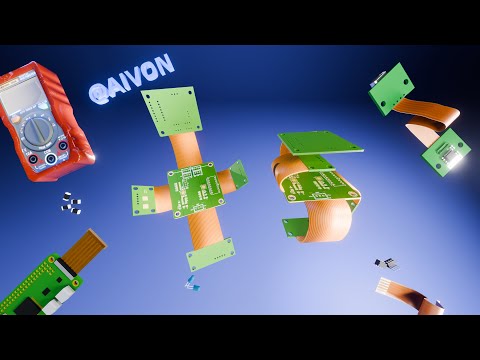
A rigid-flex PCB is a hybrid board consisting of multiple layers of flexible circuit substrates attached to one or more rigid boards. Unlike a traditional rigid board connected to a flex cable via connectors, a rigid-flex board is integrated into a single unit. The flexible layers are typically buried within the rigid sections, extending through the "bend areas" to provide electrical connectivity and mechanical flexibility.
This integration eliminates the need for bulky connectors and ribbon cables, which are often the weakest links in an electronic assembly. By unifying the structure, engineers can design circuits that fold, twist, and fit into tight, non-linear enclosures. This technology allows for "3D packaging," where the circuit is no longer a flat component but a dynamic mechanical element of the device housing.
2. The Anatomy: Materials and Stackups
To understand how a rigid-flex PCB functions, we must look at its internal architecture. The complexity of these boards arises from the bonding of materials with vastly different thermal and mechanical properties.
● Flexible Substrates (Polyimide): The heart of the flex section is typically Polyimide (PI). Unlike standard FR4, polyimide is heat-resistant, flexible, and maintains its electrical properties under extreme conditions. It serves as the base film upon which copper traces are etched.
● Rigid Substrates (FR4): The rigid sections use standard FR4 (Epoxy Glass) or high-Tg materials to provide the stiffness needed for mounting components like BGAs, microprocessors, and heavy mechanical parts.
● Adhesives and Adhesiveless Laminates: Modern high-performance boards often use adhesiveless laminates. These are thinner and offer better thermal stability, reducing the risk of "barrel cracking" in plated through-holes (PTH) during thermal cycling.
● The Stackup: A typical stackup involves external rigid layers (Copper + FR4), bonding layers (No-flow Prepreg), and internal flex layers (Polyimide + Copper + Coverlay).
3. Why Choose Rigid-Flex PCB?
Transitioning from a traditional rigid-cable-rigid design to a rigid-flex solution offers several transformative benefits that go beyond mere aesthetics:
● Space and Weight Reduction: By removing connectors and headers, you can reduce the overall package weight by up to 60% and the space requirements by 50%. This is critical for handheld medical devices and wearables.
● Increased Reliability: Connectors are prone to vibration failure, oxidation, and human error during manual assembly. Rigid-flex boards eliminate these physical connection points, significantly increasing the Mean Time Between Failures (MTBF).
● Enhanced Signal Integrity: Because the transition between rigid and flex sections is seamless, there is less impedance disruption compared to using separate connectors. This makes it ideal for high-speed data transmission.
● Simplified Logistics: A single rigid-flex part replaces an assembly of 5-10 different parts (boards, cables, connectors), simplifying the bill of materials (BOM) and reducing supply chain risk.
4. Rigid-Flex PCB Design: Mastering Complexity
A successful project always begins with a robust rigid-flex PCB design, as this stage dictates the structural integrity and electrical performance of the final device. Designing a hybrid board is significantly more demanding than designing a standard PCB because it requires a "3D-first" mindset. You aren't just routing traces; you are managing mechanical stress and material transitions across three dimensions.
The most critical aspect of this stage is the Bend Radius. If the flexible portion is too thick or the bend is too sharp, the copper traces will fatigue and crack over time. Engineers must also consider the Transition Zone—the area where the flexible substrate enters the rigid section. Stress relief fillets and specific copper anchoring techniques are required here to prevent delamination.
Furthermore, copper routing in the flex area must follow specific rules. For instance, traces should never be bent at 90-degree angles; instead, use curved corners to distribute stress. If you are using multiple layers of flex, designers must employ "staggered" trace routing to avoid the "I-beam effect," which makes the board too stiff to bend. Master these nuances to ensure your design is both functional and manufacturable.
5. Rigid-Flex PCB Manufacturing: Precision and Scale
Moving from the computer screen to the factory floor, rigid-flex PCB manufacturing represents one of the most demanding processes in the fabrication industry due to the hybrid nature of the materials. It involves significantly more steps than a standard multilayer board, primarily due to the handling of thin, floppy polyimide and the precision required for complex lamination.
One of the biggest challenges in manufacturing is registration. Because polyimide is dimensionally unstable—it can shrink or stretch during heat cycles—keeping the holes in the rigid layers aligned with the pads on the flex layers requires advanced laser-drilling and optical alignment systems.
The lamination process itself is a delicate balance. Manufacturers must apply heat and pressure to bond the FR4 to the polyimide using specialized no-flow prepregs. If the resin flows into the flex area, the board loses its flexibility. Quality control is equally rigorous; processes like Plasma Etching are used to clean out the holes before plating, ensuring that the copper bond between the rigid and flex layers is chemically and mechanically sound for long-term use at scale.
6. Rigid-Flex PCB Assembly: Ensuring Reliability
Once the raw boards are fabricated, achieving a high yield depends entirely on the precision of your partner expert in rigid-flex PCB assembly and their ability to manage non-planar surfaces. Assembling components onto a rigid-flex board presents unique hurdles that standard SMT (Surface Mount Technology) lines are not always equipped to handle without specialized tooling.
The primary challenge is planarity. Flexible sections tend to sag or warp under the weight of components or during heat cycles. To solve this, specialized SMT carriers or pallets must be used to keep the board perfectly flat as it travels through the solder paste printer, the pick-and-place machine, and the reflow oven.
Furthermore, moisture management is critical. Polyimide is hygroscopic, meaning it absorbs moisture from the air. If a rigid-flex board is not "pre-baked" before assembly, the trapped moisture will turn to steam in the reflow oven, causing internal delamination or "popcorning." By optimizing the thermal profile and using precision fixtures, you ensure that the complex assembly remains reliable under the most stressful operating conditions.
7. Rigid-Flex PCB Application: Innovation Across Industries
The versatility of this technology is best demonstrated by looking at a modern rigid-flex PCB applications, ranging from life-saving medical implants to the latest aerospace telemetry systems. Because these boards bridge the gap between innovation and reliability, they have become indispensable in high-stakes environments where failure is not an option.
● Medical Devices: In swallowable cameras, hearing aids, and pacemakers, the electronics must be incredibly small and biocompatible. Rigid-flex allows for dense circuitry in these miniature footprints.
● Aerospace and Defense: Satellite systems and missile guidance modules are subject to extreme G-forces. The lack of connectors in rigid-flex designs ensures that connections won't jar loose during launch or high-altitude maneuvers.
● Consumer Electronics: Foldable smartphones are the most visible example of this technology today. The hinge mechanism relies on ultra-thin flex layers that can withstand hundreds of thousands of fold cycles.
● Automotive: Modern EVs use rigid-flex boards in battery management systems (BMS) to save space and improve thermal dissipation while resisting the constant vibration of the road.
8. Cost Management and Quality Standards
It is no secret that rigid-flex PCBs are more expensive than standard rigid boards. However, the higher upfront cost is often offset by the reduction in assembly labor and the elimination of auxiliary parts.
How to optimize costs:
1. Minimize Flex Layers: The cost increases exponentially with the number of flexible layers. Stick to 1 or 2 layers of flex if possible.
2. Panel Utilization: Work with your manufacturer to optimize the board shape. Strange "L" or "U" shapes lead to significant material waste.
3. Standardize Materials: Using common polyimide and FR4 types reduces lead times and material surcharges.
Quality Benchmarks
To ensure the highest reliability, your rigid-flex boards should be designed and manufactured according to IPC-2223C (Sectional Design Standard for Flexible Printed Boards) and IPC-6013 (Qualification and Performance Specification for Flexible Printed Boards). Adhering to these standards is mandatory for medical, military, and aerospace grade hardware.
Conclusion: Partnering for Success
Rigid-flex PCBs represent the frontier of electronic packaging. While they offer unparalleled design freedom and reliability, the path from concept to finished product is paved with technical challenges. Success requires a holistic understanding of how design decisions impact manufacturing and how assembly constraints dictate the final performance.
By integrating the principles of Rigid-Flex PCB Design, Rigid-Flex PCB Manufacturing, Rigid-Flex PCB Assembly, and Rigid-Flex PCB Application, you can push the boundaries of what is possible in your industry.
FAQs
Q1: What is the maximum number of layers possible in a rigid-flex PCB?
A1: While technically possible to go up to 30+ layers, most high-reliability rigid-flex boards stay within the 4 to 20-layer range. The flex section itself usually consists of 1 to 4 layers to maintain flexibility. Increasing layers in the flex zone significantly increases the bend radius required and the overall cost.
Q2: What is "Coverlay" and why is it used instead of Solder Mask on the flex part?
A2: Standard solder mask is brittle and will crack when bent. Coverlay is a solid sheet of polyimide with an adhesive layer that is laminated over the flexible circuits. It provides much better protection and durability during bending, though it requires specialized laser cutting for component apertures.
Q3: What role does material selection play in rigid-flex PCB thermal management?
A3: Material selection plays a critical role in rigid-flex PCB thermal management by influencing thermal conductivity and stability. Choosing laminates with higher thermal conductivity for rigid sections and flexible materials with improved thermal resistance ensures efficient heat transfer and prevents material degradation during operation.