Introduction
PTFE PCBs, made from polytetrafluoroethylene substrates, serve critical roles in high-frequency applications such as radar systems, telecommunications, and aerospace electronics. These boards offer exceptional electrical properties including low dielectric constant and minimal loss tangent, which minimize signal degradation at microwave frequencies. However, their fabrication involves unique challenges like material expansion during lamination and sensitivity to processing conditions, making rigorous testing essential. Comprehensive validation ensures that PTFE PCBs meet performance demands under operational stresses. Electrical, thermal, and environmental tests form the backbone of this process, verifying integrity from production to deployment. Factory protocols aligned with industry standards guarantee consistent quality for electric engineers relying on these components.
Why Testing PTFE PCBs Matters
PTFE materials excel in high-speed circuits due to their stable dielectric performance over wide frequency ranges, but inconsistencies in filler distribution or voids can compromise reliability. Untested boards risk failures like impedance mismatches or delamination in field use, leading to costly rework or system downtime. Electric engineers prioritize PTFE PCB electrical testing to confirm signal integrity, while thermal and environmental evaluations address material-specific behaviors such as high coefficient of thermal expansion. These tests align production with application requirements, preventing issues in harsh environments. Validation bridges design intent and manufacturing reality, fostering trust in supply chains. Ultimately, thorough testing upholds performance in demanding sectors.
Electrical Testing for PTFE PCBs
PTFE PCB electrical testing begins with continuity and isolation checks to detect opens, shorts, and high-resistance connections across the circuit. Flying probe or bed-of-nails testers apply voltage while measuring current paths, ensuring no fabrication defects disrupt signal flow. Insulation resistance measurements, often exceeding megohms, verify dielectric separation between traces, critical for high-voltage RF operation. Factories conduct these at controlled humidity to simulate service conditions.
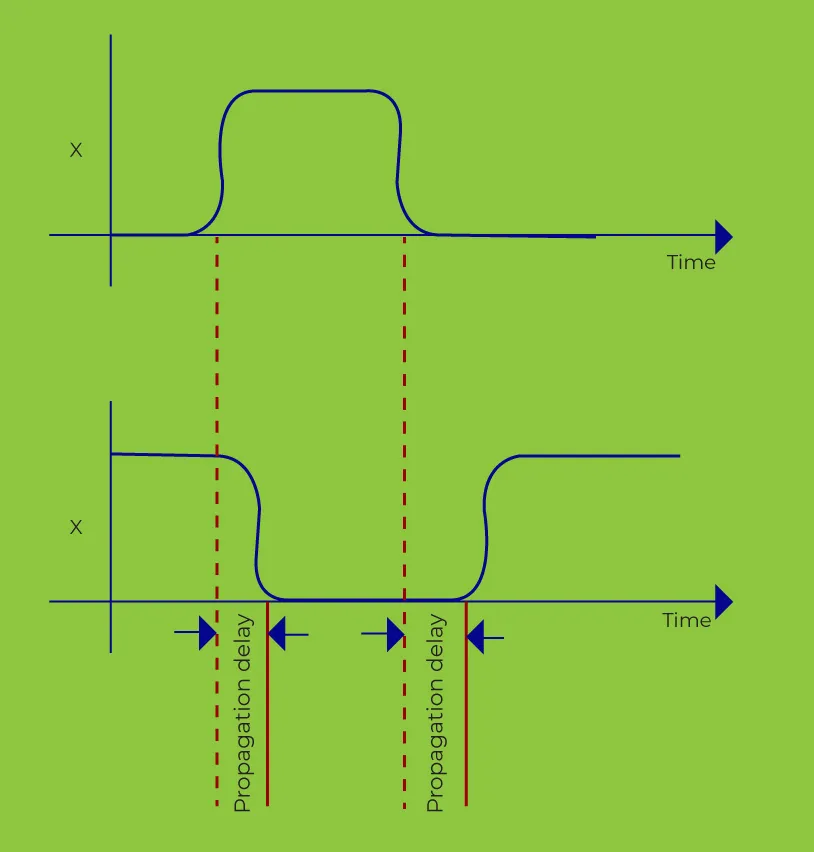
Impedance control stands out in PTFE PCB electrical testing, given the material's low dielectric constant around 2.1 to 2.5. Time-domain reflectometry (TDR) scans traces for discontinuities, comparing results against design targets typically within 10% tolerance. Vector network analyzers assess S-parameters, quantifying insertion loss and return loss up to 40 GHz or higher. These methods confirm uniform coupling between glass weave and resin, avoiding skew in differential pairs. For detailed design rules that complement these test methods, see our guide on The Ultimate Guide to Designing PTFE PCBs for RF and Microwave Applications.
Capacitance and crosstalk evaluations round out electrical validation. Factories use grid-based probing to map parasitic effects, ensuring compliance with high-frequency demands. Post-plating checks verify copper integrity after electroless and electrolytic processes unique to PTFE's smooth surface. Consistent electrical testing prevents field failures in phased-array antennas or 5G infrastructure.
Thermal Testing for PTFE PCBs
PTFE PCB thermal testing evaluates stability under heat cycles, addressing the material's high glass transition temperature above 200 degrees Celsius. Coefficient of thermal expansion (CTE) measurements compare Z-axis expansion to copper foil, mitigating via cracking risks. Differential scanning calorimetry identifies phase changes, while factories perform these per standardized procedures. Thermal cycling exposes boards to -55 to 125 degrees Celsius ramps, inspecting for warpage or delamination via cross-sectioning.
Glass fabric-reinforced PTFE variants require targeted PTFE PCB thermal testing for filler-induced anisotropy. Thermomechanical analysis plots modulus versus temperature, revealing softening points. Bake tests simulate lead-free soldering peaks, confirming no outgassing or voids form. These ensure reliability in power amplifiers where heat dissipation challenges copper-PTFE adhesion.
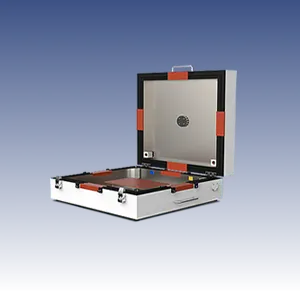
Solder joint integrity forms another focus, with thermal shock tests accelerating fatigue. IPC-TM-650 methods guide ramp rates and dwell times, correlating lab data to lifespan predictions. Factories monitor bow and twist post-cycling, as PTFE's low modulus amplifies mechanical stresses. Comprehensive thermal validation supports deployment in avionics, where temperature swings demand zero defects.
Environmental Testing for PTFE PCBs
Environmental testing probes PTFE's resilience to moisture, given its hydrophobic nature and low absorption under 0.02%. Humidity bias combines 85% relative humidity at 85 degrees Celsius with voltage stress, checking for electrochemical migration. Salt fog exposure simulates coastal deployments, inspecting corrosion on surface finishes. These PTFE PCB environmental testing protocols reveal weaknesses in edge plating or vias.
Thermal shock immerses boards in liquid nitrogen to boiling water, stressing interfaces rapidly. JEDEC standards define cycles, with post-test electrical re-verification. Vibration tables replicate mechanical shocks per aerospace profiles, scanning for microcracks via ultrasound. Factories integrate these to qualify lots for military-grade use.
Aging simulations combine multiple stressors, predicting long-term degradation. Outgassing tests in vacuum measure weight loss, crucial for space applications. PTFE PCB environmental testing ensures dimensional stability, as fillers control shrinkage during cure. Validated boards withstand operational extremes without performance drift. Learn how these validation steps ensure performance in extreme conditions in our article on PTFE PCBs in Aerospace and Defense.
Best Practices in Testing and Validation
Establish a multi-stage test flow starting with incoming laminate qualification per IPC-6012E specifications. Witness coupons track material variability, enabling statistical process control. Electric engineers should specify test conditions matching end-use, like controlled impedance at operating frequencies. Factories calibrate equipment quarterly, correlating results across shifts.
Integrate automated optical inspection pre-electrical testing to flag plating voids common in PTFE. For thermal profiles, use thermocouples on multiple zones during reflow simulation. Document deviations with root-cause analysis, adjusting lamination pressure or filler ratios accordingly. Cross-section sampling at 1% verifies internal quality post-drill.
Leverage design for testability by incorporating test points on high-speed lines. Collaborate with suppliers on shared IPC-TM-650 procedures for reproducibility. Final functional testing under load confirms systemic integrity. These practices minimize escapes, aligning factory output with engineering expectations.
Troubleshooting Common Issues in PTFE PCB Testing
Delamination often traces to CTE mismatch; inspect prepreg cure via DSC and adjust bond cycles. Impedance drift signals uneven glass distribution, resolved by optimized weave angle in layup. High insertion loss post-thermal cycle indicates filler migration, countered by homogeneous mixing validation. Moisture-induced failures demand bake-outs before assembly.
Voids in vias from drill smear require plasma desmear verification. Warpage exceeds limits? Balance copper weights symmetrically. Factories log failure modes in Pareto charts, refining processes iteratively. Electric engineers benefit from these insights for robust designs.
Conclusion
Testing and validation of PTFE PCBs safeguard their superior performance in high-frequency realms. PTFE PCB electrical testing secures signal fidelity, thermal evaluations ensure heat resilience, and environmental checks confirm durability. Adhering to standards like IPC-TM-650 delivers factory-grade reliability. Engineers gain confidence in boards enduring real-world rigors. Prioritizing these protocols optimizes lifecycle value across applications.
FAQs
Q1: What key parameters does PTFE PCB electrical testing measure?
A1: PTFE PCB electrical testing focuses on continuity, isolation resistance, controlled impedance via TDR, and S-parameters for loss. Factories use flying probes for opens/shorts and network analyzers for high-frequency validation. These confirm low-loss propagation essential for RF circuits. Alignment with design specs prevents signal distortion in production runs.
Q2: How does thermal testing differ for PTFE PCBs compared to FR-4?
A2: PTFE PCB thermal testing emphasizes high Tg stability and CTE matching due to elevated expansion rates. Cycles per IPC-TM-650 reveal delamination risks absent in FR-4. Factories assess warpage and modulus shifts post-exposure. This ensures viability in high-power microwave modules.
Q3: Why is environmental testing critical for PTFE PCBs in aerospace?
A3: PTFE PCB environmental testing verifies low moisture uptake and shock resistance under vibration/humidity. Protocols simulate altitude outgassing and thermal ramps. JEDEC guidelines guide bias testing for migration. Factories qualify for mission-critical reliability without degradation.
Q4: What best practices improve PTFE PCB validation outcomes?
A4: Implement IPC-6012E qualification with witness panels for traceability. Sequence electrical before thermal tests to isolate failures. Calibrate for frequency-specific impedance. Factories achieve yield gains through data-driven process tweaks.
References
IPC-TM-650 — Test Methods Manual. IPC.
IPC-6012E — Qualification and Performance Specification for Rigid Printed Boards. IPC, 2017.
JEDEC J-STD-020E — Moisture/Reflow Sensitivity Classification for Nonhermetic Surface Mount Devices. JEDEC, 2014.