Introduction
Silk screen printing on printed circuit boards provides essential markings for component identification, assembly guidance, and functional labeling. Traditional approaches rely on single-color inks, typically white, applied over the solder mask layer for high contrast and readability. However, as PCB designs grow more complex with integrated branding, color-coded instructions, and high-density layouts, advanced silk screen color separation techniques have emerged. These methods decompose multi-color artwork into separate printable layers, enabling vibrant, multi-layer silk screen color PCBs without compromising manufacturing reliability. For electrical engineers working on intricate boards, mastering silkscreen color separation PCB processes ensures optimal legibility during assembly and testing. This article explores the principles, best practices, and optimization strategies aligned with factory production standards.
What Is Silk Screen Color Separation and Why It Matters
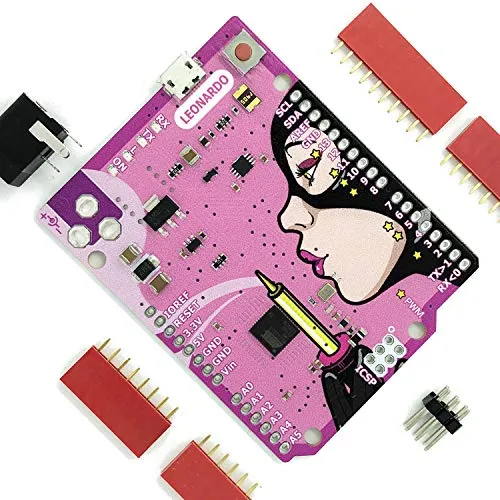
Silk screen color separation involves breaking down a full-color design into individual monochromatic films or digital layers, each corresponding to a specific ink color. This technique, borrowed from general screen printing, adapts to PCB manufacturing by creating separate stencils for sequential printing passes. In complex silkscreen color techniques, engineers separate spot colors like red, blue, and yellow, or simulate process colors using halftones for gradients and shading.
The relevance stems from modern PCB demands in consumer electronics, automotive systems, and medical devices, where clear, colorful markings aid visual inspection and reduce assembly errors. Multi-layer silk screen color PCBs allow differentiation of signal types, polarity indicators, or custom graphics, improving usability. Without proper separation, overlapping colors lead to bleeding, poor registration, or ink adhesion failures during reflow soldering. Optimizing color separation silk screen enhances board aesthetics while meeting durability requirements, directly impacting yield rates in high-volume production.
Factory-driven insights reveal that poor separation increases scrap from misalignment, especially on fine-pitch components. For electric engineers, understanding these techniques aligns design files with fabrication capabilities, minimizing revisions.
Technical Principles of Silk Screen Color Separation
The core mechanism begins with artwork preparation, where vector graphics or raster images undergo color decomposition. Spot color separation identifies discrete hues, generating one layer per color with solid fills or fine lines. For advanced silkscreen color layers, simulated process separation employs halftone screens, converting continuous tones into dot patterns at angles like 15, 45, 75, and 90 degrees to avoid moiré effects.
In PCB contexts, each separated layer translates to a photoemulsion-coated screen or direct laser-imaged stencil. Ink, typically epoxy-based for thermal resistance, squeegees through the mesh onto the cured solder mask. Registration pins or fiducials ensure sub-0.1 mm alignment across passes, critical for multi-layer silk screen color PCBs. UV curing follows each layer, building opacity without smearing.
Ink properties play a pivotal role: viscosity controls flow, thixotropy prevents settling, and solvent resistance withstands cleaning processes. Per IPC-A-600 acceptability criteria, legend thickness must uniform, with no voids larger than specified limits. Complex designs demand matte finishes to reduce glare under inspection lights. Learn our guide on IPC-compliant silkscreen guidelines.
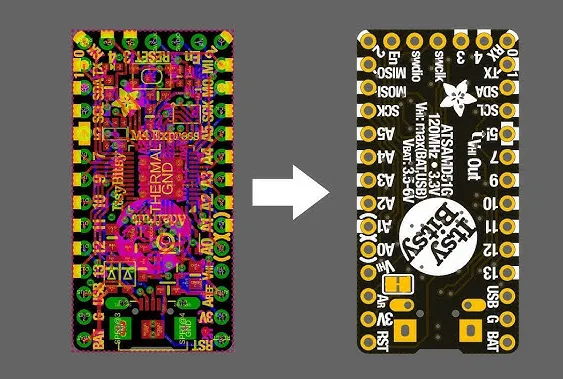
Halftone techniques optimize gradients; amplitude-modulated dots vary size for tone, while frequency-modulated uses fixed-size variable spacing. Factory alignment tolerances tighten for high-density boards, where silk screen encroaches near pads.
Advanced Techniques for Complex Silk Screen Applications
Beyond basic spot separations, complex silkscreen color techniques incorporate index separations using uniform square pixels for sharp edges, ideal for logos on PCBs. This method suits low-color-count designs, reducing layers to four or fewer, thus cutting printing cycles.
For full-spectrum effects, CMYK simulation adapts screen printing principles: cyan, magenta, yellow, and black layers overprint with rosettes to blend optically. Engineers adjust line screens from 65 to 150 lpi based on resolution needs, balancing detail with ink trapping.
Multi-pass printing for multi-layer silk screen color PCBs requires sequential ovens for partial cures, preventing lift-off. Advanced factories employ automated vision systems for real-time registration feedback. Gradient fills challenge separation, often vector-trapped to avoid white gaps.
Ink selection aligns with thermal profiles; lead-free soldering demands inks stable beyond 260°C. Adhesion promoters enhance bonding to solder mask resins like LPI.
Practical Solutions and Best Practices for Optimization
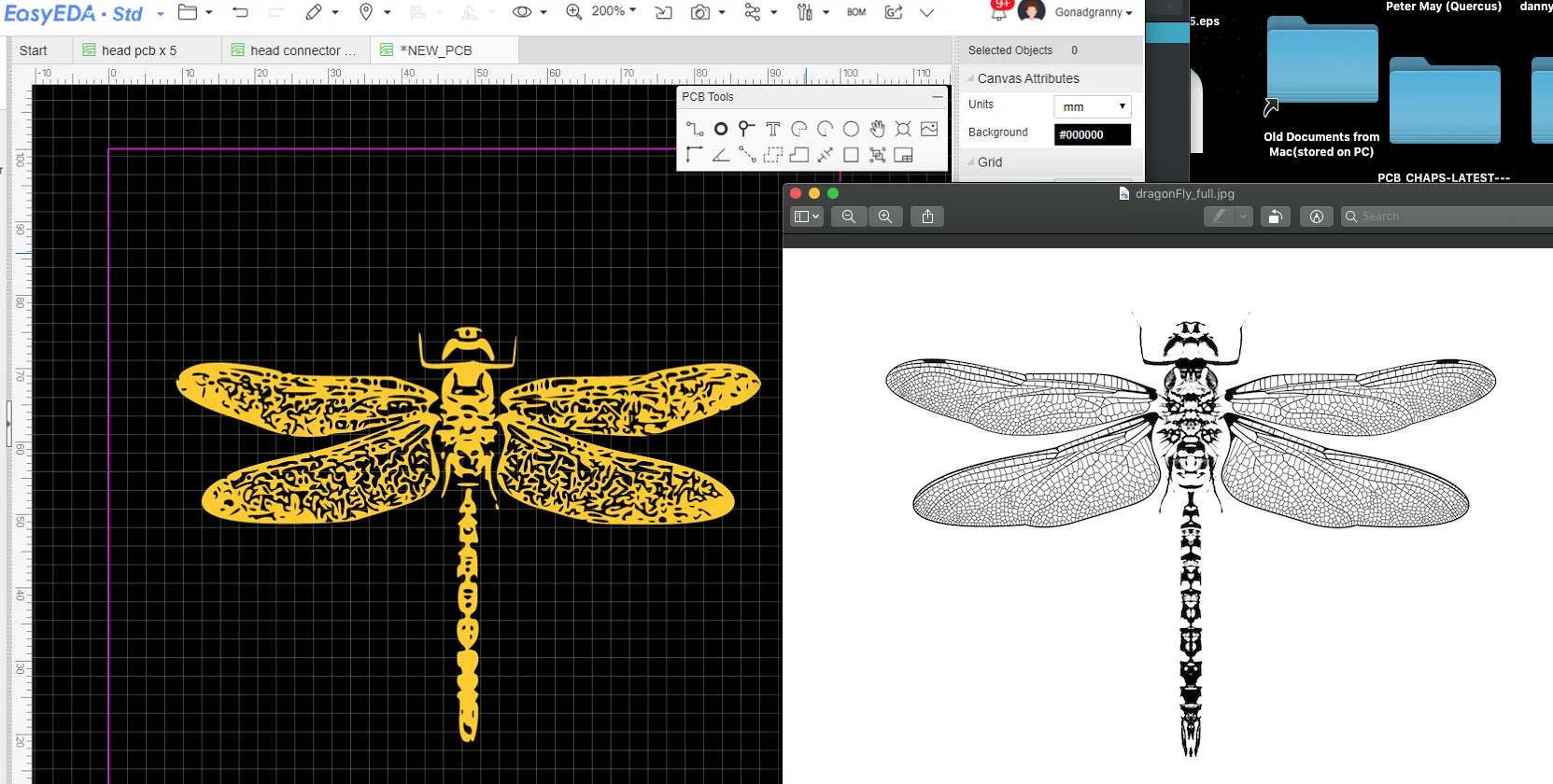
PCB silkscreen design best practices starts in design software with layer dedication: name files like TopSilk_Red.gbr for clarity. Maintain minimum feature sizes at 0.15 mm width and 0.2 mm clearance between colors to prevent bleed.
Color choice prioritizes contrast; white or yellow on green masks excels, while black suits white masks. Test separations with grayscale proofs to verify tones before production.
Gerber output must include apertures matching screen resolutions, with drill files for fiducials. Factory DFM reviews flag overlaps encroaching pads per IPC-6012E performance specs.
For high-volume runs, simulate separations with RIP software, adjusting trap widths to 0.05-0.1 mm for overprint compensation. Sequence printing from lightest to darkest inks minimizes show-through.
Troubleshooting common issues: misregistration from panel warp fixed by flatness controls; ink cracking via humidity-controlled curing. Electrical engineers benefit from polarities in contrasting hues, easing bench testing.
Aspect: Layer Separation — Best Practice: Limit to 4-6 colors — Rationale: Reduces alignment errors
Aspect: Minimum Line Width — Best Practice: 0.15 mm — Rationale: Ensures print fidelity
Aspect: Color Overlap — Best Practice: 0.05 mm trap — Rationale: Prevents gaps
Aspect: Ink Cure Sequence — Best Practice: Light to dark — Rationale: Builds opacity
Aspect: Contrast Ratio — Best Practice: >4:1 — Rationale: IPC-A-600 legibility
Case Study: Implementing Multi-Layer Silk Screen in High-Density Design
Consider a multi-layer silk screen color PCB for an automotive control module, featuring color-coded zones for power, signal, and ground traces. Initial single-color legend obscured fine text amid dense BGA footprints. Separation into three layers—white base, red accents, blue highlights—via spot method improved identification.
Factory trials adjusted halftone at 100 lpi, achieving 99% yield post-reflow. Fiducial placement at panel corners ensured 50 μm registration. This aligned with IPC-6012E, validating marking durability under vibration.
Lessons: pre-separation simulations caught moiré; matte inks reduced reflections. Result: 20% faster assembly verification.
Conclusion
Advanced silk screen color separation elevates PCB functionality and aesthetics, enabling complex silkscreen color techniques for demanding applications. By decomposing designs into precise layers, engineers optimize registration, contrast, and durability in multi-layer silk screen color PCBs. Factory best practices, from halftone optimization to sequential curing, ensure compliance with standards like IPC-A-600. Electrical engineers adopting these methods streamline production, reduce errors, and enhance board usability. Prioritize separation planning early to unlock vibrant, reliable markings.
FAQs
Q1: What is silkscreen color separation PCB, and how does it differ from standard printing?
A1: Silkscreen color separation PCB decomposes multi-color artwork into individual ink layers for sequential screen printing, unlike single-color standard processes. This supports complex silkscreen color techniques on multi-layer silk screen color PCBs. Factory alignment ensures no bleed, maintaining legibility per IPC standards. Ideal for branding while preserving thermal resistance.
Q2: How can engineers apply complex silkscreen color techniques in design?
A2: Use vector tools to separate spot colors into dedicated Gerber layers, applying halftones for gradients. Specify traps and clearances to optimize multi-layer silk screen color PCBs. Test contrasts against solder mask hues. This factory-aligned approach prevents defects, enhancing assembly efficiency.
Q3: What are key steps in optimizing color separation silkscreen for production?
A3: Start with RIP software for accurate decomposition, limit colors to essentials, and include fiducials. Sequence light-to-dark printing with partial cures. Verify per IPC-6012E for adhesion. These steps boost yield on advanced silkscreen color layers, minimizing rework.
Q4: Why use multi-layer silkscreen color PCBs in high-density applications?
A4: Multi-layer silkscreen color PCBs enable color-coded markings for trace identification and instructions, crucial for dense layouts. Proper separation avoids overlaps near pads, improving inspection. Factory processes ensure durability, aligning with standards for reliable performance.
References
IPC-6012E — Qualification and Performance Specification for Rigid Printed Boards. IPC, 2015
IPC-A-600K — Acceptability of Printed Boards. IPC, 2020
IPC-4781 — Qualification and Performance Specification for Printed Board Legend Inks. IPC, 2008