Introduction
Standard FR-4 copper-clad laminates serve most consumer electronics reliably under moderate conditions. However, extreme environments demand materials that withstand high temperatures, aggressive chemicals, and mechanical stresses without degrading performance. In aerospace PCB materials and rugged PCB design, failures like delamination or warpage can lead to mission-critical issues. Advanced copper-clad laminates address these challenges by offering superior thermal stability, chemical resistance, and dimensional integrity. Electrical engineers designing extreme environment electronics must evaluate these alternatives to ensure long-term reliability. This article explores key options beyond FR-4, their properties, and practical selection criteria.

Limitations of FR-4 in Extreme Environments
FR-4, composed of woven glass fabric impregnated with epoxy resin, excels in cost-effectiveness and processability for general applications. Its glass transition temperature limits usability in high-temperature PCB laminate scenarios, where thermal excursions cause softening and increased coefficient of thermal expansion. Chemical exposure further compromises the resin matrix, leading to swelling or hydrolysis in harsh industrial settings. Mechanical vibrations in aerospace or automotive uses exacerbate warpage and microcracks. Engineers recognize that while FR-4 meets IPC class 2 requirements, extreme environment electronics require materials aligned with higher performance specifications. Transitioning beyond FR-4 involves balancing enhanced properties against manufacturability trade-offs.
Advanced Copper-Clad Laminates: Key Types and Properties
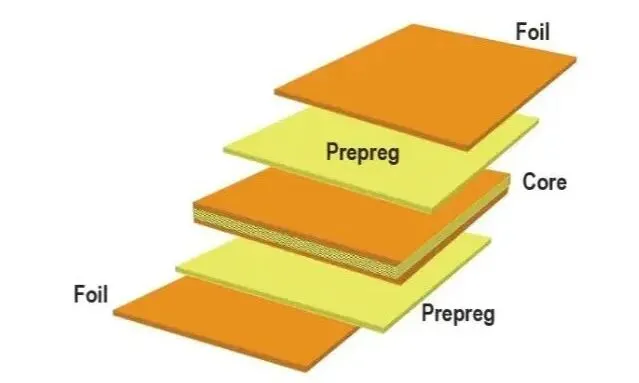
Copper-clad laminates consist of a dielectric core bonded to copper foil, where the resin system defines environmental resilience. High-temperature variants employ modified epoxy resins with elevated glass transition temperatures, maintaining rigidity during soldering or operational heat. Polyimide-based laminates provide exceptional thermal endurance and chemical resistance, ideal for aerospace PCB materials exposed to continuous high-heat cycles. Ceramic-filled composites reduce thermal expansion mismatch with copper, minimizing stress in rugged PCB design. PTFE-reinforced laminates offer low dielectric loss alongside moisture and chemical impermeability for RF applications in extreme conditions. Each type adheres to specifications like IPC-4101, ensuring consistent qualification for demanding uses.
Polyimide laminates feature aromatic polyimide resins that resist oxidation and maintain mechanical strength up to prolonged elevated temperatures. Their low moisture absorption prevents ionic contamination in humid or chemically aggressive atmospheres. Ceramic-filled epoxies integrate inorganic fillers to lower the coefficient of thermal expansion, enhancing via reliability under thermal cycling. PTFE laminates, often hybridized with glass or ceramics, excel in chemical resistant PCB applications due to inherent nonstick properties. High-Tg FR-4 extensions push epoxy limits while retaining compatibility with standard processes. Selection hinges on matching laminate properties to specific environmental profiles.
Related Reading: The Manufacturing Process of Copper-Clad Laminate: A Step-by-Step Guide

Thermal Performance Mechanisms
Thermal reliability stems from the laminate's glass transition temperature, decomposition temperature, and time-to-delam test performance. Above the glass transition, the resin shifts from glassy to rubbery state, increasing CTE and risking copper peel. Advanced laminates delay this transition, preserving interlayer adhesion during reflow or engine bay exposure. Low-CTE formulations counteract copper's expansion, reducing z-axis stress in multilayer stacks. Decomposition temperature indicates onset of resin breakdown, critical for lead-free assembly peaks. These mechanisms ensure high-temperature PCB laminates support extended life in aerospace PCB materials.
Decomposition resistance involves stable polymer backbones that avoid volatile release under heat. Polyimides form char layers that insulate during overloads, unlike epoxies prone to cracking. Ceramic fillers dissipate heat conductively, acting as thermal pathways in dense designs. IPC-4101 outlines test methods like T288 for predicting field behavior. Engineers model these via finite element analysis to forecast warpage. Overall, thermal matching prevents fatigue in extreme environment electronics.
Chemical and Mechanical Resilience
Chemical resistance arises from resin hydrophobicity and crosslink density, repelling solvents, fuels, and acids common in industrial or military settings. Polyimides and fluoropolymers exhibit minimal swelling, preserving trace integrity against hydraulic fluids or cleaners. Mechanical toughness counters vibration through high modulus and fracture toughness, vital for rugged PCB design. Reinforced structures distribute loads evenly, avoiding microcracks at vias or edges. Humidity resistance links to low water absorption, preventing electrochemical migration. These attributes enable chemical resistant PCB deployment without conformal coatings in many cases.
Vibration damping improves with viscoelastic damping in resin systems, absorbing energy in aerospace applications. Impact resistance benefits from ductile copper foils paired with compliant cores. Standards like IPC-6012 qualify laminates for class 3 assemblies in harsh conditions. Dimensional stability under combined stresses maintains signal integrity. Testing protocols simulate field exposures for validation.
Applications in Extreme Environments
Aerospace PCB materials prioritize polyimide and high-Tg laminates for avionics enduring -55°C to 125°C cycles and rapid depressurization. Engine controls demand low-CTE to match aluminum housings, preventing bow. Chemical processing plants use fluoropolymer laminates against acids and solvents in sensor boards. Oil and gas downhole electronics rely on rugged PCB design with ceramic-filled cores for 200°C steam and H2S exposure. Military gear integrates hybrid stacks for multifunctionality under shock and EMI. Extreme environment electronics thus leverage tailored CCL for mission assurance.
In automotive powertrains, high-temperature PCB laminates handle inverter heat near motors. Subsea robotics employ chemical resistant PCB for saltwater and pressure. Each sector weighs cost against performance, often hybridizing cores for optimization.
Related Reading: Copper-Clad Laminate: A Cost-Effective Material for PCB Production
Best Practices for Selection and Implementation
Assess operating envelopes first: map peak temperatures, chemical profiles, and mechanical loads. Consult IPC-4101 slash sheets for matching specifications to needs. Prototype with representative stackups to verify CTE compatibility and via fill. Employ sequential lamination for thick high-Tg builds to control warpage. Bake-out moisture per JEDEC guidelines before assembly. Validate via accelerated life testing simulating environments.
Layer sequencing places high-CTE cores inner for symmetry. Copper weight selection balances current capacity with peel strength. Edge beveling aids chemical cleanability. Supplier qualification ensures lot consistency. Documentation traces material pedigree for audits.

Practical Insights for Rugged PCB Design
Engineers often overlook resin-flow dynamics in high-filler laminates, leading to voids. Prepreg selection matches resin content to foil adhesion. Drill smear removal demands plasma over permanganate for polyimides. Solder mask compatibility testing prevents adhesion loss at edges. Field returns highlight CTE mismatch as top failure mode. Iterative DFMEA refines designs pre-production.
Conclusion
Advanced copper-clad laminates extend PCB viability into extremes where FR-4 falters. High-temperature, chemical resistant, and low-CTE options enable reliable aerospace PCB materials and rugged PCB design. Technical properties like elevated Tg and filler reinforcement underpin performance. Best practices in selection and processing maximize yields. Electrical engineers benefit from aligning materials to IPC standards for extreme environment electronics. Future innovations will further hybridize for multifunctionality.
FAQs
Q1: What distinguishes high-temperature PCB laminates from standard FR-4?
A1: High-temperature PCB laminates use resins with superior thermal stability, such as polyimides or high-Tg epoxies, resisting softening during prolonged heat exposure. They maintain low CTE to prevent delamination in multilayer boards. These materials suit aerospace PCB materials under thermal cycling. Standard FR-4 limits apply to milder conditions per IPC specifications.
Q2: How do chemical resistant PCB materials enhance rugged PCB design?
A2: Chemical resistant PCB laminates, like fluoropolymer composites, repel solvents and acids without swelling or degradation. This preserves electrical isolation in harsh industrial settings. Rugged PCB design integrates them for vibration-prone applications. Low moisture uptake further bolsters reliability.
Q3: Why are advanced laminates essential for extreme environment electronics?
A3: Extreme environment electronics face combined thermal, chemical, and mechanical stresses beyond FR-4 capabilities. Advanced copper-clad laminates provide matched expansion and decomposition resistance. They align with IPC-4101 for qualification. This ensures operational integrity in aerospace or downhole uses.
Q4: What role do standards play in selecting aerospace PCB materials?
A4: Standards like IPC-6012 define qualification tests for performance in extreme conditions. They guide laminate specs for high-Tg and polyimide types. Aerospace PCB materials must pass thermal shock and peel strength criteria. Compliance minimizes risks in certification.
References
IPC-4101E — Specification for Base Materials for Rigid and Multilayer Printed Boards. IPC, 2017
IPC-6012E — Qualification and Performance Specification for Rigid Printed Boards. IPC, 2017
IPC-4103C — Specification for Nonhalogenated Laminate and Prepreg Base Materials Intended for Use in Printed Boards and Multilayer Printed Boards. IPC, 2015
JEDEC J-STD-020E — Moisture/Reflow Sensitivity Classification for Nonhermetic Solid State Surface Mount Devices. JEDEC, 2014