Introduction
The evolution of modern electronics is defined by the transition from rigid, bulky enclosures to sleek, ergonomic, and often wearable forms. Flexible printed circuits, or flex PCBs, sit at the center of this transformation. Unlike their rigid counterparts, flexible circuits provide the mechanical freedom to fold, twist, and fit into unconventional spaces, enabling breakthroughs in aerospace, medical technology, and consumer electronics.
For engineers and technical decision makers, mastering flexible PCB design is not merely about making a board bend. It requires a systematic understanding of how mechanical stress, thermal dynamics, and material properties interact to influence electrical performance. This guide establishes a foundational framework for navigating the complexities of flex circuit engineering, ensuring that reliability is maintained throughout the product lifecycle.
What Makes a High Reliability Flexible PCB?
A high reliability flexible PCB must maintain electrical performance and mechanical integrity under the stresses expected during assembly, installation, and operation. Unlike rigid boards, flexible circuits can experience repeated bending, twisting, vibration, compression, and localized strain throughout their service life.
For demanding applications, high reliability flexible PCB solutions need to balance electrical performance with mechanical durability. Reliability is therefore not determined by one material or manufacturing step. It depends on the interaction between the substrate, copper, coverlay, adhesives, stiffeners, circuit geometry, interconnections, and manufacturing controls.
In practical terms, flexible PCB high reliability means the circuit continues to perform as intended after exposure to the mechanical, thermal, and environmental conditions defined for the product. A design that works well in a static application may require substantially different construction when the circuit must flex repeatedly.

Material Selection for High Reliability Flexible Circuits
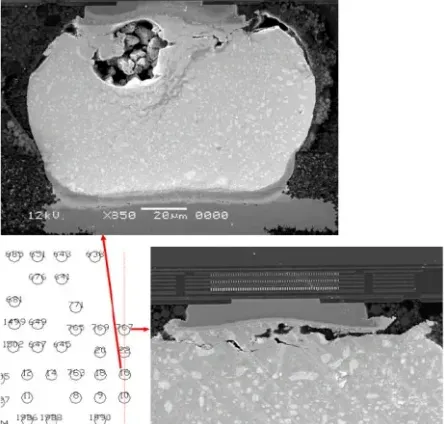
Flexible circuits are often deployed in environments where they are exposed to thermal cycling and high operating temperatures. Because polyimide and copper have different coefficients of thermal expansion, the risk of delamination or barrel cracking in plated through holes increases significantly in extreme conditions.
Beyond mechanical movement, environmental factors like thermal stress dictate the longevity of a flexible circuit. Selecting materials for extreme temperature PCB reliability requires careful analysis of the glass transition temperature and the thermal stability of the chosen adhesives. Engineers must evaluate how materials behave when subjected to rapid temperature shifts to prevent mechanical failure. Proper material qualification ensures that the circuit maintains its structural integrity and electrical connectivity even when operating at the limits of its thermal specification.

Designing the Bend Area for Long-Term Reliability
The bend area is one of the most mechanically sensitive regions of a flexible circuit. Excessive bending, sharp transitions, or placing components and vias directly in a dynamic bend zone can increase copper fatigue and stress concentration.
A reliable design should control bend radius, copper geometry, layer construction, and the transition between rigid and flexible sections. Dynamic flex applications generally require more careful mechanical analysis than circuits that are bent only during assembly.
How to Improve Flexible PCB Connection Reliability
Flexible PCB connection reliability depends on more than maintaining electrical continuity. Connectors, solder joints, contact pads, stiffeners, and rigid-to-flex transitions must also withstand the mechanical loads generated during assembly and operation.
A connection that performs correctly during initial electrical testing may still become unreliable if repeated movement transfers excessive stress into the interface. This is why mechanical support and strain relief should be considered alongside electrical design.
Connector and Contact Area Design
Connector regions should be designed around the actual insertion, retention, and bending conditions of the application. Appropriate stiffeners can provide the local support needed to maintain dimensional stability and protect contact areas during assembly.
The transition between the reinforced connector region and the flexible section should also be controlled. An abrupt stiffness change can concentrate mechanical stress and contribute to cracking or delamination.
Solder Joint and Component Transition Reliability
Components should generally be kept away from areas that experience repeated dynamic bending. When components must be placed near a flexing region, the transition should be designed to reduce stress transferred into solder joints and component terminations.
Pad geometry, component orientation, solder-joint design, and local reinforcement should be evaluated together rather than treating the solder joint as an isolated feature.
Strain Relief for Flexible PCB Connections
Strain relief helps prevent mechanical loads from being transferred directly into electrical connections. Stiffeners, adhesive support, controlled bend transitions, and appropriate enclosure design can all contribute to better connection reliability.
For products exposed to vibration or repeated movement, strain relief should be considered during the initial mechanical and PCB design stages rather than added after fabrication.
Materials and Design Rules for High Reliability Flexible Circuits
A reliable material system must be supported by an appropriate layout. Even a high-performance flexible substrate can experience premature failure if copper geometry, bend areas, vias, or stiffeners are positioned incorrectly.
For high reliability flexible circuits, the electrical layout should therefore be developed together with the expected mechanical movement of the finished product.
Copper and Trace Layout
Trace geometry should be adapted to the expected bending direction and flexing frequency. Smooth trace routing can reduce local stress concentrations, while unnecessary changes in trace width or sharp corners can create areas of increased mechanical stress.
In dynamic flexing applications, the copper pattern should be positioned and routed so that repeated movement does not repeatedly concentrate strain at the same location.
Coverlay and Adhesive Considerations
Flexible PCB coverlay protects exposed conductors and contributes to the mechanical structure of the flexible circuit. Its opening dimensions, overlap, and transition areas should be considered during layout and fabrication.
The adhesive system can also affect overall thickness and flexibility. For demanding applications, designers should evaluate whether an adhesive-based or adhesiveless construction better matches the required bend performance, thermal environment, and dimensional requirements.
Stiffener Design for Reliable Flexible PCB Assemblies
Stiffeners are commonly used beneath connectors, component areas, and other regions requiring additional mechanical support. FR-4, polyimide, stainless steel, and other reinforcement materials can be selected according to the mechanical and assembly requirements.
The stiffener should reinforce the intended area without creating an unnecessary stress concentration at the transition into the flexible section.
Thin Flexible PCB Design Considerations
A thin flexible PCB can provide valuable space and weight savings in compact electronic products. However, reducing thickness does not automatically improve reliability.
A thinner construction may be more flexible, but it can also be more sensitive to handling, dimensional variation, and mechanical damage. Substrate thickness, copper thickness, coverlay, stiffener placement, and bend requirements should therefore be considered together.
For space-constrained products, the correct objective is not simply to make the circuit as thin as possible. The construction should be thin enough to meet the mechanical requirements while maintaining adequate electrical and manufacturing reliability.
Via and Interconnect Reliability in Flexible PCBs
Vias can introduce mechanical discontinuities into a flexible circuit, particularly when they are positioned in areas exposed to repeated bending. For this reason, via placement and construction should be evaluated as part of the overall mechanical design.
High-reliability interconnects require appropriate drilling, plating, registration, pad geometry, and material compatibility. These manufacturing factors become especially important when a via is located near a bend or transition region.
Via Placement in Flexible and Dynamic Areas
Where possible, vias should be kept away from the most active bending zones. Positioning vias in relatively stable regions can reduce repeated mechanical stress on plated structures.
The appropriate location depends on the layer count, bend direction, via technology, and expected flex cycles. A via that is acceptable in a static region may become a reliability concern when subjected to repeated dynamic movement.
For customers evaluating a high reliability vias FPC maker, manufacturing capability should be considered alongside nominal via dimensions. Drilling accuracy, copper plating quality, layer registration, material handling, and process inspection all influence the reliability of the finished interconnect.
Annular Ring and Plated Connection Reliability
An adequate annular ring helps maintain a reliable connection between the via and surrounding copper. Poor registration, insufficient copper coverage, or excessive mechanical stress can increase the risk of connection failure.
The required geometry should therefore be established according to the actual fabrication capability. A design that leaves little manufacturing margin may become difficult to control consistently when production tolerances are introduced.
Laser Vias and HDI Flex Structures
High-density flexible circuits may use microvias or other advanced interconnect structures to overcome routing limitations. These structures require appropriate control of laser drilling, copper plating, registration, and layer construction.
For high reliability applications, the interconnect should be evaluated from both electrical and mechanical perspectives. A compact via structure may solve a routing problem while creating additional mechanical sensitivity if it is placed in an active bend area.
Continuous Flexible Printed Circuits for Long-Length Applications
A continuous flexible printed circuit can be useful when a circuit must extend along a long mechanical path or connect multiple electrical points without relying on several separate boards or cable assemblies.
Long-length flexible circuits can provide continuous electrical routing while maintaining the ability to conform to curved or moving structures. Their suitability depends on the product's mechanical layout, electrical requirements, assembly method, and manufacturing process.
When to Use a Continuous Flexible Printed Circuit
Continuous flexible circuits may be considered for applications where conventional rigid boards and cable harnesses would introduce additional connectors, assembly steps, or mechanical constraints.
Potential applications include moving mechanisms, instrumentation, displays, lighting systems, sensors, and other products requiring electrical routing across an extended path.
The design should account for where the circuit will bend, how it will be supported, and how the ends will be connected to the rest of the system.
Can Flexible PCBs Be Made in Unlimited Lengths?
The phrase flexible PCBs of unlimited length should be treated carefully in practical manufacturing. Flexible materials can support extended circuit lengths, but actual production length is still constrained by material handling, fabrication equipment, processing methods, transportation, assembly, and the mechanical requirements of the finished product.
For a long-length design, the manufacturer should review the required finished length and mechanical conditions before production. It is also important to determine how the circuit will be packaged, shipped, handled, and installed without introducing damage.
In other words, long-length capability should be evaluated as a complete manufacturing and application requirement rather than assumed from the flexibility of the material alone.
Testing and Manufacturing Controls for High Reliability Flexible PCBs
A high reliability flexible PCB is not defined only by its design. Manufacturing consistency and verification are equally important, particularly for circuits used in demanding environments.
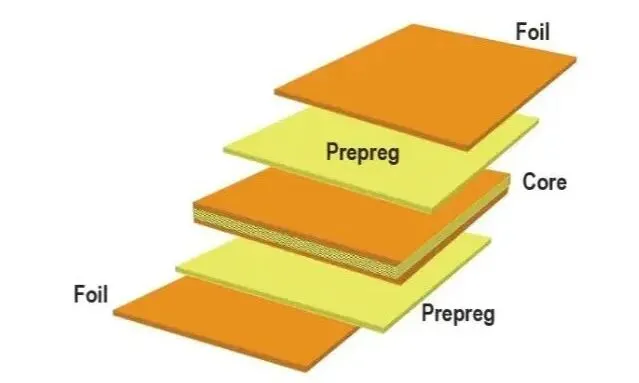
The manufacturing process should translate the design requirements into measurable controls. This includes material verification, dimensional control, imaging, etching, drilling, plating, lamination, coverlay application, surface finishing, and final inspection.
Incoming Material and Process Control
Material thickness, copper type, surface condition, dimensional accuracy, and material condition should be verified against the applicable specifications.
Process controls should then maintain consistency through fabrication. Critical parameters may include layer registration, conductor geometry, drilling accuracy, plating quality, coverlay alignment, and stiffener placement.
For high reliability applications, controlling process variation is often as important as meeting the nominal design dimensions.
Electrical and Visual Inspection
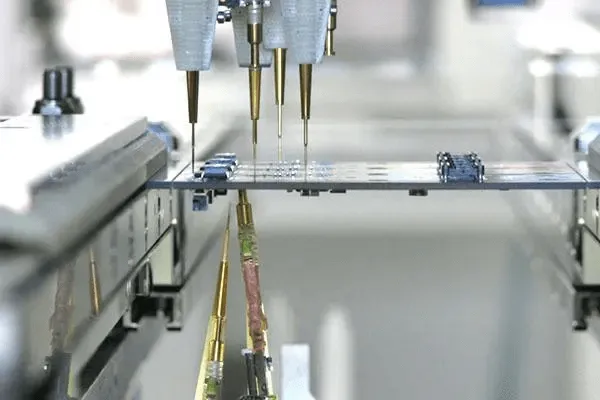
Electrical testing can identify opens, shorts, and other circuit-level defects before shipment. Visual and automated inspection methods can help identify conductor geometry issues, registration problems, surface defects, and workmanship concerns.
The inspection strategy should reflect the actual risks of the product. A flexible circuit used in a static consumer application may require a different verification approach from one used in a continuously moving mechanism.
Mechanical Reliability Testing
Applications involving repeated movement may require mechanical testing that reflects actual service conditions. Bend radius, flex direction, cycle requirements, temperature, vibration, and connector loading can all influence the appropriate test method.
The most useful reliability test is one that reproduces the critical stresses the finished flexible circuit will experience. Test conditions should therefore be established from the product requirements rather than selected only because they are convenient to perform.
High-Reliability Standards for Medical Wearable Flexible PCBs
Medical wearables represent one of the most demanding applications for flexible electronics, requiring a combination of miniaturization, biocompatibility, and extreme durability. These devices must endure constant human motion, exposure to moisture, and the physical rigors of daily use while providing accurate diagnostic data.
When flexible circuits are integrated into medical devices, reliability becomes a matter of patient safety. Maximizing the reliability of medical wearable flexible PCB involves unique testing protocols that simulate the specific stresses of the human body. Designers must focus on moisture resistance and the mechanical fatigue of the circuit to ensure long term performance. By prioritizing robust interconnects and specialized protective coatings, manufacturers can produce wearable electronics that meet the stringent quality standards required for medical certification.
Strategies for Flexible PCB Manufacturing Cost Optimization
The production of flexible circuits involves specialized processes and materials that typically command a higher price point than standard rigid boards. However, through thoughtful design and early collaboration with manufacturers, it is possible to achieve significant cost savings without sacrificing quality or functionality.
While technical performance is paramount, engineering decisions must remain economically viable. Optimizing the flexible PCB cost without compromising quality involves a deep understanding of panel utilization and material yields. Reducing the number of layers, simplifying the stiffener requirements, and choosing standard material thicknesses can significantly lower the total cost of ownership. A strategic approach to design for manufacturing allows organizations to scale production while maintaining a competitive edge in the market.
Common Design Factors That Reduce Flexible PCB Reliability
Many flexible PCB failures originate from a mismatch between the circuit design and its mechanical environment. Common risk factors include placing vias or components in active bend zones, using an insufficient bend radius, creating abrupt stiffness transitions, and selecting materials without considering the expected flexing conditions.
Excessive Mechanical Stress
Repeated bending beyond the intended capability of the construction can lead to copper fatigue, cracking, delamination, or other failures.
Mechanical requirements should therefore be defined before the final stackup and routing are established. Designers should know whether the circuit will remain static after installation or experience repeated dynamic movement.
Poor Rigid-to-Flex Transitions
Rigid-to-flex transitions are particularly important in rigid-flex constructions. Sudden changes in thickness or stiffness can concentrate mechanical stress.
Controlled transitions, suitable stiffeners, and appropriate bend areas can help distribute stress more effectively. The transition should be reviewed during DFM rather than only after the first prototype.
Inadequate Manufacturing Tolerance
A design that works only at nominal dimensions may become unreliable when normal manufacturing variation is introduced.
Critical features such as pad dimensions, via structures, coverlay openings, layer registration, and stiffener placement should therefore be reviewed against actual fabrication capabilities.
How Manufacturers Improve High Reliability Flexible PCB Solutions
Developing high reliability flexible PCB solutions requires coordination between design engineering, CAM review, material selection, fabrication, inspection, and final testing.
A manufacturer should evaluate the design according to both the electrical requirements and the mechanical conditions expected in the finished product. This is especially important for applications involving repeated bending, limited installation space, vibration, or long service life.
DFM Review Before Production
A DFM review can identify potential problems with bend areas, trace geometry, vias, coverlay openings, stiffener placement, layer registration, and manufacturing tolerances before fabrication begins.
Early review is particularly valuable for high reliability flexible circuits because many mechanical problems become more difficult and expensive to correct after the stackup and layout have been finalized.
The manufacturer can also compare the proposed design with actual production capabilities and recommend practical adjustments when necessary.
Manufacturing and Reliability Verification
Production controls should connect design requirements with measurable inspection criteria. Depending on the application, this can include dimensional inspection, electrical testing, visual inspection, plating verification, and mechanical reliability testing.
The objective is not simply to manufacture a flexible printed board that passes an electrical test. The finished circuit should also be capable of performing reliably under the mechanical and environmental conditions defined for the product.
Designing for Reliability from the Start
The most effective reliability strategy begins before fabrication. Designers should define the expected bend behavior, environmental conditions, connection method, material requirements, and service life, then translate those requirements into the stackup and layout.
This approach helps ensure that the final flexible PCB is designed for its actual application rather than being evaluated for reliability only after production.

Summary of Flexible Circuit Principles
Mastering the complexities of FPC PCB design requires a transition from viewing the circuit as a static component to treating it as a dynamic mechanical system. By establishing a clear framework that accounts for bending stress, thermal resilience, and application specific requirements, engineers can build highly reliable products. The integration of signal integrity considerations with material science and cost management creates a robust foundation for innovation. As the demand for smaller and more versatile electronics continues to grow, a systematic approach to flexible circuitry remains an essential discipline for modern hardware development. Focus on core engineering principles and industry best practices ensures that these sophisticated interconnects perform as intended in the most challenging environments.
FAQ
Q1: What makes a flexible PCB suitable for high-reliability applications?
A1: A flexible PCB is suitable for a high-reliability application when its material system, circuit structure, interconnections, and manufacturing process are matched to the actual operating environment. Factors such as repeated movement, vibration, temperature changes, connector loading, and installation stress should be considered during design rather than relying on electrical testing alone.
Q2: How can I improve flexible PCB connection reliability?
A2: Improving flexible PCB connection reliability requires controlling both the electrical interface and the mechanical transition around it. Connector regions should have appropriate reinforcement, solder joints should be protected from unnecessary mechanical stress, and strain relief should prevent external forces from being transferred directly into the connection. The connection design should also account for the expected movement and installation conditions of the finished product.
Q3: Are high reliability flexible circuits suitable for dynamic applications?
A3: Yes. High reliability flexible circuits can be designed for dynamic applications when the material construction and layout are appropriate for repeated movement. Dynamic applications require more attention to copper type, bend radius, trace routing, layer construction, and the location of vias and components than circuits that are flexed only during installation. The expected movement and service conditions should be defined before selecting the final construction.
Q4: What should I look for in a high reliability vias FPC maker?
A4: When evaluating a high reliability vias FPC maker, look beyond the manufacturer's minimum via size. Consider its capabilities for drilling, copper plating, layer registration, flexible materials, coverlay processing, electrical testing, and process inspection. It is also important to determine whether the manufacturer can review via placement in relation to the circuit's bending and mechanical requirements.
Q5: Can a continuous flexible printed circuit be used for long-distance electrical routing?
A5: Yes. A continuous flexible printed circuit can be considered when electrical routing needs to extend along a long mechanical path or connect multiple locations without using several separate boards or cable assemblies. The design should account for how the circuit will be supported, bent, connected, packaged, and assembled over its full length.
Q6: Can flexible PCBs really be manufactured in unlimited lengths?
A6: The term flexible PCBs of unlimited length is best understood as a description of extended-length capability rather than an absolute manufacturing guarantee. Actual circuit length can be limited by fabrication equipment, material handling, processing methods, transportation, assembly requirements, and the mechanical conditions of the application. For a long-length project, the required finished length should be reviewed with the manufacturer before production.
Q7: Is a thinner flexible PCB always more reliable?
A7: Not necessarily. A thin flexible PCB can provide advantages in compact products where space, weight, and flexibility are important, but reducing thickness may also affect mechanical durability and handling. The substrate, copper, coverlay, stiffener, bend conditions, and assembly method should be evaluated as a complete construction rather than optimizing thickness alone.
Q8: What should I consider when choosing a thin flexible AR PCB board?
A8: When selecting a thin flexible AR PCB board, consider the complete circuit construction instead of thickness alone. Substrate material, copper thickness, coverlay, stiffeners, bend radius, connector requirements, and the expected mechanical environment can all affect performance. A thinner construction may improve flexibility and space efficiency, but it still needs to meet the electrical, mechanical, and manufacturing requirements of the application.
Q9: How do vias affect the reliability of flexible PCBs?
A9: Vias can become reliability concerns when they are exposed to repeated mechanical stress, especially in active bending regions. Their reliability depends on factors such as via placement, drilling accuracy, plating quality, annular ring, layer registration, and the surrounding circuit structure. Keeping vias away from highly active bend areas can reduce unnecessary mechanical stress when the layout permits.
Q10: What testing is commonly used to verify flexible PCB reliability?
A10: The appropriate testing depends on the intended application. Electrical testing can identify opens and shorts, while visual and automated inspection can detect manufacturing and workmanship issues. Applications involving repeated movement may additionally require mechanical testing that reflects the expected bend conditions, cycle requirements, temperature, vibration, and connector loading. Test methods should be based on the actual service conditions of the product.
Q11: How does DFM improve flexible PCB reliability?
A11: DFM allows potential reliability problems to be identified before fabrication. During a DFM review, manufacturers can evaluate bend areas, trace geometry, via placement, coverlay openings, stiffeners, layer registration, and manufacturing tolerances against actual production capabilities. Addressing these issues before production can reduce the risk of design-related defects and make the finished flexible circuit more consistent.