Overview of Underground Robotics and the DARPA SubT Challenge
Underground environments present some of the most demanding conditions for robotic systems. The DARPA Subterranean (SubT) Challenge, culminating in its final in September 2021 in a limestone cave network near Louisville, Kentucky, highlighted both the potential and the significant engineering hurdles of operating robots in dark, dusty, damp, and GPS-denied spaces.
The competition pushed teams to develop robots capable of traversing kilometers of unknown terrain, building accurate maps, locating artifacts, and operating with high autonomy amid communication blackouts, smoke, and structural obstacles. These scenarios mirror real-world applications in mining, disaster response, tunnel inspection, and infrastructure maintenance.
Core Technical Challenges in Underground Environments
Underground operations expose multiple interdependent engineering problems:
- Navigation and Localization Without GPS: Robots must rely on SLAM (Simultaneous Localization and Mapping), LiDAR, IMUs, and visual odometry in complete darkness and featureless tunnels.
- Communication Limitations: Radio signals are heavily attenuated by rock and soil. Teams experimented with mesh networks, tethered solutions, and breadcrumb-style relay nodes, but deep sections often require full autonomy.
- Mobility and Traversability: Complex terrain, debris, water, and narrow passages demand robust locomotion - wheeled, legged, or hybrid platforms combined with advanced perception for real-time path planning.
- Sensing and Perception: Dust, smoke, and low visibility degrade optical sensors. Multi-modal sensor fusion (LiDAR, thermal, ultrasonic, radar) is essential for reliable obstacle detection and mapping.
- Power and Reliability: Long-duration missions in harsh conditions require efficient power management, thermal control, and fault-tolerant electronics.
- System-Level Integration: Coordinating fleets of heterogeneous robots (wheeled, quadruped, aerial) under tight time constraints.
These challenges drive innovation in embedded systems, where electronics must maintain performance under vibration, temperature extremes, moisture, and potential electromagnetic interference.

The Role of Autonomy and Human-Robot Teaming
Early SubT rounds relied heavily on teleoperation, but the final emphasized autonomy due to communication constraints. Robots handled low-level navigation and exploration while human supervisors focused on high-level goals and intervention. This "human-on-the-loop" approach balances reliability with safety in critical operations.
Achieving robust autonomy requires powerful onboard processing, efficient sensor fusion algorithms, and real-time decision-making capabilities - all supported by high-performance computing platforms and reliable interconnects.

Results and Technological Advancements from SubT
The finals demonstrated significant progress. Top teams like Cerberus and CSIRO Data61 located 23 artifacts each, with CSIRO achieving mapping accuracy within 1% of ground truth in under an hour - a task that took human surveyors over 100 hours. The competition accelerated development of:
- Multi-robot coordination systems
- Advanced mapping and exploration algorithms
- Rugged locomotion platforms
- Resilient communication strategies
Many of these technologies are now transitioning to commercial and industrial use, particularly in mining automation, search-and-rescue, and infrastructure inspection.
PCB Design and Manufacturing Considerations for Underground Robots
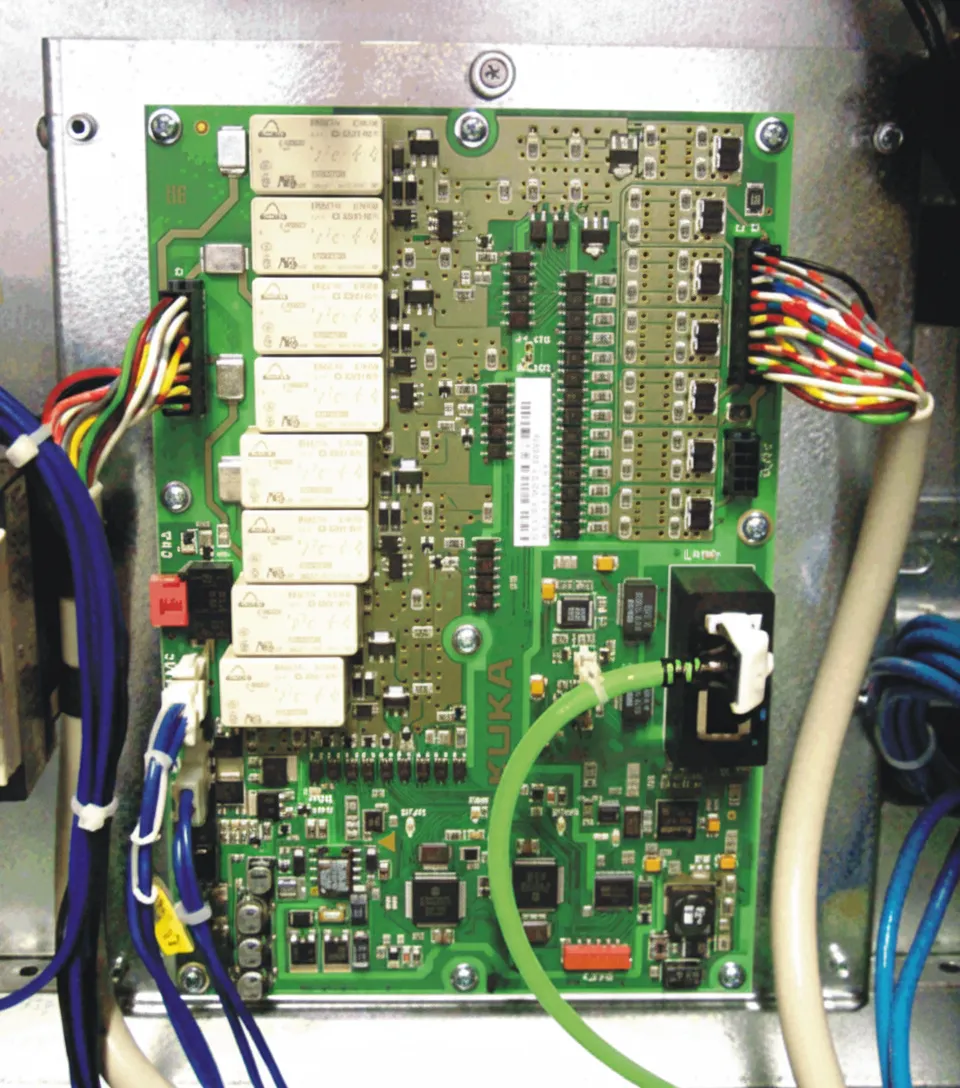
Reliable underground robotics depends heavily on robust electronics hardware engineered for extreme conditions:
- High-Reliability PCBs: Use of polyimide and high-Tg materials for thermal stability and mechanical resilience in vibration-heavy environments.
- Rugged Interconnects: Rigid-flex and flexible PCBs accommodate movement in legged or articulated platforms while maintaining signal integrity.
- Power Management: Optimized layouts for efficient DC-DC conversion, battery management systems (BMS), and low-power modes to extend mission duration.
- Sensor Integration: High-density interconnect (HDI) designs support multi-sensor arrays with clean analog/digital separation to minimize noise in harsh conditions.
- Protection and Environmental Sealing: Conformal coating, controlled impedance routing, and robust assembly processes protect against dust, moisture, and thermal cycling.
- Thermal Management: Heavy copper layers, thermal vias, and strategic component placement handle heat dissipation in enclosed, poorly ventilated robotic systems.
Electronics manufacturing partners experienced in industrial and aerospace-grade production help ensure these systems meet the stringent reliability requirements for field deployment.
Industry Applications and Future Outlook
Technologies matured through challenges like SubT are finding rapid adoption in mining automation, tunnel inspection, disaster response, and underground infrastructure monitoring. As autonomy improves and costs decrease, underground robots will significantly enhance safety by reducing human exposure to hazardous environments.
For developers of robotic systems, collaboration with specialized PCB and electronics manufacturers is crucial to translate advanced perception and control algorithms into rugged, deployable hardware.
FAQ
Q1: What are the main challenges for underground robots?
A1: Lack of GPS, poor communications, complex terrain, dust/smoke interference, and the need for high autonomy in GPS-denied environments.
Q2: Why was the DARPA SubT Challenge important?
A2: It accelerated development of practical, robust robotic systems for search-and-rescue, mining, and industrial applications by forcing system-level integration under realistic conditions.
Q3: How do PCBs support underground robotic systems?
A3: Through high-reliability materials, rigid-flex designs, robust power and sensor integration, and manufacturing processes that ensure performance in vibration, dust, and temperature extremes.