Market Growth and Technology Drivers
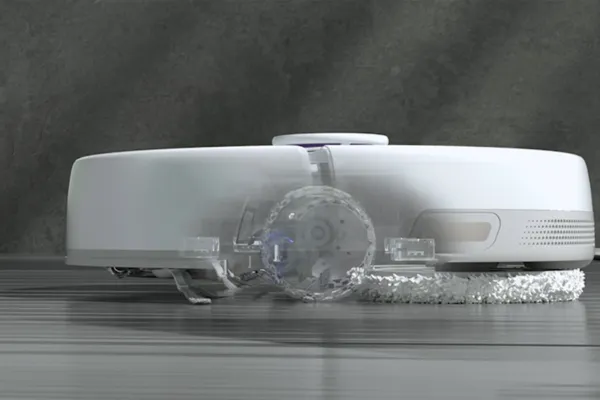
The home robot market is experiencing strong growth, driven by advances in AI, machine learning, sensor fusion, and power electronics. Devices such as robotic vacuums, mops, lawn mowers, service robots, and companion devices are shifting from basic functionality to intelligent, autonomous operation. Global shipments are projected to rise significantly, fueled by consumer demand for convenience, efficiency, and smart home integration.
Success in this competitive space depends on balancing performance, size, cost, power consumption, and reliability - areas where electronics and PCB design play a decisive role.
Key Design Trends and Engineering Challenges
Modern home robots must operate in unstructured indoor environments, requiring sophisticated perception, navigation, decision-making, and mobility while maintaining compact form factors and long battery life.
Major Challenges:
- Integration of multiple sensors, processors, and actuators in limited space.
- Management of power consumption for extended runtime.
- Thermal dissipation in sealed or compact enclosures.
- Protection against electrical faults, surges, ESD, and battery-related risks.
- Compliance with safety, EMC, and energy efficiency standards across global markets.
- Cost-effective scalability for high-volume manufacturing.
The transition from mains-powered to battery-operated systems further emphasizes the need for efficient power management, charging circuits, and robust protection.
Typical Home Robot System Architecture
A typical home robot architecture comprises three primary functional blocks:
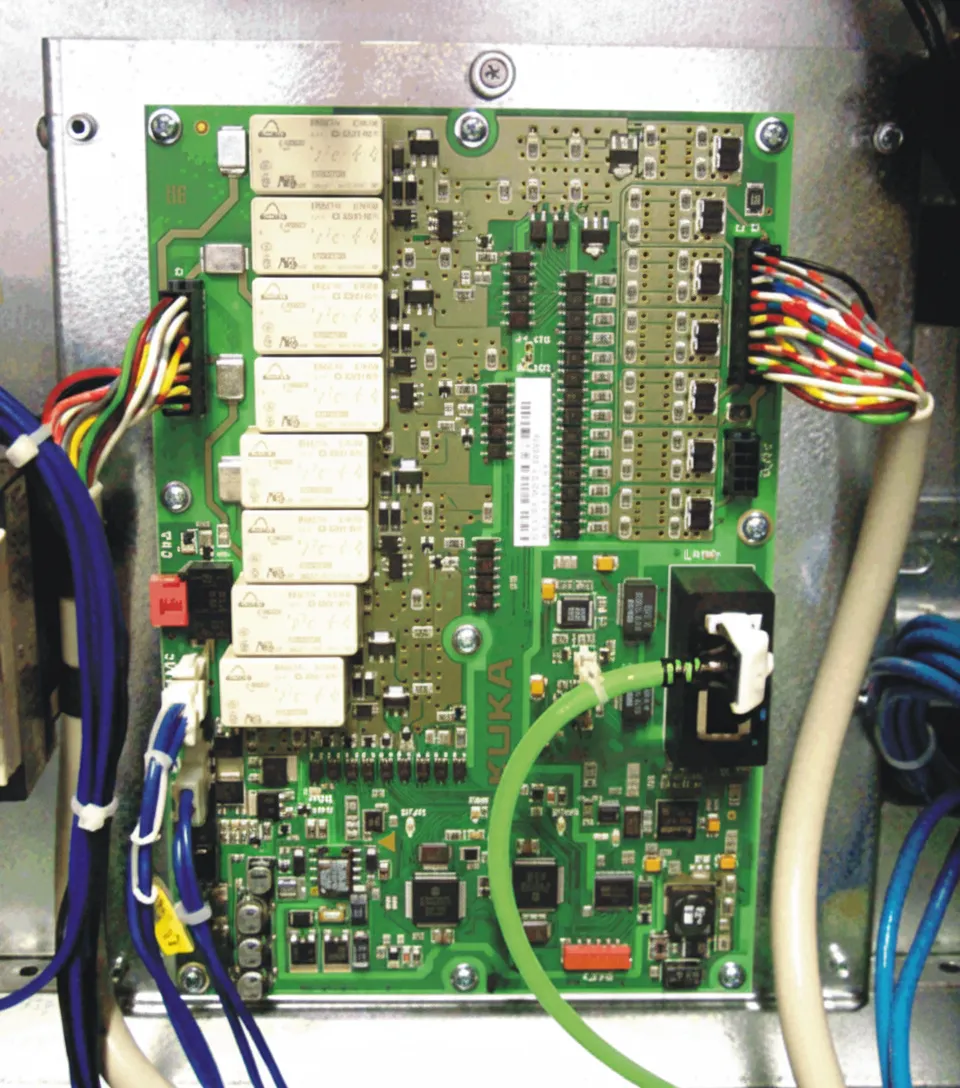
- Main Control Unit: Houses the central processor, memory, sensor interfaces, motor drivers, and communication modules. This is the "brain" responsible for sensor fusion, path planning, AI algorithms, and real-time control.

- Charging and Protection Circuitry: Manages power input from docking stations, battery charging, voltage regulation, and comprehensive protection (overcurrent, overvoltage, short circuit, reverse polarity, etc.).

- Battery Pack: Provides mobility with lithium-ion or LiFePO4 cells, often including BMS (Battery Management System) for monitoring cell balance, temperature, and state of charge.
These subsystems must integrate seamlessly through high-density interconnects, flexible circuits for mechanical movement, and reliable connectors.
Core Components and Technology Recommendations
Processors and Computing Platforms
Mid-to-high-end home robots often use ARM-based MCUs or application processors (e.g., STM32 series, Qualcomm or MediaTek SoCs) with sufficient compute for SLAM, computer vision, and voice recognition. Key requirements include low power modes, integrated peripherals (ADC, PWM, communication interfaces), and support for real-time operating systems.
Sensors
Multi-sensor fusion is essential: LiDAR or cameras for mapping, ultrasonic and IR for proximity/cliff detection, IMUs (gyro + accelerometer) for odometry, and bump sensors for collision handling. High-accuracy, low-power sensors with robust interfaces (I2C, SPI, UART) are preferred.
Motors and Drives
Brushless DC (BLDC) motors with encoders provide efficient locomotion and suction. Precision motor drivers with PWM control and current sensing ensure smooth operation and energy efficiency.
Power Management and Protection
Critical components include:
- Fast-acting fuses (e.g., 0603 thin-film series) for battery and secondary circuit protection.

- TVS diodes for transient voltage suppression and ESD protection.

- eFuses or ideal diode controllers for efficient power ORing and reverse current blocking.

- Low-ohm current sense resistors for accurate monitoring in BMS and motor control.
These protection elements help safeguard sensitive electronics in compact layouts.
PCB Design and Manufacturing Considerations for Home Robots
Home robots demand sophisticated PCB solutions due to their compact size, mechanical motion, and mixed-signal requirements:
- High-Density and HDI PCBs: Enable integration of processors, sensors, and power circuits in small footprints.
- Rigid-Flex and Flexible Circuits: Accommodate moving parts (wheels, brushes, lids) while maintaining signal integrity and reliability.
- Power Integrity and Thermal Management: Heavy copper layers, thermal vias, and optimized layouts for motor drivers and charging circuits reduce heat and voltage drop.
- Signal Integrity: Careful routing to separate high-current paths from sensitive analog/sensor signals, minimizing noise in sensor fusion systems.
- Protection and Reliability: Strategic placement of fuses, TVS devices, and current sense resistors, plus conformal coating for dust resistance.
- Manufacturability: Design for automated assembly, testability, and high-volume production with consistent yield.
Experienced electronics manufacturers optimize these aspects to help OEMs achieve cost targets while meeting performance and safety requirements.
Regulatory and Global Market Considerations
Home robots must comply with varying regional standards for safety (UL, IEC), EMC, energy efficiency, and battery regulations. Designers should incorporate flexible protection strategies and work with manufacturing partners familiar with global compliance to streamline certification and market entry.
FAQ
Q1: What are the main subsystems in a home robot?
A1: The core architecture includes the main control unit, charging/protection circuitry, and battery pack, integrated through advanced PCBs and flexible circuits.
Q2: Why is protection circuitry critical in home robots?
A2: It safeguards against overcurrent, surges, ESD, and battery faults in compact, battery-powered systems exposed to daily use and environmental stresses.
Q3: How do PCBs support home robot development?
A3: Through high-density layouts, rigid-flex designs, thermal management, and reliable integration of processors, sensors, motors, and protection components for scalable manufacturing.