The Role of High-Current Interconnects in EV Power Systems
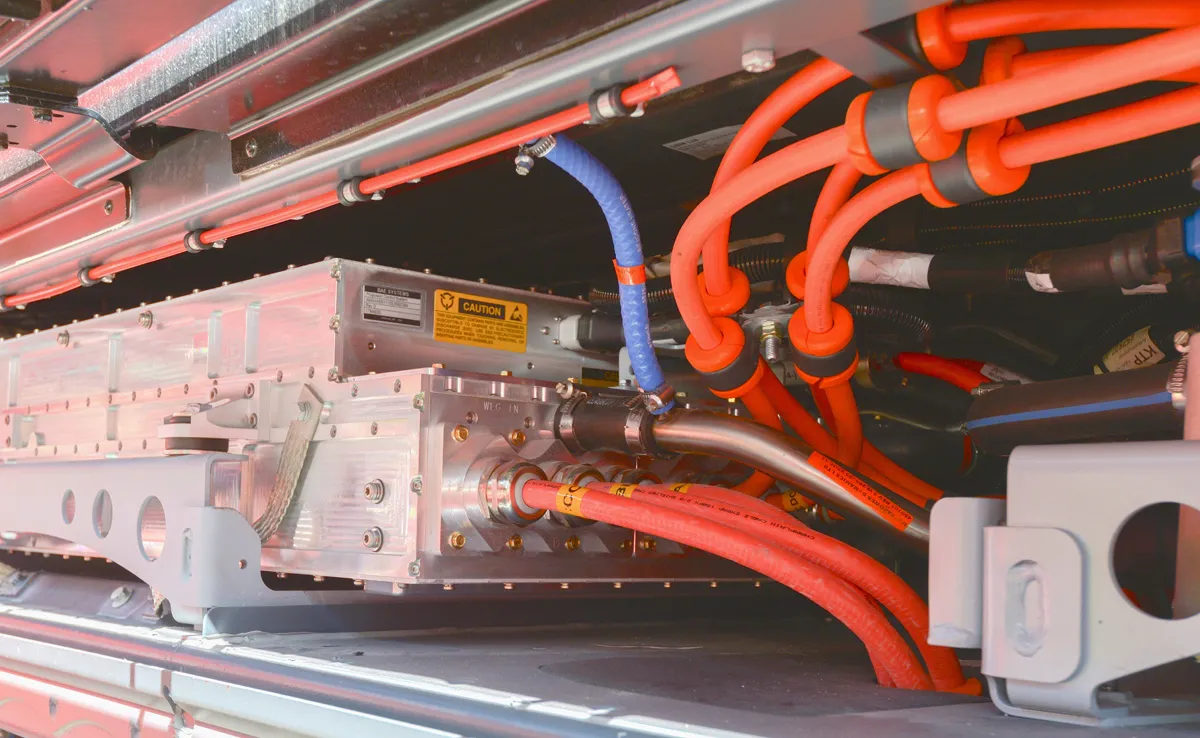
Electric vehicles (EVs) are shifting toward ultra-fast charging systems with peak powers exceeding 250 kW, enabling significant range addition in approximately 20 minutes. This evolution demands thicker high-voltage power cables - often 60 mm2 to 120 mm2 or larger cross-sections - to handle increased current while minimizing resistive losses and heat generation.
Reliable termination and joining of these large copper or aluminum cables to busbars, terminals, and battery modules is critical for safety, efficiency, and long-term durability. Traditional fusion welding methods struggle with high-conductivity materials, often introducing excessive heat, intermetallic compounds, or mechanical weakness. Ultrasonic metal welding has emerged as a preferred solid-state joining technology for these demanding applications.
Challenges in Welding Large EV Battery Cables
As cable cross-sections increase to support higher power delivery, conventional ultrasonic welders face several engineering limitations:
- Mechanical Stress on Strands: Higher clamping forces and vibration amplitudes cause strand bending and fatigue, raising the risk of long-term failure.
- Heat and Energy Inefficiency: Excessive friction generates unwanted heat spread, reducing process control and efficiency.
- Tool Slippage and Wear: Larger diameters reduce grip, leading to slippage, accelerated tool degradation, and inconsistent joint quality.
- Actuator Limitations: Cantilevered designs reach mechanical limits under the high forces required, causing vibration, instability, and reduced repeatability.
These issues impact production yield, tool maintenance costs, and the overall reliability of battery packs and charging infrastructure in high-volume automotive manufacturing.
How Ultrasonic Metal Welding Works
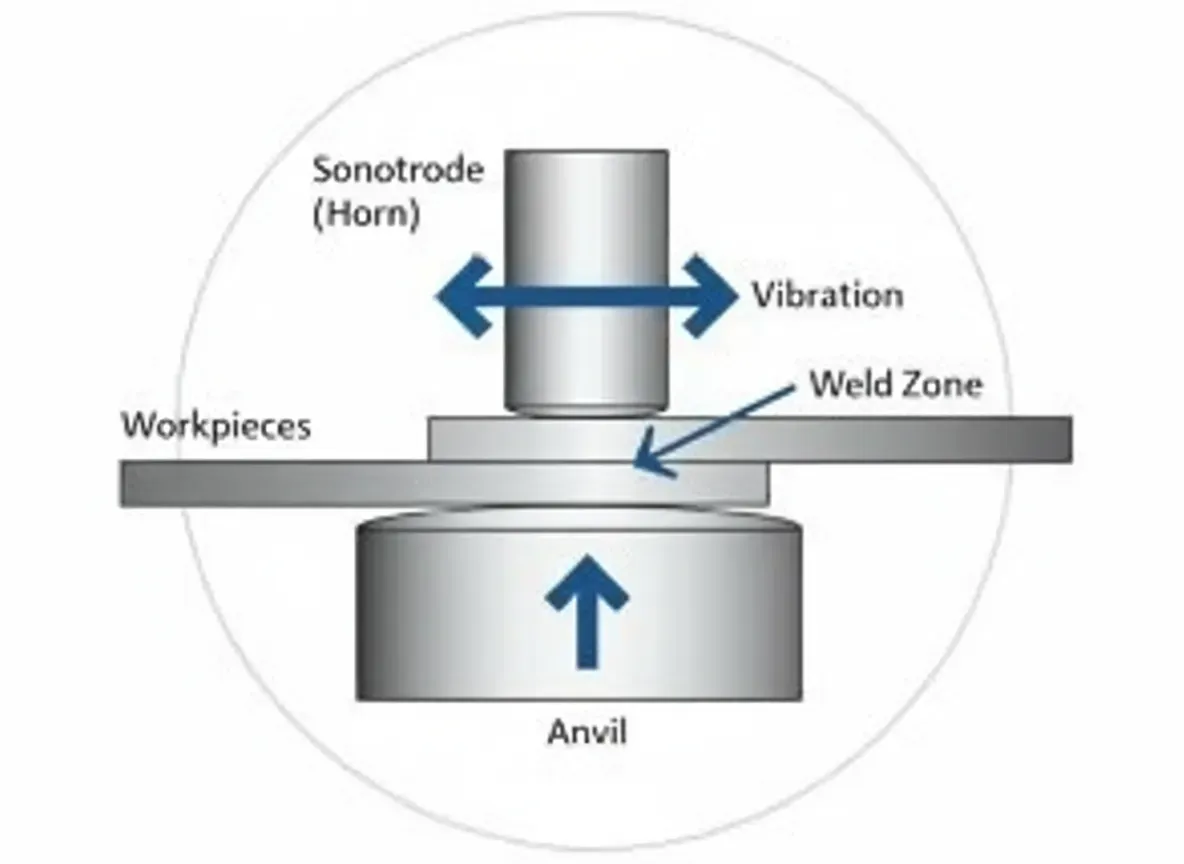
Ultrasonic metal welding is a solid-state process that joins metals through high-frequency mechanical vibration under clamping pressure, without melting the base materials. Process Steps:
- Components are clamped between a vibrating horn (sonotrode) and a fixed anvil.
- High-frequency oscillation (typically 20 kHz) removes surface oxides and contaminants through frictional scrubbing.
- Continued vibration generates localized frictional heat - typically one-third to one-half the melting point - promoting atomic diffusion and plastic deformation.
- When vibration ceases, the materials consolidate into a strong metallurgical bond with a fine-grained, cold-worked microstructure.
This enables joining of dissimilar non-ferrous metals (e.g., copper to aluminum) while preserving material properties and achieving low electrical resistance.
The process is highly versatile, suitable for both thin foils in battery cells and large conductors in power distribution systems.
Key Benefits for EV Battery and Power Applications
Ultrasonic metal welding offers distinct advantages for electric vehicle manufacturing:
- Excellent Electrical Performance: Produces bonds with maximum conductivity and minimal contact resistance.
- No Melting or Filler Materials: Avoids intermetallic compounds, porosity, and heat-affected zones that can degrade performance or create corrosion risks.
- Material Flexibility: Effective for a wide range of non-ferrous metals and combinations, including high-conductivity alloys.
- Energy Efficiency: Consumes approximately 30 times less energy than resistance or fusion welding, with no consumables.
- Process Control and Repeatability: Multiple monitoring parameters support statistical process control and high automation compatibility.
- Gentle on Components: Suitable for sensitive battery foils as well as robust cable terminations.
These characteristics make it ideal for busbars, cell tabs, terminals, and high-voltage cable assemblies in battery packs.
Advances in Direct-Press Ultrasonic Welding Systems
To overcome limitations with large cables, innovations such as direct-press (vertical actuator) systems like the Branson GMX-20-DP have been developed:
- Enhanced Clamping Force: Vertical motion delivers up to 6100 N of controlled downward pressure, eliminating cantilever vibration and improving stability.
- Advanced Tooling: Specialized coatings and textured surfaces on horn and anvil increase grip, durability, and energy transfer efficiency.
- Lower Amplitude Operation: Achieves high-quality welds at 30-40% reduced amplitude, minimizing strand stress and tool wear.
- Expanded Capability: Reliable welding of cable cross-sections from 20 mm2 up to 95 mm2+ with consistent, repeatable results.
These improvements enhance process robustness, reduce maintenance, and support higher throughput in EV production lines.
Manufacturing and Electronics Integration Considerations
In EV battery systems, ultrasonic welding interfaces directly with power electronics, battery management systems (BMS), and high-current PCB assemblies. Reliable joints are essential for minimizing resistance in paths that include power distribution boards, inverters, and charging controllers.
Key PCB and Manufacturing Synergies:
- Power Integrity: Low-resistance cable-to-busbar connections complement optimized PCB layouts with heavy copper traces, busbars, or insulated metal substrates (IMS) for thermal management.
- High-Current Design: Multilayer PCBs with thick copper (up to 10 oz or more) and appropriate via structures must match the performance of welded interconnects.
- Reliability Engineering: Joint quality impacts overall system vibration resistance, thermal cycling performance, and long-term durability under automotive conditions.
- Assembly Processes: Precision cable preparation, fixturing, and post-weld inspection integrate with SMT assembly, conformal coating, and functional testing of power electronics.
- Scalability: High-volume manufacturers benefit from process data that supports traceability and quality systems (IATF 16949).
Electronics manufacturing partners with expertise in power and automotive applications help ensure seamless integration between mechanical joining processes and advanced PCB fabrication.
Industry Trends and Outlook
As EV adoption accelerates and charging infrastructure evolves toward higher voltages and powers, ultrasonic metal welding will remain central to battery interconnect technology. Continued advancements in tool life, real-time monitoring, and hybrid joining methods will further improve yield and cost efficiency.
For OEMs and Tier 1 suppliers, success depends on robust supply chains that combine precision joining with high-reliability PCB fabrication, flexible circuits, and power electronics assembly.
Optional FAQ
Q1: What makes ultrasonic welding suitable for EV battery cables?
A1: It creates strong, low-resistance metallurgical bonds without melting, preserving conductivity and avoiding heat-related defects in high-current applications.
Q2: How do direct-press systems improve large cable welding?
A2: Vertical actuators and enhanced tooling provide superior clamping force and grip, enabling consistent welds on thick cables with reduced stress and tool wear.
Q3: Why is this relevant to PCB manufacturing?
A3: Reliable cable and busbar connections are critical for power electronics PCBs, influencing thermal design, current carrying capacity, and overall system reliability in EV applications.