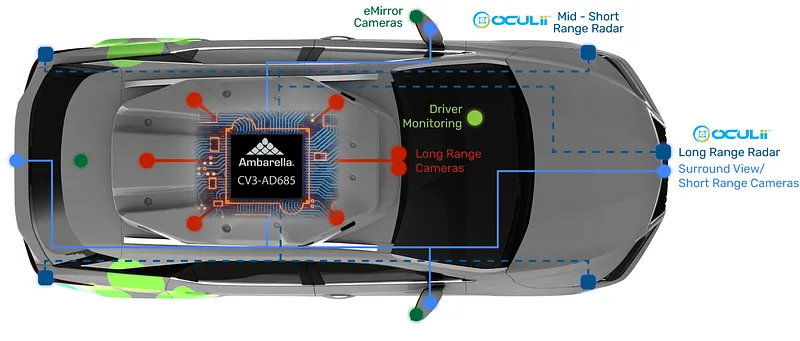
Advanced Driver Assistance Systems (ADAS) and autonomous driving rely heavily on domain controllers - centralized computing platforms that process massive sensor data in real time. These high-performance units place extreme demands on printed circuit board (PCB) technology, requiring superior signal integrity, thermal management, power delivery, and reliability under harsh automotive conditions. At Aivon, we specialize in designing and manufacturing the complex PCBs that power next-generation ADAS domain controllers for leading automotive platforms.
Evolution of Domain Controller Architectures in ADAS
Traditional distributed ECUs are being replaced by centralized or zonal domain controllers that consolidate perception, decision-making, and control functions. This shift enables more efficient sensor fusion and faster response times but significantly increases PCB complexity.
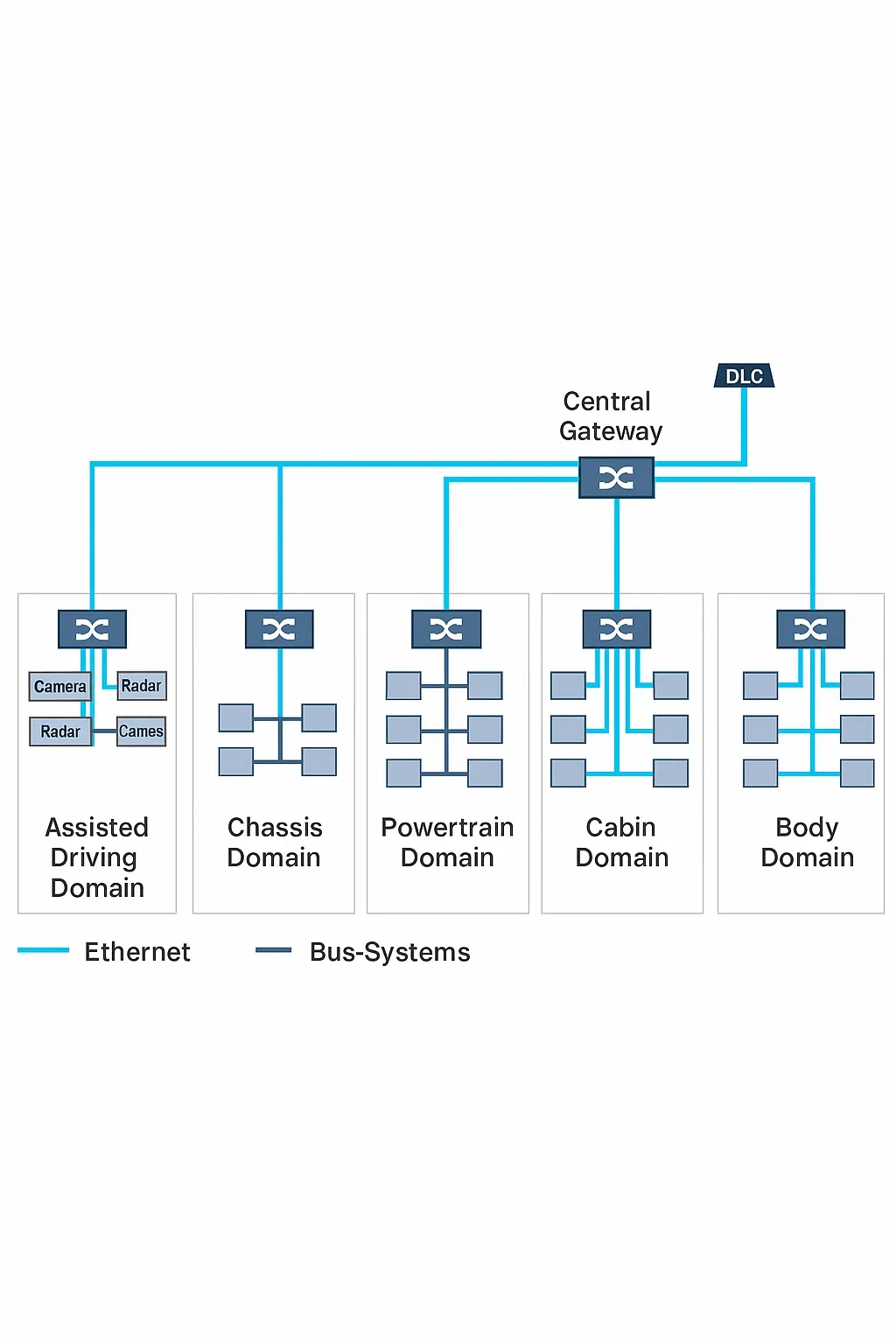
Key PCB design requirements include:
- High-Density Integration: Support for powerful SoCs (such as NVIDIA Orin series) with multiple high-speed interfaces in compact form factors.
- Multi-Domain Processing: Separate yet tightly coupled processing pipelines for vision, radar, and lidar data, requiring sophisticated multilayer stack-ups with isolated analog, digital, and power domains.
- Functional Safety Compliance: Redundant circuits, watchdog monitoring, and ASIL-D capable layouts to meet stringent automotive safety standards.
Modern examples like the Inspur EIS400 and Huawei CCA demonstrate highly integrated architectures that rely on advanced PCB solutions for performance and reliability.
SoC Integration and High-Speed Interface Challenges
Leading SoCs like the NVIDIA Orin deliver tera-level computing performance essential for real-time sensor fusion and AI inference.
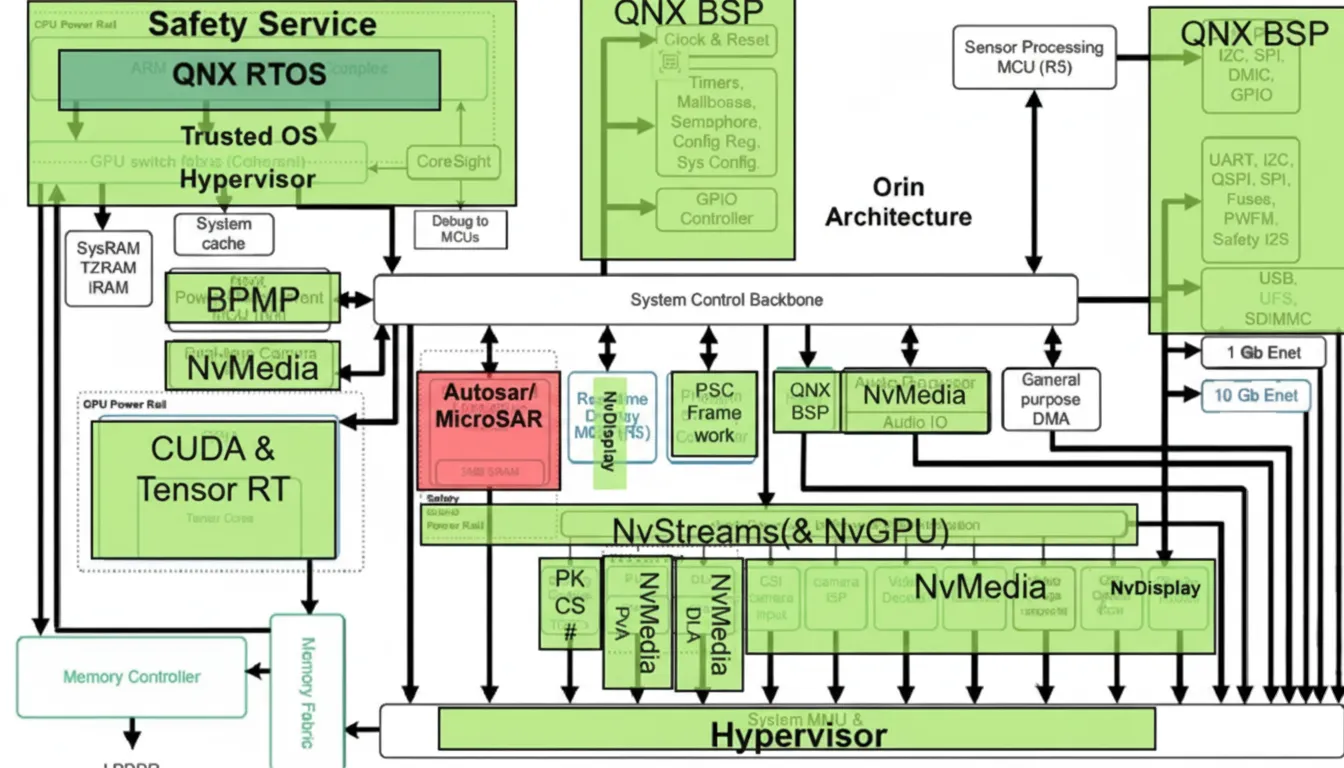
PCB-level considerations include:
- High-Speed SerDes Routing: Multiple PCIe Gen4/Gen5, MIPI CSI-2, and Ethernet interfaces demand ultra-tight impedance control (+/- 5%), length matching, and back-drilling to minimize signal degradation.
- Power Integrity: Sophisticated PDNs with multiple voltage domains, heavy copper layers, and extensive decoupling to support high-current SoC cores without voltage droops during peak AI workloads.
- Thermal Management: Advanced solutions such as copper coins, thermal vias arrays, and metal-core substrates are necessary to dissipate heat from high-power SoCs while maintaining stable electrical performance.
Sensor Interface Design for ADAS Cameras and Radar
ADAS systems depend on diverse sensors, particularly high-resolution cameras for vision-based perception and autonomous parking applications.
PCB design implications include:
- High-Speed Camera Interfaces: Optimized MIPI D-PHY or C-PHY routing with low-loss materials to preserve image quality from multiple 8MP+ cameras.
- Sensor Fusion Hub: Centralized processing of camera, radar, and lidar data requires excellent isolation between channels to prevent crosstalk and maintain timing synchronization.
- FPGA Co-Processing: FPGAs often handle low-latency preprocessing and sensor synchronization, necessitating hybrid FPGA + SoC board designs with high-bandwidth interconnects.
These interfaces must maintain signal integrity across wide temperature ranges and under mechanical vibration typical in automotive environments.
High-Speed Networking and Zonal Communication
Domain controllers serve as the central hub in zonal architectures, communicating with zone ECUs via Automotive Ethernet and other high-speed buses.
Critical PCB features include:
- 1000BASE-T1 / Multi-Gig Ethernet: Precision differential pair routing with excellent return loss and EMI suppression.
- Time-Sensitive Networking (TSN): Low-jitter clock distribution networks essential for deterministic data delivery.
- Redundant Paths: Dual-network designs for functional safety, increasing routing density and requiring advanced HDI PCBs.
Manufacturing and Reliability Considerations for Automotive ADAS PCBs
Producing domain controller PCBs demands automotive-grade processes:
- Material Selection: High-Tg, low-CTE laminates with stable dielectric properties across temperature and humidity variations.
- Advanced Via Technologies: Stacked microvias, blind/buried vias, and filled vias for high-density routing and improved thermal performance.
- Signal Integrity Validation: Comprehensive testing with VNAs and TDR to verify impedance and high-speed performance.
- Thermal and Mechanical Reliability: Rigorous thermal cycling, vibration, and environmental stress screening to ensure long-term durability.
- Functional Safety Features: Design-for-testability, boundary scan, and redundant grounding to support ASIL requirements.
Failure mechanisms such as via cracking, delamination under thermal stress, or signal degradation due to manufacturing variations must be proactively mitigated.
Future Outlook for ADAS Domain Controller PCBs
As vehicles advance toward higher levels of autonomy, domain controllers will require even greater computing power, sensor bandwidth, and AI acceleration. This will drive continued innovation in hybrid material stack-ups, 2.5D/3D packaging integration, and advanced thermal solutions on PCBs.
Aivon delivers specialized PCB manufacturing expertise for ADAS domain controllers, combining high-speed design capabilities, automotive-grade reliability processes, and deep engineering knowledge to support the most demanding autonomous driving platforms.
The success of software-defined and autonomous vehicles ultimately depends on the underlying hardware foundation. Superior PCB design and manufacturing for domain controllers directly determine system performance, safety, and long-term reliability in next-generation vehicles.