End-to-end autonomous driving systems are rapidly replacing traditional modular perception pipelines with unified neural network architectures that process raw sensor data directly into planning and control outputs. Technologies such as Bird's Eye View (BEV) perception, Transformer-based models, and advanced 3D object detection place extreme computational and data-handling demands on the underlying hardware. At Aivon, we engineer the high-performance PCBs that power these perception frameworks, delivering the signal integrity, processing density, thermal management, and functional safety required for reliable autonomous operation.
Evolution from SLAM to End-to-End BEV Architectures
Traditional autonomous driving relied on SLAM (Simultaneous Localization and Mapping) for mapping and localization, combined with separate modules for detection and tracking. Modern end-to-end systems, such as those pioneered by Tesla FSD and Li Auto, use large neural networks that directly map multi-camera inputs to BEV representations and control commands.
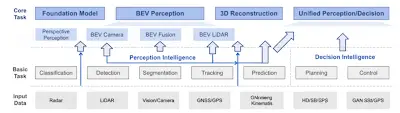
This architectural shift creates significant PCB-level challenges:
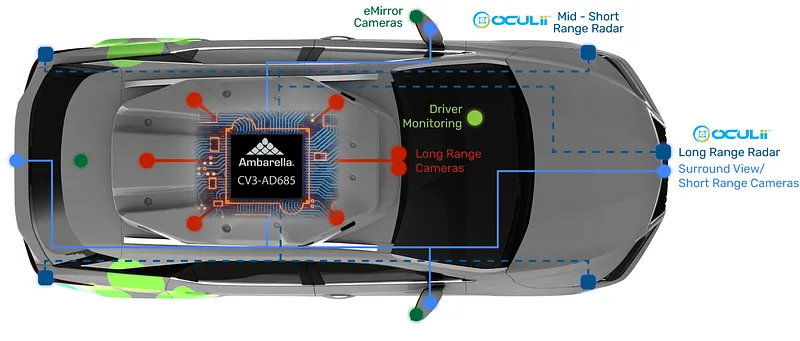
- Massive Parallel Data Ingestion: Multiple high-resolution cameras (8MP+) generate gigabytes per second of data, requiring high-speed MIPI CSI-2 or SerDes interfaces with precise impedance control and minimal skew.
- Unified Neural Processing: End-to-end models demand powerful AI accelerators (GPUs, NPUs) integrated on the same board as sensor interfaces, necessitating sophisticated multilayer HDI stack-ups.
- Real-Time Performance: Low-latency inference requires clean high-speed routing, low-jitter clocks, and robust power delivery networks to prevent timing violations during critical driving scenarios.
BEV Perception and 3D Object Detection Requirements
BEV Transformer architectures and advanced 3D point encoding methods (such as PETR and StreamPETR) have become central to modern visual perception frameworks. These models convert multi-view camera images into unified 3D representations for superior spatial understanding and long-range detection.
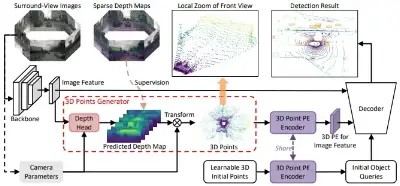
PCB design implications include:
- High-Bandwidth Memory Interfaces: Support for HBM or high-speed DDR with tight timing margins and controlled impedance to handle large feature maps in BEV processing.
- Heterogeneous Computing: Integration of GPUs, FPGAs, or dedicated AI accelerators with the main SoC requires complex power sequencing, multiple voltage domains, and excellent isolation between digital sections.
- Signal Integrity at Scale: Dense routing of high-speed differential pairs for camera data and inter-chip communication demands back-drilled vias, low-loss laminates, and careful crosstalk management.
End-to-End Architectures and Sensor Fusion Challenges
Leading implementations, including Xiaomi's autonomous driving algorithms and Tesla's FSD pipeline, emphasize direct raw-to-control mapping. This approach reduces latency but increases the computational load on domain controllers.
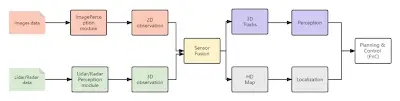
Critical PCB engineering considerations:
- Multi-Modal Sensor Integration: Combining camera, radar, and lidar data streams requires high-density interconnects and synchronized timing across interfaces.
- Thermal Density Management: AI inference at high frames-per-second generates substantial localized heat. Solutions include heavy copper planes, embedded copper coins, thermal vias, and optimized component placement.
- Functional Safety (ASIL-D): Redundant processing paths, watchdog circuits, and extensive monitoring demand additional routing layers and robust grounding strategies.
PCB Manufacturing Solutions for Autonomous Driving Perception Systems
To support these advanced perception frameworks, Aivon applies specialized manufacturing capabilities:
- Hybrid Material Stack-Ups: Combining ultra-low-loss dielectrics for high-speed RF/sensor interfaces with high-Tg cores for structural stability and thermal performance.
- Advanced HDI PCBs: Stacked microvias and any-layer designs to achieve the routing density needed for complex AI accelerators and multi-camera inputs.
- Tight Impedance and Registration Control: Essential for maintaining signal integrity across long high-speed channels and dense BGA packages.
- Reliability Enhancements: Enhanced via filling, surface finishes, and rigorous thermal cycling/vibration testing to meet automotive-grade requirements (AEC-Q100, IATF 16949).
- Power Integrity Optimization: Sophisticated PDN design with extensive decoupling to support bursty AI workloads without voltage droops.
These capabilities directly address failure mechanisms such as via fatigue under vibration, dielectric breakdown under thermal stress, and signal degradation that could compromise perception accuracy.
Future Outlook for Perception Hardware
As autonomous driving moves toward higher levels of autonomy, perception systems will require even greater sensor resolution, faster inference, and more efficient neural architectures. This evolution will continue to drive demand for innovative PCB solutions featuring 3D heterogeneous integration, advanced thermal management, and ultra-high-speed networking.
The performance and safety of end-to-end autonomous driving systems ultimately depend on the underlying PCB hardware. From high-speed sensor interfaces and AI accelerator integration to thermal reliability and functional safety features, every aspect of the perception pipeline is enabled - or constrained - by PCB design and manufacturing excellence.
Aivon partners with automotive Tier 1 suppliers and OEMs to deliver the advanced PCBs required for next-generation visual perception frameworks, BEV architectures, and end-to-end autonomous driving systems. Our expertise ensures superior signal integrity, power efficiency, and long-term reliability in the most demanding vehicle environments.