Where 6061 and 7075 Actually Diverge in Production
In our shop, 6061 is the default choice for most CNC jobs that need to ship on time and stay under budget. It machines cleanly, holds dimensions well across batches, and gives consistent yields even on complex parts. 7075 steps in when the design demands higher tensile strength and fatigue resistance, but it comes with tighter process controls, more tool wear, and higher scrap risk during machining. For electronic enclosures or structural brackets in consumer devices, 6061 usually wins on total landed cost. For aerospace-grade load-bearing components or high-stress chassis, 7075 justifies the premium if the application truly needs that extra performance margin.
Key Manufacturing Differences at a Glance
| Factor | 6061 Aluminum | 7075 Aluminum |
|---|---|---|
| Cost per part (volume production) | Lower material and machining cost | 30-60% higher due to material price and tool wear |
| Machinability | Excellent - clean chips, lower tool pressure | Good but harder on tools, more heat generation |
| Tensile Strength | ~276 MPa (T6) | ~570 MPa (T6) - significantly higher |
| Weight (density similar) | 2.70 g/cm³ - same class | 2.81 g/cm³ - marginally heavier |
| Corrosion Resistance | Very good, especially anodized | Fair - more prone to pitting without protection |
| Lead Time & Availability | Stocked widely, fast turnaround | Longer procurement for certified grades |
| Typical Electronics Applications | Enclosures, heatsinks, brackets | High-stress frames, RF shields under vibration |
Production Decision Matrix for CNC Shops
| If your priority is... | Better Choice | Why from the shop floor |
|---|---|---|
| Lowest overall cost | 6061 | Cheaper stock, faster cycle times, less tool changes |
| Highest mechanical strength | 7075 | Nearly double the yield strength for load-critical parts |
| Fast prototype runs | 6061 | Better chip evacuation reduces setup adjustments |
| Corrosion resistance in electronics | 6061 | Performs reliably with standard anodizing |
| Mass production efficiency | 6061 | Higher panel utilization and lower scrap rates |
| Extreme vibration or fatigue | 7075 | Superior fatigue life in dynamic applications |
Strength vs Weight Trade-offs in Real CNC Runs
When we compare 6061 vs 7075 aluminum CNC directly on the same geometry, 7075 delivers roughly double the tensile and yield strength in T6 temper. This matters for thin-wall electronic chassis that see drop tests or sustained vibration. However, the density difference is negligible — both hover around 2.7-2.8 g/cm³ — so weight savings rarely come from switching alloys alone. In production, we often see engineers over-spec 7075 thinking it will allow thinner walls, but the increased material hardness leads to more deflection during machining of those thin features, forcing slower feeds and higher risk of chatter. 6061 lets us maintain aggressive parameters while still meeting most structural requirements in consumer electronics.

Machinability Differences That Hit Cycle Time and Tooling
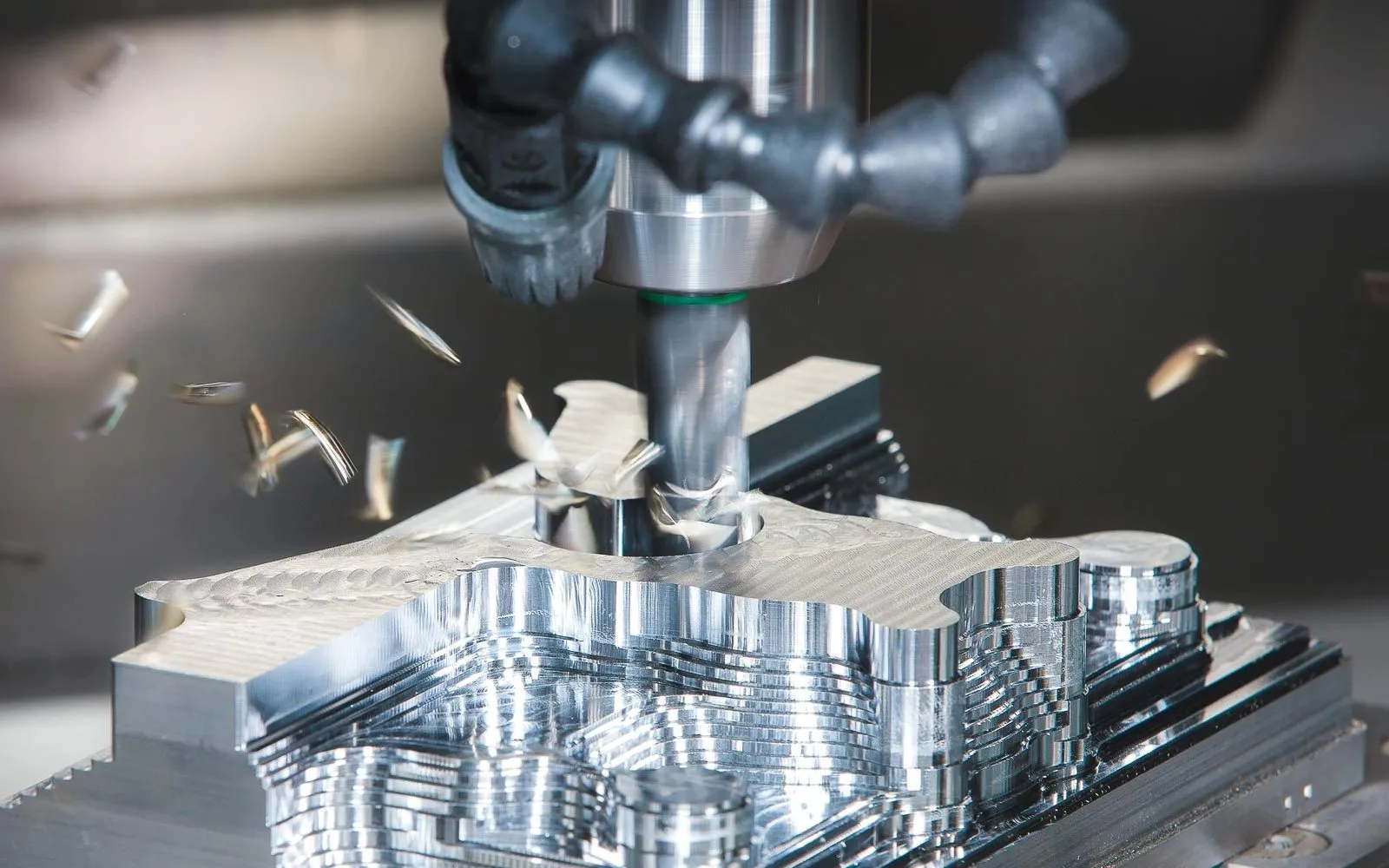
From a fabrication standpoint, 6061 machines like a dream — excellent chip breaking, lower cutting forces, and minimal built-up edge on carbide tools. We routinely run higher spindle speeds and feeds, achieving better surface finishes straight off the machine. 7075, being heat-treated to higher hardness, generates more heat and puts heavier load on end mills. This shows up as accelerated flank wear and the need for more frequent tool changes, especially on long production runs. During CAM preparation, we adjust toolpaths more conservatively for 7075 to avoid work hardening. The net result is 6061 typically offers 20-40% faster cycle times on similar parts, which directly impacts shop throughput for electronics contract manufacturing.
Corrosion Resistance and Post-Machining Treatments in Electronics
For electronic product applications like enclosures or mounting brackets exposed to humidity or mild environments, 6061 provides solid baseline corrosion resistance that pairs well with standard clear or hard anodizing. 7075 is more susceptible to pitting and stress corrosion cracking, particularly in the grain boundaries of the T6 temper. In our experience, this forces extra process steps — sometimes chromate conversion or more robust sealing — adding cost and lead time. When we review DFM for outdoor or marine-adjacent electronics, 6061 almost always wins unless strength requirements absolutely demand 7075 with additional protective coatings.
Cost Differences That Accumulate Across Production Volumes
Material cost for 7075 runs noticeably higher, and when you layer in increased tooling consumption and slower cycle times, the gap widens in volume. For prototype quantities under 50 pieces, the difference may be tolerable if strength is non-negotiable. But at 500+ units common in electronics, 6061 delivers better total cost of ownership. We see this repeatedly in CAM reviews where switching to 7075 requires quoting higher scrap allowances due to occasional cracking during aggressive milling of pockets or threads.
CNC Factory Perspective on Evaluating 6061 vs 7075
During DFM review, we look closely at feature sizes, wall thicknesses, and tolerance stacks. 6061 tolerates more aggressive design choices without pushing process limits. CAM preparation for 7075 often involves refined stepover strategies and coolant adjustments to manage heat. Production yield stays higher with 6061 because of better dimensional stability and fewer surface defects. Panel (or bar stock) utilization is similar, but tool life and machine uptime favor 6061 heavily. Inspection requirements ramp up for 7075 parts, especially for fatigue-critical electronics applications. Most shops recommend 6061 unless the mechanical datasheet explicitly calls for the higher alloy properties. Process risk is lower across the board with 6061, making it the stable choice for consistent delivery.

Assembly and Long-Term Reliability Considerations
In electronics assembly lines, 6061 parts accept threading, press-fits, and welding more forgivingly. 7075 can be trickier for secondary operations due to its higher strength and lower ductility. Long-term reliability in vibration-heavy applications favors 7075, but for standard consumer and industrial electronics, 6061 with proper design margins performs reliably at lower cost. The trade-off becomes clear when balancing initial machining challenges against field performance.
Which Alloy Should You Choose for Your CNC Project?
Choose 6061 if you:
- Need fast turnaround and cost control in electronics enclosures or heatsinks
- Prioritize excellent machinability and surface finish straight from CNC
- Require good corrosion resistance with standard finishing
- Are running medium to high volumes where every minute of cycle time counts
Choose 7075 if you:
- Face high mechanical loads, fatigue, or impact requirements
- Design weight-critical structural components where strength-to-weight ratio is paramount
- Operate in controlled environments where extra coatings can mitigate corrosion risks
- Have budget for premium material and accept longer lead times
FAQs
Q1: Is 7075 worth the extra cost over 6061 for most electronic device housings?
A1: In our experience, no. 6061 provides sufficient strength for the majority of 6061 vs 7075 aluminum CNC applications in electronics while keeping machining costs and lead times lower. Reserve 7075 for parts that see extreme mechanical stress.
Q2: How does machinability affect surface finish in 6061 vs 7075?
A2: 6061 consistently delivers better as-machined finishes with less effort. 7075 often requires additional polishing or stricter parameter control to avoid tearing, especially around thin features common in electronics.
Q3: Which alloy is better for corrosion resistance after CNC machining?
A3: 6061 performs better out of the box and with standard anodizing. 7075 needs more attention to protective finishes to match performance in humid electronics environments.
Q4: Can you switch from 6061 to 7075 mid-project without major redesign?
A4: Usually not without reviewing wall thicknesses and tolerances. 7075’s higher strength allows potential downsizing, but its machining behavior may require CAM revisions and could affect flatness.
Q5: What volumes make the cost difference between 6061 and 7075 most noticeable?
A5: Above 200-500 pieces the cumulative effect of material price, tool wear, and cycle time makes 6061 clearly more economical for typical electronics production.
Q6: How do material certifications differ for electronics supply chains?
A6: Both are readily available, but 7075 often requires specific aerospace or military traceability which adds cost and lead time compared to standard 6061 stock.