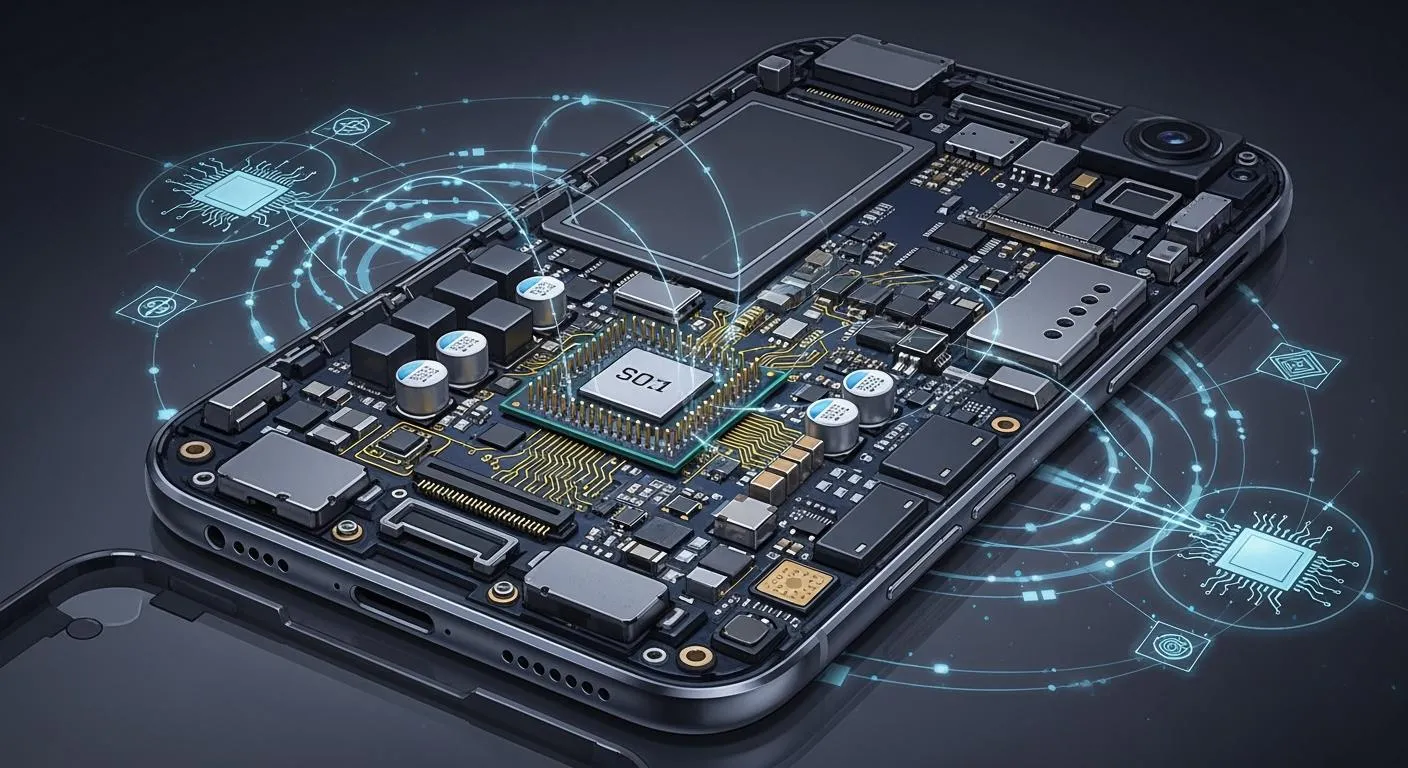
Foldable smartphones and next-generation mobile features demand highly specialized printed circuit boards capable of withstanding repeated mechanical stress while delivering high-speed performance in extremely thin form factors. As manufacturers push the boundaries of device flexibility, large-screen usability, and integrated sensing, PCB design and fabrication become central to achieving reliability, signal integrity, and manufacturability.
Reliability and Durability Requirements in Foldable Designs
Reliability remains the foremost concern for foldable phones, with durability against impact, abrasion, and repeated folding cycles directly influencing user adoption. Early generations suffered from screen delamination and hinge-related failures, often traced to inadequate PCB support structures.
Modern solutions rely on flexible PCBs and rigid-flex PCBs that maintain electrical continuity across the folding axis. These boards use polyimide or liquid crystal polymer substrates with optimized copper foil adhesion and coverlay materials to prevent cracking during thousands of bend cycles. Controlled stack-up sequences, including balanced copper distribution and low-modulus adhesives, minimize stress concentrations at the hinge interface. High-Tg laminates and reinforced vias further enhance resistance to thermal cycling and mechanical fatigue in daily use.

Balancing Thinness, Weight, and Structural Integrity
Achieving both slim profiles and robust performance requires aggressive optimization of PCB thickness and layout. Thicker copper or additional layers improve current-carrying capacity and thermal dissipation but increase folding resistance and overall device bulk.
Engineers address this through high-density interconnect (HDI) techniques, microvia stacking, and sequential lamination processes that enable finer line widths and spaces without adding excessive layers. Advanced simulation tools now allow real-time modeling of mechanical-electrical interactions, enabling designers to remove redundant copper pours and optimize via placement while preserving signal integrity. The result is lighter, thinner PCBs that support high-resolution displays and multi-gigabit data rates without compromising foldability.
Hinge Integration and Signal Routing Across Flexible Zones
The hinge mechanism directly impacts PCB architecture. Evolving from simple dual-axis designs to multi-link systems with shorter transmission paths, modern hinges require PCBs with precisely engineered bend radii and strain-relief features.
Rigid-flex constructions allow critical components—such as processors, memory, and RF modules—to reside on rigid sections while high-speed traces and power planes cross the flexible zone. Differential pair routing with impedance-controlled traces, ground stitching vias, and shielding layers maintain signal integrity despite dynamic flexing. Any deviation in trace geometry or via placement can introduce crosstalk or intermittent failures, making early collaboration between mechanical and PCB designers essential.
Materials Innovation Supporting PCB Performance
Screen protection layers using non-Newtonian polymers or ultra-high-molecular-weight materials improve impact resistance without adding thickness. These innovations extend to PCB-level materials, where specialized flexible substrates and low-Dk/Df dielectrics reduce insertion loss in high-frequency paths.
Plasma-treated surfaces and molecular-level adhesion promoters ensure reliable bonding between layers, preventing delamination under repeated stress. For the display and sensor interfaces, fine-pitch connectors and embedded component technology further shrink the overall footprint while maintaining electrical performance.
Emerging Smartphone Technologies and PCB Integration Demands
Beyond foldables, several emerging capabilities are reshaping smartphone architecture and placing new demands on PCB design.
Miniaturized spectrometers integrated into camera modules require compact sensor PCBs with precise analog front-end circuitry, low-noise power delivery, and optical alignment features. These boards often employ ceramic or high-frequency laminates to support sensitive photodetectors while managing thermal drift.
High-precision positioning systems achieving centimeter-level accuracy leverage existing smartphone antennas and additional inertial sensors. The supporting PCBs must handle multi-band RF signals with exceptional phase stability, employing advanced stack-ups for controlled impedance and minimal interference between GNSS and cellular paths.
Gas sensors for detecting hazardous compounds or spoilage demand dedicated environmental sensing modules. These typically use MEMS-based elements on small, low-power PCBs featuring robust sealing, moisture-resistant coatings, and wireless interfaces such as Bluetooth or NFC. Power management ICs and efficient voltage regulators on the same board extend battery life during continuous monitoring.
Manufacturing and Reliability Considerations Across Applications
Producing these advanced PCBs involves tight process controls, including laser drilling for microvias, precise lamination under vacuum to eliminate voids, and automated optical inspection for flexible zones. Panel-level processing and selective surface finishes help achieve the high yields required for consumer volumes.
Cross-industry parallels appear in automotive and industrial applications, where similar flexible and HDI techniques support vibration-resistant electronics. In consumer devices, EMI/EMC compliance becomes especially critical due to dense integration of wireless, display, and sensor functions.
Conclusion
Foldable smartphones and emerging mobile technologies succeed only when PCB engineering addresses the intertwined challenges of mechanical flexibility, electrical performance, thermal management, and long-term reliability. Through innovations in materials, stack-up design, via technology, and manufacturing processes, modern PCBs enable the thin, durable, and feature-rich devices consumers expect.
Aivon's capabilities in flexible, rigid-flex, and HDI PCB fabrication position the company to support these demanding applications, delivering the precision and consistency required for next-generation consumer electronics.