Wireless connectivity has become essential for modern wearable and implantable medical devices, enabling real-time data transmission, remote monitoring, closed-loop therapy, and emergency alerts. At the heart of every reliable wireless medical system lies a carefully engineered printed circuit board (PCB) that integrates RF modules, antennas, power management circuitry, and sensitive analog front-ends while maintaining signal integrity, electromagnetic compatibility (EMC), and ultra-low power consumption.
For PCB manufacturers and design engineers, wireless medical applications introduce stringent requirements: controlled-impedance RF traces, precise antenna matching, isolation between digital and RF domains, efficient power delivery, and robust thermal management in compact, body-worn or implantable form factors. Proper PCB-level implementation directly determines transmission range, data reliability, battery life, and regulatory compliance with standards such as IEC 60601 and FCC Part 15.
Wireless Transmission Technologies and PCB Integration Fundamentals
Wearable medical systems commonly employ Bluetooth Low Energy (BLE), Wi-Fi, GSM/4G/5G, and proprietary low-power protocols. Each technology places distinct demands on PCB layout. RF sections require dedicated ground planes, via stitching for shielding, and short, controlled-impedance traces (typically 50 Ω) to minimize insertion loss and reflections. Multilayer stack-ups with low-loss dielectrics and precise copper thickness help maintain signal integrity at 2.4 GHz and higher frequencies.
Antenna placement is critical: the antenna must be kept clear of ground planes and metal enclosures while maintaining adequate distance from sensitive analog sensor circuits to avoid noise coupling. Proper decoupling, filtering, and grounding strategies prevent digital switching noise from degrading receiver sensitivity or transmitter spectral purity.
Wi-Fi Module Circuit Design for Wearable Medical Devices
Wi-Fi enables high-bandwidth data transfer for continuous ECG, SpO2, or imaging streams from wearables to gateways or cloud platforms. Modern Wi-Fi modules integrate the radio, baseband, and MAC into a single package, reducing board space but increasing the importance of clean power rails and precise RF layout.

Key PCB considerations include:
- Separate analog, digital, and RF power domains with dedicated decoupling capacitors placed as close as possible to module pins
- Controlled-impedance microstrip or stripline routing for the antenna feed line
- Ground plane stitching and via fencing around the RF section to contain emissions
- Thermal relief and copper pours under the module to dissipate heat from the power amplifier during continuous transmission
HDI or rigid-flex constructions allow dense integration of Wi-Fi modules alongside sensor front-ends in thin, flexible wearable housings while preserving RF performance.
GSM and Cellular Connectivity for Remote Emergency Alerts and Monitoring
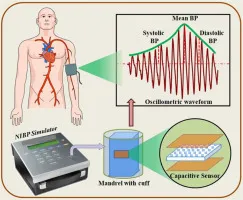
GSM/4G modules provide wide-area connectivity for remote patient monitoring and emergency alert systems. These modules often require higher transmit power and more complex power sequencing than BLE or Wi-Fi, making PCB power distribution and thermal design especially important.
Designers must implement:
- Robust power planes capable of handling peak currents during transmission bursts
- Proper antenna matching networks and clearance zones to achieve reliable signal strength in varying environments
- Isolation between the cellular RF section and low-noise analog sensor circuits to prevent interference with heart-rate or blood-pressure measurements
- Firmware-controlled power gating and sleep modes that minimize quiescent current on the PCB
Cellular modules also demand careful EMC layout to meet both medical and telecommunications regulatory requirements.
Remote Rehabilitation, 3D Vision Data Collection, and Mobile Health Systems
Remote rehabilitation platforms and real-time 3D vision systems collect large volumes of motion, posture, and physiological data that must be transmitted wirelessly with low latency. These applications often combine multiple wireless protocols (BLE for local sensors + Wi-Fi or cellular for backhaul) on a single PCB.
Closed-loop mobile health systems require bidirectional communication for therapy adjustment. PCB engineers address this through:
- High-speed digital interfaces with proper termination and impedance control
- Efficient power management ICs that support multiple voltage rails while maintaining low noise on analog sections
- Strategic component placement to separate high-speed digital processors from sensitive RF and sensor areas
Rigid-flex or multilayer HDI PCBs enable the compact, durable assemblies needed for wearable rehabilitation garments and portable diagnostic hubs.

External Wireless Power Transfer for Implantable Medical Devices
Implantable devices such as pacemakers, neurostimulators, and continuous glucose monitors benefit from wireless power transfer (WPT) to extend or eliminate battery replacement surgeries. Inductive or resonant coupling techniques transfer power across the skin via external transmit coils and internal receive coils.
On the PCB, WPT integration demands:
- Precise coil or antenna design with controlled impedance and high-Q factors
- Efficient rectification and voltage regulation circuitry with minimal heat generation inside the body
- Isolation and shielding to protect sensitive electronics from strong magnetic fields
- Thermal management features such as thermal vias and copper planes to keep implant temperatures within safe limits
Multilayer PCBs with specialized stack-ups support the integration of receive coils, power management, and low-power wireless telemetry in a single compact assembly.
Manufacturing, Reliability, and Regulatory Considerations
Medical wireless PCBs require controlled impedance, precise etching, and high-reliability surface finishes such as ENIG. Advanced lamination processes and via filling ensure consistent RF performance across production volumes. Design-for-manufacturability (DFM) reviews, impedance modeling, and thermal simulation help avoid common issues such as detuned antennas, EMI coupling, or excessive heat in power sections.
Conformal coatings and biocompatible encapsulants protect against moisture and sterilization while maintaining RF transparency. Rigorous testing for signal integrity, radiated emissions, and patient leakage currents ensures compliance with medical and wireless standards.
Conclusion
Successful wireless transmission in wearable and implantable medical systems ultimately depends on sophisticated PCB design and manufacturing. By prioritizing optimized RF layouts, precise impedance control, efficient power architectures, robust isolation, and rigorous fabrication processes, PCB engineers enable reliable data connectivity, extended battery life, and superior clinical performance. Collaboration between medical device developers and specialized PCB manufacturers remains essential for delivering next-generation wireless solutions that meet both regulatory requirements and real-world patient needs.