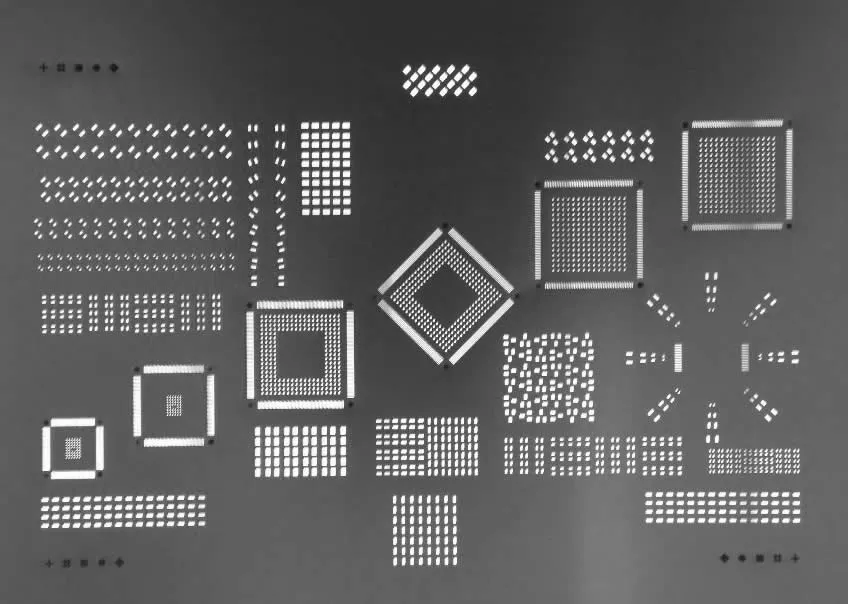
Aperture Quality
Aperture quality plays a critical role in the precision and reliability of printed circuit board (PCB) manufacturing, particularly during the solder paste printing process. In stencil design, apertures are the precisely cut openings that allow solder paste to be deposited onto pads with accuracy. High aperture quality ensures uniform paste transfer, minimizes defects such as bridging or insufficient solder, and enhances overall assembly yield. For engineers and manufacturers searching for insights on aperture quality, this tag aggregates resources that delve into the factors influencing aperture performance, including material selection, laser cutting techniques, and dimensional tolerances. Understanding aperture quality is essential for optimizing PCB production, especially in high-density designs where fine-pitch components demand exacting standards. Poor aperture quality can lead to issues like paste slumping or inconsistent volume, resulting in costly rework or failures in the field. Practical applications include evaluating aperture shapes—such as rounded corners to reduce paste release problems—and implementing inspection methods like automated optical systems to verify quality before production runs. Best practices often involve collaborating with stencil fabricators to specify wall smoothness and aperture wall angles, which can significantly improve paste release efficiency and reduce variability in surface mount technology (SMT) lines. By focusing on aperture quality, designers can achieve better first-pass yields and more robust electronic assemblies. The articles under this tag provide detailed case studies, troubleshooting guides, and expert tips to help you refine your processes. Whether you are addressing challenges in lead-free soldering or scaling up for mass production, these resources offer actionable strategies to elevate your PCB manufacturing outcomes.
Technical Articles
Get in Touch
Send Message
- Products & Service
- Company
- About AIVON
- Contact
- News
- Blog
- Certification
-


- Payment
-


2026 AIVON.COM All Rights Reserved