Where 6061 Handles Most Enclosure Work and 7075 Earns Its Keep
From a fabrication standpoint, 6061 aluminum wins for the majority of CNC electronics enclosures. It machines cleanly, holds decent tolerances without excessive tool wear, and keeps costs in check while offering solid corrosion resistance for typical indoor and moderate outdoor use. 7075 steps in when you need higher strength-to-weight or better fatigue resistance under vibration and shock — common in portable, automotive, or industrial electronics — but it brings higher material costs, slower machining, and tighter process controls during production.
In our shop experience, most customers default to 6061 and get reliable parts faster. We only see 7075 specified when the design pushes mechanical limits or weight savings justify the premium.
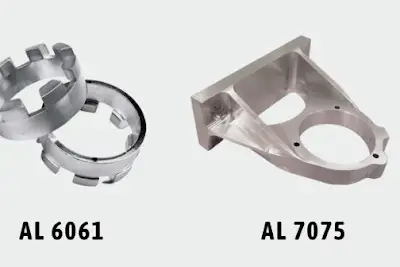
Aluminum Enclosure Material Comparison at a Glance
| Factor | 6061 Aluminum | 7075 Aluminum |
|---|---|---|
| Material Cost | Lower (baseline) | 30-60% higher |
| Machinability | Excellent — faster feeds, less tool wear | Fair — slower speeds, higher wear |
| Strength (Yield) | ~276 MPa | ~503 MPa |
| Corrosion Resistance | Good to excellent | Moderate (often needs extra protection) |
| Thermal Performance | Very good conductivity | Comparable conductivity |
| Lead Time for CNC Parts | Faster | Longer due to machining challenges |
| Typical Applications in Electronics | General enclosures, consumer devices, prototypes | High-vibration, aerospace-grade, rugged portables |
| Production Yield | Higher in volume CNC runs | Lower without optimized parameters |
Decision Matrix: Matching Material to Project Priorities
| If your priority is... | Better Choice | Why |
|---|---|---|
| Lowest overall cost | 6061 | Cheaper stock and significantly easier/faster CNC machining |
| Highest mechanical strength | 7075 | Nearly double yield strength for thinner walls or higher loads |
| Fast prototype or small batch | 6061 | Quicker setup, less tool maintenance, higher first-pass success |
| Corrosion resistance without extra finishes | 6061 | Better natural oxide layer performance in typical environments |
| Mass production volume | 6061 | Better panel/material utilization and process stability |
| Extreme vibration or impact | 7075 | Superior fatigue resistance in dynamic electronics applications |
| Complex internal features and tight tolerances | 6061 | More forgiving during extended machining cycles |
Machining Performance Differences That Hit the Shop Floor
During CAM preparation for aluminum enclosure material comparison projects, 6061 runs smoother with standard tooling. You can push feeds and speeds higher without chatter or excessive heat buildup that distorts thin enclosure walls. 7075 demands more conservative parameters — lower speeds, higher torque, and frequent tool checks — because its higher hardness accelerates wear on end mills and increases the risk of burrs or surface imperfections that require secondary deburring.
In production we typically see 20-40% longer cycle times on 7075 for similar geometries. This becomes noticeable during high-volume runs where machine utilization matters. 6061 allows better nesting and material utilization on stock plates, reducing scrap. The trade-off shows up clearly when enclosures have deep pockets or fine threads for electronics mounting: 6061 holds features more reliably without work hardening issues that complicate 7075.
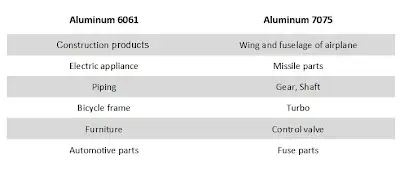
Strength and Mechanical Reliability Trade-offs
7075 delivers roughly double the yield strength, which lets designers specify thinner walls or smaller cross-sections while maintaining rigidity — valuable for lightweight portable electronics enclosures. However, this comes at the expense of ductility. In drop or impact testing scenarios common for field electronics, 7075 can crack more readily if the design has stress concentrations from sharp internal corners.
6061 offers a more balanced profile for most aluminum enclosure material comparison decisions. It absorbs energy better and tolerates minor design imperfections that appear during DFM review. From our fabrication experience, enclosures in vibration-heavy environments (vehicle-mounted or industrial controls) often perform adequately in 6061 with proper ribbing, avoiding the need to jump to 7075 and its associated costs.
Cost Differences That Affect Quoting and Scaling
Material price alone makes 7075 noticeably more expensive, but the real gap widens in machining and finishing. Most PCB manufacturers and enclosure fabricators quote 6061 as the default because it supports tighter turnarounds and lower per-part costs at volume. When we run aluminum enclosure material comparison analyses for customers, the break-even point for switching to 7075 usually requires either significant weight reduction targets or documented mechanical requirements that 6061 cannot meet.
Post-machining operations like anodizing work on both, but 7075 sometimes shows more color variation and may need additional sealing for corrosion performance in humid electronics environments.
Thermal and Corrosion Performance in Electronics Use
Both alloys conduct heat well enough for most enclosure applications where heat dissipation from PCBs is a concern. Differences here are minor compared to design factors like surface area and contact with internal components. Corrosion resistance is where 6061 pulls ahead in standard conditions — its oxide layer holds up better without additional coatings, reducing long-term failure risk in non-sealed electronics housings.
7075 often requires chromate conversion or thicker anodizing for equivalent protection, adding steps that impact lead time and cost during production scaling.
Factory Perspective on Processing These Materials
In DFM review, we flag 7075 designs more frequently for fillet radii, wall thickness uniformity, and feature accessibility to reduce tool deflection risks. CAM preparation for 7075 involves more careful toolpath strategies to manage heat and residual stresses that can cause warping in larger enclosures. Production yield tends to stay higher with 6061 because it is more forgiving of slight variations in stock or machine conditions.
Panel utilization and nesting efficiency favor 6061 in sheet or plate form. Tooling considerations include more frequent cutter replacements for 7075 runs, which affects scheduling. Process stability is better with 6061, leading to fewer inspection holds for dimensional or surface issues. Most PCB-related enclosure manufacturers recommend 6061 unless strength data clearly justifies 7075, as the latter increases overall process risk and requires more experienced operators for consistent results.
Which Option Should You Choose for Your Electronics Enclosure?
Choose 6061 if you:
- Need cost-effective production at any volume
- Prioritize fast turnaround and reliable machining
- Want good corrosion resistance with minimal finishing
- Have moderate mechanical requirements that standard wall thicknesses can meet
- Are developing prototypes or iterating designs frequently
Choose 7075 if you:
- Require maximum strength in minimal space or weight
- Face high vibration, shock, or fatigue loads in the application
- Operate in demanding environments where extra strength provides margin
- Have validated the design through FEA showing 6061 limitations
- Can absorb higher per-unit costs for performance-critical products
The aluminum enclosure material comparison almost always resolves in favor of 6061 unless specific engineering data pushes toward 7075. Early involvement with the fabricator during design helps lock in the right choice before tooling commitments.
FAQs
Q1: How much more expensive is 7075 compared to 6061 for CNC electronics enclosures?
A1: Expect 30-60% higher total cost depending on volume, driven by both material price and longer machining times. For most standard enclosures the premium rarely justifies itself without clear strength needs.
Q2: Does 7075 provide noticeably better heat dissipation for PCB enclosures?
A2: Thermal conductivity is very similar between the two. Design features like fins, contact surfaces, and wall thickness have far greater impact than alloy choice.
Q3: Can 6061 enclosures handle the same vibration environments as 7075?
A3: In many cases yes, with proper design reinforcements. 7075 shines when minimizing weight while maintaining stiffness under continuous dynamic loading.
Q4: Which material is easier to anodize for cosmetic and protective finishes on electronics enclosures?
A4: Both respond well, but 6061 typically yields more consistent color and appearance with standard processes. 7075 may show slight tint variations.
Q5: When does switching to 7075 make sense during DFM review?
A5: When FEA or testing shows deflection or fatigue issues in 6061, or when the enclosure must meet strict weight targets alongside strength requirements.
Q6: Is weldability a factor for aluminum CNC enclosures?
A6: Rarely for pure CNC parts, but 6061 offers better options if hybrid fabrication or repair welding is anticipated later in the product lifecycle.