Where CNC Machined Aluminum Outperforms Sheet Metal — And Where It Does Not
From the fabrication floor, the choice between CNC aluminum enclosures and sheet metal versions for housing PCBs comes down to volume, geometry complexity, and what matters most in the field. CNC aluminum shines in low-to-medium runs where tight tolerances, intricate features, and solid-block integrity deliver consistent results with minimal secondary operations. Sheet metal takes over in higher volumes where cost per unit drops sharply once tooling is amortized, especially for simpler rectangular or folded designs. In production we see CNC preferred for prototypes and custom industrial controls, while sheet metal dominates consumer electronics and larger rack-mount systems.
Key Manufacturing Differences at a Glance
| Factor | CNC Aluminum | Sheet Metal |
|---|---|---|
| Unit Cost (Low Volume) | Higher | Lower |
| Unit Cost (High Volume >500) | Higher | Much Lower |
| Mechanical Strength | Superior (solid block) | Good but depends on gauge and seams |
| EMI Shielding | Excellent with continuous material | Good but requires careful seam treatment |
| Appearance & Finish Options | Superior precision and aesthetics | Functional, paintable but visible bends |
| Lead Time (Prototype) | Faster (no hard tooling) | Comparable or slightly longer |
| Design Flexibility | High for complex features | Limited by bend radii and unfolding |
| Typical PCB Applications | Precision instruments, harsh environments | Consumer devices, rack systems |
Decision Matrix: Matching Priorities to Process
| Priority | Better Choice | Why from Production View |
|---|---|---|
| Lowest unit cost at scale | Sheet Metal | Tooling pays off quickly; high panel utilization and fast cycle times. |
| Fastest prototype turnaround | CNC Aluminum | Direct from CAD, no stamping dies needed; easy design iterations. |
| Maximum mechanical strength and rigidity | CNC Aluminum | No seams or thin walls; better vibration resistance for PCB mounting. |
| Best EMI/RFI performance without extra gaskets | CNC Aluminum | Continuous conductive path; fewer leakage points during assembly. |
| High volume production (>1000 units) | Sheet Metal | Lower material waste per part and automated forming lines. |
| Complex internal features or tight tolerances | CNC Aluminum | Machining handles pockets, threads, and precise PCB alignment easily. |
Cost Differences That Show Up in Quoting and Production Runs
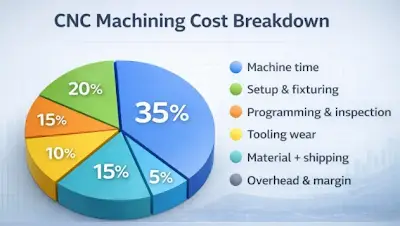
During CAM review, CNC aluminum enclosures carry higher material removal costs and longer machine time, especially for larger parts where a lot of stock is wasted as chips. We see this reflected in quotes — prototypes might be 2-4x more expensive than a basic sheet metal fold. However, sheet metal requires upfront tooling investment that only makes sense above certain volumes. In production we typically recommend CNC when quantities stay under 200-300 units because setup costs dominate. Beyond that threshold, sheet metal pulls ahead rapidly due to progressive forming and lower per-part labor. The trade-off becomes noticeable when design changes are frequent; CNC allows quick adjustments without new dies, keeping overall project costs lower in iterative PCB development.
Strength and Durability Trade-offs in Real Assembly Environments
CNC machined aluminum provides inherent rigidity from solid stock, making it easier to maintain flatness for PCB mounting and better resistance to deformation under vibration or impact. Sheet metal, while lighter per surface area, relies on formed bends and often spot welds or fasteners that can become weak points over time. In our DFM checks, we frequently flag sheet metal designs for reinforcement needs around heavy PCB components or connectors. CNC enclosures handle higher mechanical loads without additional bracing, which simplifies downstream assembly. Yield tends to decrease in sheet metal when tolerances stack up at seams, whereas CNC maintains consistency across batches as long as fixturing is stable.
EMI Shielding Performance Comparison in PCB Housing
Both materials offer good conductivity when aluminum-based, but CNC provides seamless construction that minimizes EMI leakage paths. Sheet metal enclosures need precise attention to seam gaps, gaskets, and grounding during CAM preparation — small misalignments during forming can degrade shielding effectiveness. From a fabrication standpoint, we see better real-world EMI results with machined parts because continuous walls allow reliable conductive finishes without relying on multiple contact points. For high-frequency PCB applications, this difference often justifies the higher initial cost of CNC until volumes allow optimized sheet metal designs with fingerstock or conductive paint.
Recommended Figure: Manufacturing process flow comparison diagram illustrating CNC milling steps versus sheet metal cutting, bending, and welding sequences for typical PCB enclosures.
Appearance, Finish Quality, and Customer-Facing Considerations
CNC aluminum delivers superior surface finish straight off the machine, with options for anodizing, brushing, or clear coating that look premium without much extra effort. Sheet metal often shows bend lines, tool marks, or weld seams that require more post-processing like powder coating to hide. In production, this means CNC parts usually need less cosmetic rework, improving throughput for visible enclosures. However, sheet metal can achieve excellent painted results at scale, making it preferable when appearance is secondary to cost in high-volume consumer PCB products.
How Production Volume Drives the CNC Enclosure vs Sheet Metal Enclosure Decision
Batch size remains the strongest driver we observe in quoting. Low volumes favor CNC because there is almost no non-recurring engineering cost and parts come off the machine ready for PCB integration. As quantities increase, sheet metal's efficiency in material usage and automated bending lines lowers costs dramatically. We normally recommend transitioning around 300-500 units depending on part size and complexity — below that, machining waste and time are acceptable; above it, the investment in stamping or forming tooling pays back quickly through higher yield and faster cycle times.
Factory Perspective on Evaluating CNC vs Sheet Metal for PCB Projects
In DFM review, we scrutinize unfoldability for sheet metal and machinability features for CNC. CAM preparation for CNC focuses on tool paths and fixturing to avoid vibration on thin walls, while sheet metal emphasizes bend deduction accuracy and nesting efficiency. Production yield is generally higher and more predictable with CNC for complex parts because there are fewer process variables after the initial setup. Panel utilization favors sheet metal for flat patterns, but CNC offers better overall process stability for precision PCB alignment holes and cutouts. Tooling considerations are minimal for CNC but significant for sheet metal. Inspection requirements differ too — CNC parts benefit from CMM checks on critical dimensions, whereas sheet metal needs gap and flatness verification at seams. Most PCB manufacturers we work with recommend CNC for early stages and specialty applications, switching to sheet metal when the design stabilizes and volumes justify the tooling.
Which Option Should You Choose?
Choose CNC Aluminum Enclosure if you:
- Need rapid prototypes or frequent design iterations for PCB integration
- Require tight tolerances for precise mounting and connector alignment
- Operate in environments demanding maximum rigidity and vibration resistance
- Prioritize seamless EMI shielding without extensive secondary sealing
- Value premium appearance and finish options on lower volumes
Choose Sheet Metal Enclosure if you:
- Target high-volume production where per-unit cost is critical
- Have simpler geometries that unfold cleanly for stamping and bending
- Accept trade-offs in seam management for EMI with proper gasketing
- Need lighter weight per enclosure size at scale
- Plan for painted or powder-coated finishes across thousands of units
FAQ
Q1: How does CNC enclosure vs sheet metal enclosure affect overall project timeline for PCB prototypes?
A1: CNC typically shortens the enclosure portion of the timeline since parts go straight from CAD to machine. Sheet metal may add days for tooling if custom punches or dies are required, though standard box profiles can be competitive.
Q2: Which process offers better thermal performance for heat-generating PCBs?
A2: CNC aluminum generally performs better due to thicker continuous sections that conduct heat more effectively to external fins or surfaces. Sheet metal can be enhanced with additional heatsink features but starts with thinner material.
Q3: Can sheet metal match CNC for precision in PCB mounting holes?
A3: Sheet metal can come close after secondary machining, but CNC delivers tighter positional tolerances out of the primary process, reducing assembly issues with dense PCBs.
Q4: What are the main DFM concerns when comparing the two for EMI-sensitive designs?
A4: For sheet metal we focus heavily on seam overlap and fastener grounding; CNC requires attention to wall thickness and surface conductivity after machining.
Q5: At what production volume does the cost comparison typically flip?
A5: Usually between 200-500 units depending on size and features. Below this CNC enclosure vs sheet metal enclosure favors machining; above it sheet metal becomes the lower cost option.
Q6: How do finishes impact long-term reliability differences?
A6: Both benefit from anodizing or chromate conversion, but CNC's smoother surfaces and lack of seams often lead to better corrosion resistance in harsh environments.