Where Conductive Coating Wins and Where Aluminum Enclosure Dominates in PCB EMI Shielding Enclosure Choices
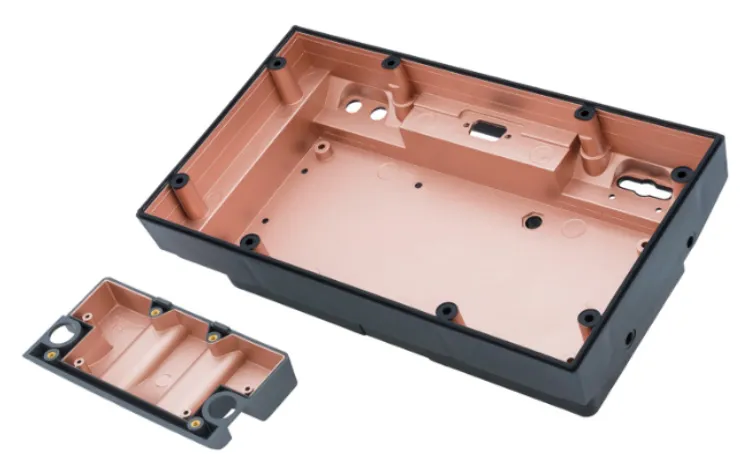
From the fab floor, conductive coating on plastic housings or direct PCB application usually beats aluminum enclosures when targeting medium-volume runs, tight cost targets, and lightweight designs under 1 GHz dominant noise. Aluminum enclosures deliver superior broadband shielding, mechanical protection, and long-term reliability in high-EMI environments or when regulatory limits are strict. The real decision hinges on your production volume, frequency range, thermal needs, and how much mechanical ruggedness the final assembly requires.
PCB EMI Shielding Enclosure Comparison at a Glance
| Factor | Conductive Coating | Aluminum Enclosure |
|---|---|---|
| Unit Cost (medium volume) | Lower (material + spray process) | Higher (machining + assembly) |
| Shielding Effectiveness (broadband) | Good up to ~1-2 GHz, degrades at seams | Excellent across wide frequency range |
| Manufacturing Complexity | Simpler integration in existing lines | Requires precise mechanical design and fixturing |
| Weight | Significantly lighter | Heavier, impacts portability |
| Thermal Performance | Depends on coating thickness, can trap heat | Superior heat sinking if properly designed |
| Lead Time | Faster (coating added post-assembly) | Longer due to custom fabrication |
| Yield Impact | High if coating uniformity controlled | Lower risk but higher scrap cost per failure |
| Typical Applications | Consumer electronics, cost-sensitive IoT | Industrial, automotive, medical, aerospace |
Decision Matrix: Matching Priorities to the Right PCB EMI Shielding Enclosure
| If your priority is... | Better Choice | Why |
|---|---|---|
| Lowest overall cost | Conductive Coating | Lower material and processing costs at scale; no custom metal tooling |
| Best shielding performance | Aluminum Enclosure | Continuous metal path provides consistent attenuation with fewer leakage points |
| Fastest time to prototype | Conductive Coating | Applied to off-the-shelf plastic housings quickly |
| Highest mechanical reliability | Aluminum Enclosure | Better vibration, impact, and environmental protection |
| Mass production efficiency | Conductive Coating | Easier automation and higher panel/assembly throughput |
| Extreme EMI or harsh environments | Aluminum Enclosure | Superior durability and shielding consistency over time |
How Shielding Effectiveness Differs in Real Production Runs
In the factory, aluminum enclosures generally outperform conductive coatings across a wider frequency spectrum because they create a near-continuous Faraday cage with solid metal walls. Conductive coatings rely on uniform particle distribution in the paint or spray, which works well for many commercial applications below 1 GHz but shows more variability at higher frequencies where seam gaps and coating thickness inconsistencies become noticeable during final EMI chamber testing.
We see conductive coating solutions passing regulatory tests reliably when grounding is carefully designed and multiple passes ensure thickness. However, aluminum enclosures tolerate minor assembly variations better — a slightly misaligned lid still maintains good contact pressure, whereas a thin spot in coating can create a leakage path that fails during vibration or temperature cycling. During DFM review, we pay close attention to coating coverage around connectors and board edges versus the need for precise enclosure tolerances and gasket materials.
Cost Differences That Matter on the Production Floor
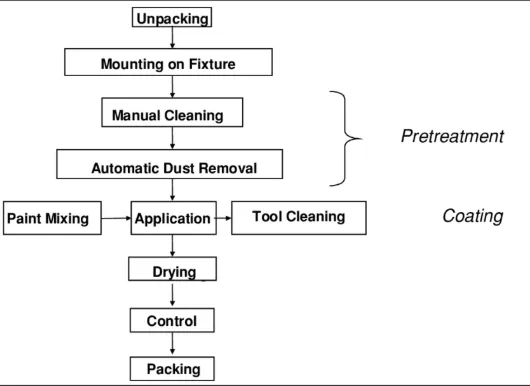
Conductive coating usually wins on pure piece price once you hit a few thousand units. The process adds a spray or dip step that integrates easily into existing SMT or assembly lines with minimal additional tooling. Aluminum enclosures require custom machining or die-casting, plus secondary operations like anodizing or conductive plating on contact surfaces, driving up both NRE and per-unit costs significantly.
The trade-off appears when you factor in scrap rates. A failed aluminum part costs much more to discard than a coating defect that can sometimes be reworked. In high-volume consumer PCB EMI shielding enclosure projects, we normally recommend starting with conductive coating unless thermal dissipation or mechanical requirements force the metal route. Tooling amortization for aluminum only makes sense above certain volumes or when the enclosure serves dual purposes as heatsink and shield.
Manufacturing Complexity and Process Stability
From a fabrication standpoint, conductive coating introduces fewer disruptions to standard PCB panel processing. We apply it post-population on the assembled product, so CAM preparation stays straightforward. Aluminum enclosures demand tighter mechanical tolerances during board layout — mounting holes, stand-offs, and clearance for lid closure must be reviewed early in DFM. Misalignment here leads to assembly line stoppages that coating processes rarely cause.
Yield tends to stay higher with coatings when process parameters like viscosity, spray pressure, and curing temperature are controlled. Aluminum parts can suffer from warping during machining or poor grounding contact after repeated thermal cycles. Most PCB manufacturers see better overall throughput with the coating approach for designs that don't require extreme ruggedness.
Thermal and Mechanical Trade-offs in Daily Production
Aluminum enclosures provide natural heat spreading that conductive coatings cannot match, especially when the enclosure makes direct contact with hot components or uses thermal pads. In dense PCB EMI shielding enclosure designs, this often becomes the deciding factor — coating can actually increase thermal resistance if applied too thickly. Mechanically, aluminum wins for vibration-heavy or drop-test requirements common in industrial and automotive work.
However, the added weight and size from aluminum can create problems in handheld or wearable products where conductive coating keeps everything slim and light. During production, we see more handling damage risks with metal parts due to their mass, while coated assemblies flow smoother through automated lines.
Factory Perspective on Evaluating Conductive Coating vs Aluminum Enclosure
In CAM engineering and DFM review, we evaluate conductive coating projects primarily around coverage uniformity, grounding continuity, and compatibility with conformal coating steps. Panel utilization remains high because the PCB itself doesn't change much. For aluminum enclosures, we focus on board-to-enclosure interface tolerances, screw hole positioning, and potential for galvanic corrosion between different metals.
Production yield stays more predictable with coatings for runs under 50k units. Process stability favors aluminum when you have dedicated automation for enclosure assembly, but the upfront risk is higher. Tooling considerations are minimal for coating while aluminum often needs custom fixtures. Inspection requirements differ too — coatings need thickness measurement and adhesion tests, while enclosures require dimensional verification and continuity checks at seams.
We normally recommend conductive coating for most cost-driven consumer and IoT PCB EMI shielding enclosure applications. Switch to aluminum when the product faces harsh environments, high power dissipation, or stringent EMC standards that coatings struggle to meet consistently over temperature and aging.
When Electrical Performance Outweighs Fabrication Ease
Signal integrity and EMI containment favor aluminum in designs with high-speed interfaces or sensitive analog sections. The metal provides a reference plane that coatings approximate but rarely equal, especially around apertures for cables and connectors. In production we've seen coating solutions require additional ferrite beads or redesigns to pass testing, while aluminum enclosures often pass on the first try with proper design.
The trade-off is real: you pay more and wait longer for aluminum, but gain peace of mind in field performance. For mixed-signal boards, we carefully review both options during quoting to highlight these risks.
Which Option Should You Choose for Your PCB EMI Shielding Enclosure?
Choose Conductive Coating if you:
- Target medium to high volume with aggressive cost goals
- Need lightweight final assembly
- Have dominant noise below 1-2 GHz
- Want minimal changes to existing plastic housing designs
- Can validate shielding through iterative testing
Choose Aluminum Enclosure if you:
- Require broadband or high-frequency shielding performance
- Face harsh mechanical or environmental conditions
- Need integrated thermal management
- Have low-to-medium volumes where reliability trumps cost
- Must meet the toughest regulatory certifications with margin
FAQ
Q1: How does conductive coating compare to aluminum enclosure for high-volume consumer electronics?
A1: Conductive coating is usually the better manufacturing choice for high-volume consumer products due to lower cost and easier integration. It maintains acceptable shielding for most applications while keeping weight and assembly time down.
Q2: Can conductive coating achieve the same EMI performance as aluminum enclosures?
A2: Not consistently across all frequencies and conditions. Aluminum provides more reliable broadband performance, while coatings can work well with careful design but often need supplementary measures at higher frequencies.
Q3: What are the main DFM concerns when switching from coating to aluminum enclosure?
A3: Key concerns include board mounting features, tolerance stack-up for lid closure, grounding contact areas, and thermal expansion differences. Early CAM review prevents costly respins.
Q4: Which option is better for thermal management in dense PCB designs?
A4: Aluminum enclosures are superior because the metal acts as a heat spreader. Conductive coatings can impede heat flow if not carefully specified.
Q5: How does production volume affect the choice between conductive coating and aluminum?
A5: At lower volumes aluminum may be acceptable due to simpler per-unit economics without heavy tooling. At higher volumes conductive coating becomes clearly more cost-effective and manufacturable.
Q6: Are there long-term reliability differences in field use?
A6: Aluminum enclosures generally offer better long-term reliability against vibration, corrosion, and repeated thermal cycling. Coatings can wear or lose conductivity over years in harsh conditions.