Modern industrial, automotive, and telecommunications systems rely on robust communication protocols such as PLC Ethernet open communication, MPLS, in-vehicle Ethernet, and Modbus to ensure reliable data exchange. These protocols place stringent demands on printed circuit boards, requiring precise signal integrity, controlled impedance, thermal stability, and high-reliability manufacturing processes.
PLC Ethernet Open Communication and PCB Implementation
Ethernet open communication allows PLCs to exchange data with other controllers or third-party devices using user-defined TCP or UDP protocols. Each PLC brand implements this through specific instructions, such as SOCKET_WRITE for Rockwell Micro800, TSEND for Siemens S7-1200 and S7-200 Smart, TCP_Client_Send for Schneider M241/M251, SP.SOCSEND for Mitsubishi FX5 series, and SSEND for Delta DVP-ES3.
From a PCB perspective, these implementations demand multilayer boards with tight impedance control on Ethernet traces to maintain signal integrity at 100 Mbps and beyond. High-Tg FR4 or polyimide materials resist thermal expansion in harsh industrial environments, while sequential lamination and laser-drilled microvias enable dense routing around high-pin-count PLC connectors. Standardized function blocks simplify programming, but the underlying PCBs must support consistent socket handling through optimized power planes and EMI shielding to prevent crosstalk between multiple communication channels.

MPLS Technology and Telecommunication PCB Requirements
MPLS enables service providers to manage traffic through label-switched paths (LSPs) created by LDP, RSVP-TE, or segment routing. It supports BGP-free cores, traffic engineering, VPN tunnels, and multicast services without requiring core routers to process full IP routing tables.
In MPLS-enabled routers and switches, PCBs must handle high-speed packet forwarding with minimal latency. Telecommunication-grade boards incorporate low-loss laminates, heavy copper power planes, and back-drilled vias to support 100G+ SerDes while maintaining signal integrity across label-processing ASICs. Customer-edge connections typically use standard Ethernet interfaces on high-reliability PCBs that ensure stable VRF mapping and label imposition at the provider edge.

In-Vehicle Ethernet Transmission Testing and Automotive PCB Design
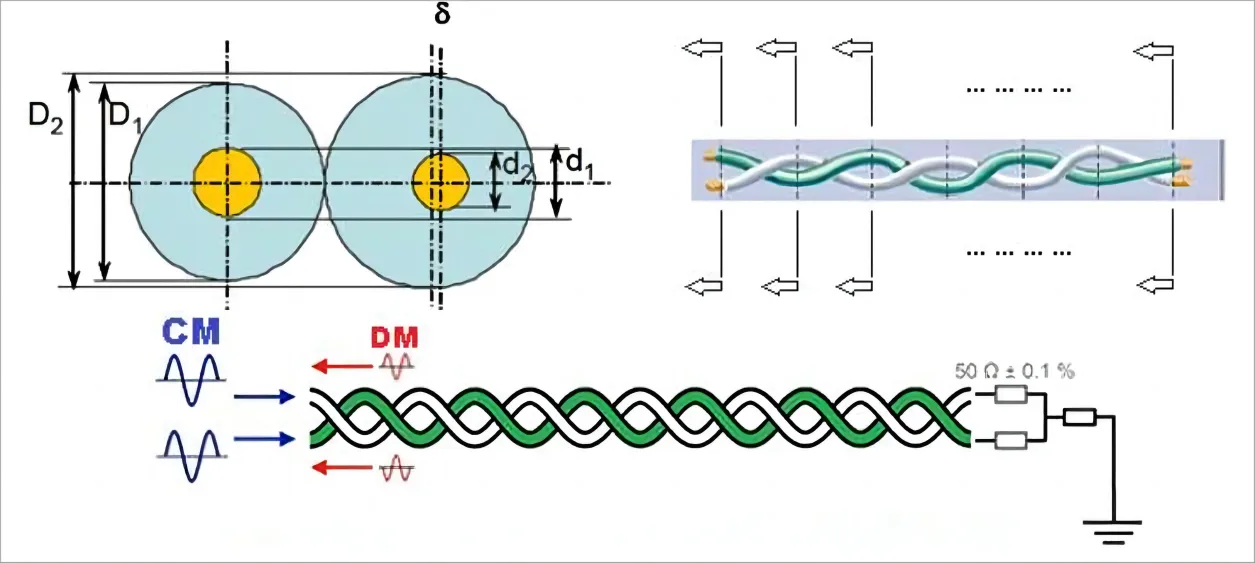
Automotive Ethernet harnesses must meet OPEN TC9 criteria for high data rates, bandwidth, and interference immunity at 600 MHz. Key tests include return loss (RL), longitudinal conversion loss (LCL), characteristic impedance via time-domain reflectometry (TDR), insertion loss (IL) for A-type (15 m) and B-type (40 m) link segments, and longitudinal conversion transfer loss (LCTL).
These requirements translate directly to PCB design for in-vehicle gateways and controllers. Automotive PCBs demand controlled-impedance differential pairs with ±5% tolerance, embedded shielding layers, and thermal vias to manage heat from high-speed transceivers. HDI stack-ups with fine-pitch routing support the stringent balance and symmetry needed for twisted-pair emulation on board, while rigorous manufacturing processes such as plasma etching and automated impedance testing ensure harness-to-PCB interfaces meet automotive reliability standards.

Modbus Communication Protocol and Industrial PCB Considerations
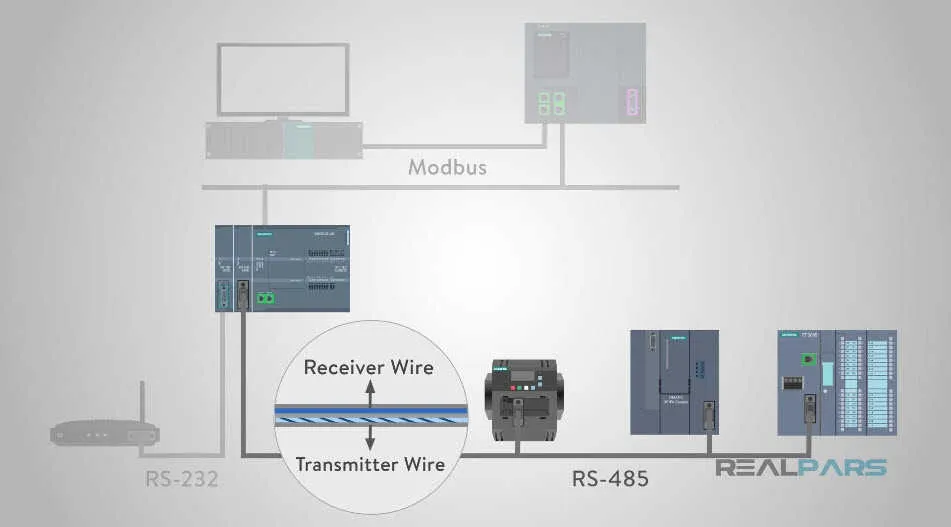
Modbus remains a widely used industrial protocol in RTU, ASCII, and TCP variants. It employs a master-slave model with function codes such as 0x03 for reading holding registers and 0x06 for writing single registers. RTU frames consist of address, function code, data, and CRC, while ASCII adds start/end delimiters for readability.
On industrial PCBs, Modbus implementation requires robust RS-485 or RS-232 transceiver layouts with proper termination resistors, ground plane isolation, and surge protection. High-reliability boards use thick copper for power delivery to transceivers and controlled-impedance routing for differential signals to maintain error-free communication over long distances in noisy factory environments.
Unified PCB Manufacturing Best Practices for Communication Systems
Across these protocols, Aivon delivers high-performance telecom PCBs through hybrid material stack-ups, precise impedance control, filled and capped vias, and comprehensive signal-integrity validation. These capabilities ensure reliable operation in PLC networks, MPLS backbones, automotive Ethernet systems, and Modbus-based industrial controllers while meeting the thermal, mechanical, and electromagnetic requirements of demanding applications.
Future Trends in PCB Technology for Industrial Communication Systems
As industrial networks evolve toward higher speeds and greater integration, several PCB technology trends are shaping the next generation of communication infrastructure. Automotive Ethernet is moving rapidly to 10GBASE-T1 and 25 Gbps+ rates, requiring PCBs with ultra-low-loss laminates, finer trace geometries, and advanced via-in-pad constructions to support longer harness lengths while preserving signal integrity.
In industrial and telecom environments, the convergence of 5G/6G backhaul with MPLS and time-sensitive networking (TSN) demands hybrid PCBs that combine high-frequency RF sections with dense digital control layers. Sequential lamination with sub-50 µm build-up films and embedded optical waveguides is becoming essential for reducing latency in PLC-to-cloud gateways.
Sustainability and predictive reliability are also driving innovation. Halogen-free, high-Tg materials with improved thermal conductivity are being adopted for harsh-environment PCBs, while integrated sensors and AI-based impedance monitoring on the board itself enable real-time fault detection in Modbus and Ethernet networks. These trends require new manufacturing capabilities such as precision copper filling, hermetic sealing, and automated optical/X-ray inspection at higher resolutions.
Conclusion
Industrial communication protocols such as PLC Ethernet open communication, MPLS, in-vehicle Ethernet, and Modbus form the backbone of modern automation, automotive, and telecommunications systems. Their performance ultimately depends on the printed circuit boards that carry high-speed signals under demanding electrical, thermal, and mechanical conditions.
By optimizing material selection, impedance control, via technology, and manufacturing processes, engineers can meet the stringent requirements of these protocols while ensuring long-term reliability. Aivon's expertise in high-reliability HDI, hybrid stack-ups, and rigorous signal-integrity validation positions the company as a trusted partner for delivering the advanced PCBs that power next-generation industrial networks.