Serial Communication Fundamentals in Embedded Design
Effective device communication is foundational to modern electronics, from simple sensor nodes to complex industrial controllers. Communication interfaces are broadly classified as parallel or serial. Parallel interfaces transmit multiple bits simultaneously but require more wiring and face challenges with signal skew over distance. Serial communication transmits data bit-by-bit, offering simpler wiring, better noise immunity over longer distances, and suitability for embedded applications.
Within serial communication, designs differentiate by directionality and synchronization:
Directionality
- Simplex: One-way data flow.
- Half-duplex: Bidirectional but not simultaneous.
- Full-duplex: Simultaneous bidirectional communication using separate transmit (TX) and receive (RX) lines.
Synchronization
- Synchronous (e.g., SPI, I2C): Uses a dedicated clock line for precise timing.
- Asynchronous (e.g., UART/USART): No shared clock; timing relies on agreed baud rates and framing bits (start, stop, parity).
UART (Universal Asynchronous Receiver-Transmitter) and its synchronous-capable variant USART are staples in STM32 microcontrollers for their simplicity, robustness, and widespread use in debugging, sensor integration, and device-to-device links.
STM32 UART/USART Overview and Key Characteristics
STM32 families integrate multiple UART and USART peripherals. Larger devices, such as those in the STM32F1 series, often feature 3 USARTs and 2 UARTs, providing flexible connectivity options.
Core Features of STM32 UART:
- Full-duplex asynchronous communication.
- Programmable baud rates with fractional generators for high accuracy, supporting speeds up to 4.5 Mbits/s.
- Configurable data word length (8 or 9 bits).
- Selectable stop bits (1 or 2).
- Parity generation and checking (odd, even, or none).
- DMA support for efficient multi-buffer transfers, reducing CPU load.
- Independent transmitter and receiver enables.
- Rich status flags (RXNE, TXE, TC) and multiple interrupt sources.
- Error detection including framing, overrun, noise, and parity errors.
These capabilities make STM32 UARTs ideal for industrial control, consumer electronics, IoT gateways, and telemetry applications.

UART Hardware Interfacing and Level Translation
Basic Pinout
- TXD (Transmit Data): Output from the MCU.
- RXD (Receive Data): Input to the MCU.
- Common ground reference is essential.
For MCU-to-MCU communication, cross-connect TXD to RXD (and vice versa) while sharing ground, operating at TTL levels (typically 3.3V on modern STM32).
Interfacing with PCs or Legacy Systems
RS-232 remains common in industrial environments despite its age. It uses different voltage levels (±3V to ±15V) compared to MCU TTL (0V/3.3V). Direct connection risks damage, necessitating level translators such as the MAX232 or similar charge-pump ICs.
Standard DB9 RS-232 pinout for basic full-duplex operation:
- Pin 2: RXD (PC input)
- Pin 3: TXD (PC output)
- Pin 5: GND
USB-to-serial adapters (often based on PL2303 or CP210x) provide modern alternatives when native RS-232 ports are unavailable.
UART Data Framing and Configuration Parameters
Successful UART communication requires both ends to use identical settings:
- Baud Rate: Common values include 9600, 115200, or higher. Mismatch causes framing errors.
- Data Bits: Usually 8.
- Parity: None (most common), Odd, or Even for basic error detection.
- Stop Bits: 1 or 2.
- Flow Control: Optional hardware (RTS/CTS) or software (XON/XOFF).
A typical frame: 1 Start bit + 8 Data bits + (optional Parity bit) + 1 Stop bit. STM32's fractional baud rate generator allows precise tuning even with non-ideal clock sources, enhancing compatibility across devices with varying crystal accuracies.

Block Internal Operation
The UART peripheral consists of:
- Transmit Path: CPU/DMA writes to Transmit Data Register -> Transmit Shift Register -> TX pin.
- Receive Path: RX pin -> Receive Shift Register -> Receive Data Register (readable by CPU/DMA).
- Baud Rate Generator: Shared internal clock source for timing both TX and RX, despite no external clock line.
This architecture supports efficient interrupt-driven or DMA-based operation, critical for real-time systems where UART handles debug output, sensor data, or Modbus/ industrial protocols.
PCB Design and Manufacturing Considerations for UART Interfaces
Reliable UART implementation extends beyond firmware to hardware design:
- Signal Integrity: Keep TX/RX traces short, impedance-controlled, and away from noisy power or high-speed digital lines. Use ground guarding or reference planes.
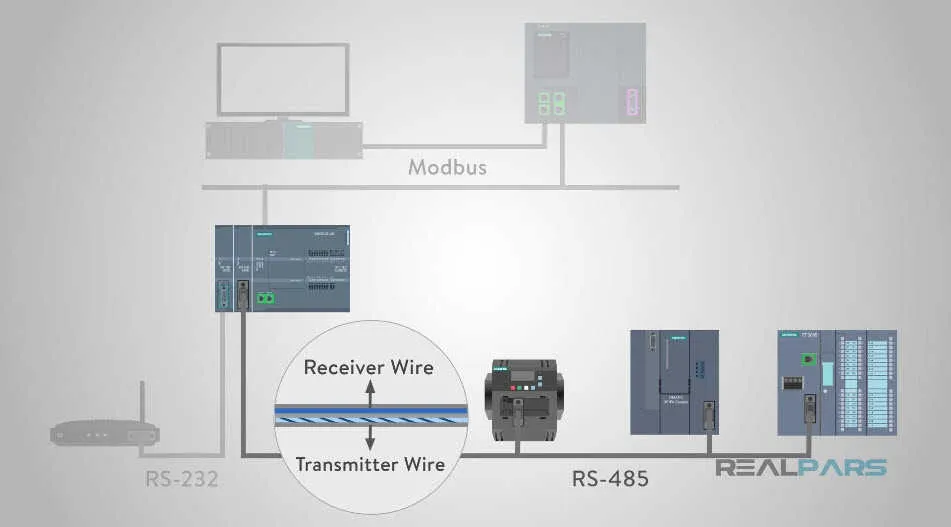
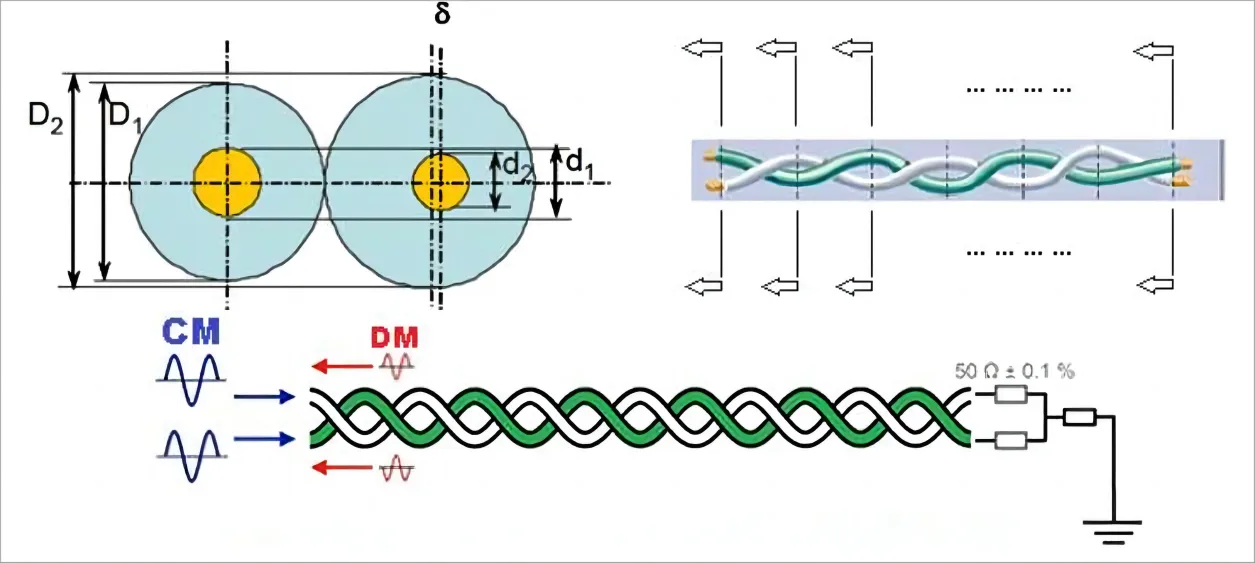
- Noise Immunity: In industrial environments, consider differential signaling (e.g., RS-485) or proper termination. Decoupling capacitors near MCU power pins are essential.
- Layer Stackup and Routing: Multilayer PCBs with dedicated ground planes minimize EMI. HDI techniques help in dense designs integrating multiple communication interfaces.
- Component Placement: Position level shifters (MAX232 etc.) close to connectors. Ensure clear separation between digital and analog sections when applicable.
- Testing and Reliability: Include test points for TX/RX/GND. Validate baud rate accuracy, error rates under temperature/vibration, and ESD protection for external connectors.
- Flex and Rigid-Flex Applications: For wearable or space-constrained devices, flexible circuits must maintain signal quality across bends.
Experienced PCB manufacturers optimize these layouts for manufacturability, ensuring consistent impedance, controlled etching for fine traces, and robust assembly processes that support high-volume production of reliable embedded systems.
Industry Applications and Best Practices
STM32 UART remains a go-to interface for cost-effective, field-proven communication in automation, metering, medical devices, and consumer products. While newer protocols (USB, Ethernet, CAN) dominate high-bandwidth use cases, UART excels in simplicity, low power, and legacy compatibility.
Best practices include:
- Using DMA for high-throughput scenarios.
- Implementing robust error handling and timeouts.
- Documenting and version-controlling communication protocols.
- Designing for future scalability (e.g., reserving pins for RS-485 transceivers).
For OEMs developing STM32-based products, partnering with electronics manufacturing services that understand high-speed digital design and signal integrity ensures smooth transition from prototype to production.
Optional FAQ
Q1: What is the difference between UART and USART in STM32?
A1: USART supports synchronous communication (with clock) in addition to asynchronous UART mode, offering greater flexibility.
Q2: How do you handle level translation for PC communication?
A2: Use dedicated ICs like MAX232 for RS-232 or USB-to-UART bridges for modern connections.
Q3: Why is PCB layout important for UART reliability?
A3: Proper routing, grounding, and noise isolation prevent data corruption, EMI issues, and ensure signal integrity, especially at higher baud rates or in harsh environments.