Introduction
In high-reliability electronics, few failures are as dramatic as the sharp “pop” heard during reflow when a multilayer PCB suddenly blisters and delaminates. One well-documented case involved an outdoor IoT sensor deployed in a humid environment: 22% of units failed in the field within six months due to moisture-induced delamination during field repairs. The root cause was not poor design alone, but a preventable combination of PCB moisture absorption and inadequate PCB baking.
This failure mode is entirely avoidable. PCB hygroscopicity — the tendency of laminate materials to absorb atmospheric moisture — combined with improper baking procedures, remains one of the most common yet under-addressed threats to PCB reliability. This comprehensive guide explains the physics behind these failures, provides actionable standards and protocols, and shows how proper material selection, PCB baking, and design-for-manufacturing (DFM) practices can eliminate moisture-related defects in even the most demanding applications.
The Hook & Industry Context
The "Nightmare" Scenario
It's the final stage of a high-stakes product launch. Your AI-integrated medical diagnostic tool—a project involving eighteen months of R&D—is undergoing final reflow soldering. Suddenly, a sickening "pop" echoes through the assembly line. Upon inspection, the once-pristine multilayer boards resemble blistered skin. Probing reveals that internal layers have separated, and critical signal traces are severed.
This isn't just a defect; it's a catastrophic failure that renders the entire batch of expensive components scrap.
Relevance in 2026
In an era of AI Servers and Autonomous Vehicle (EV) Modules, the margin for error is non-existent. As we push the boundaries of High-Density Interconnect (HDI PCB) design, the materials we use must withstand extreme thermal gradients. The culprit behind the "pop" is often a silent one: Hygroscopicity (the tendency of a material to absorb moisture from the air).
Macro-to-Micro Bridge
Think of a PCB like a high-performance sponge. While it looks solid, the epoxy resin in the laminate is porous. At a macro level, this moisture causes the board to swell and lose its "flatness." At a micro level, specifically at the Glass Transition Temperature (Tg) (the point where the resin shifts from rigid to rubbery), trapped water molecules vaporize into high-pressure steam. This internal pressure is what causes the delamination (layer separation) and blistering seen in the field.
Root Cause & Impact Analysis: The Physics of Failure
The transition from a functional board to a "potato chip" or a blistered mess is rarely accidental. It is the result of three converging factors:
The "Why": Design, Material, and Fabrication
Material Limitations (The Resin Factor): Standard PCB FR-4 utilizes epoxy resins that naturally attract water. If the Resin Content (RC%) is too high without proper moisture-barrier properties, the board becomes a liability in humid environments.
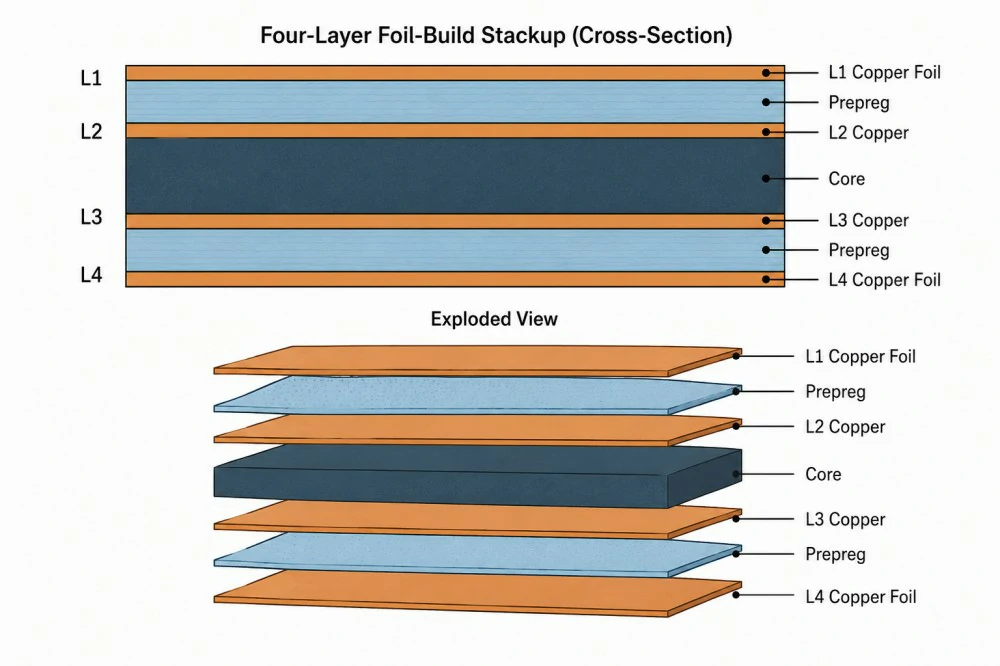
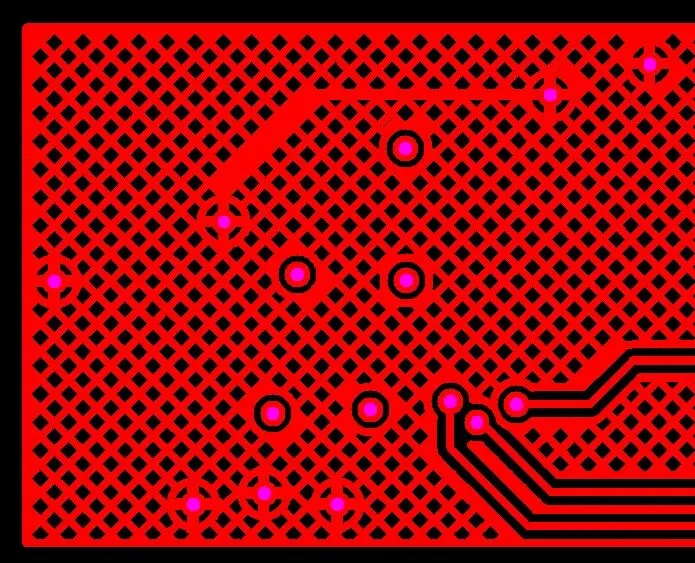
Design Flaws (Symmetry & Voids): Asymmetrical stack-ups create uneven stress during thermal expansion. Furthermore, large areas of copper without "venting" (small holes to let gas escape) trap moisture between layers.
Fabrication Errors (The Baking Gap): Skipping the vacuum drying stage or using atmospheric ovens that don't reach the core of the board leaves residual moisture (volatile content) trapped.
Material Comparison: Moisture Absorption Rates and Selection Guide
Material choice is the first line of defense against PCB moisture absorption.
| Material | Moisture Absorption (%) | Tg (°C) | CHE (Z-axis) | Recommended Applications | Relative Cost |
|---|---|---|---|---|---|
| Standard FR-4 | 0.15–0.30 | 130–150 | 0.6–0.8% | Consumer, low-reliability | Low |
| High-Tg FR-4 | 0.10–0.20 | 170–180 | 0.5–0.6% | Automotive, industrial | Medium |
| Halogen-Free FR-4 | <0.10 | 150–170 | 0.4–0.5% | High-reliability, medical, IoT | Medium-High |
| Rogers RO4000 Series | 0.03–0.06 | >280 | <0.3% | RF, 5G, millimeter-wave | High |
| Polyimide | 0.20–0.40 | >250 | 0.4–0.6% | Aerospace, extreme temperature | Very High |
For applications exposed to humidity or multiple reflow cycles, selecting materials with moisture absorption below 0.10% significantly reduces risk.
The "Cost" of Neglect
● Signal Loss (dB): Moisture increases the Dielectric Constant (Dk). A board that absorbed 0.5% moisture can see its signal integrity degrade by up to 15%, causing jitter in high-speed AI data lines.
● Thermal Throttling: Delamination creates air gaps. Since air is a poor conductor of heat (0.024 W/m·K), these gaps act as thermal insulators, causing components to overheat and fail.
● CAF Formation: Moisture facilitates Conductive Anodic Filament (CAF) growth—microscopic copper "whiskers" that grow internally, leading to sudden short circuits weeks after the product is in the field.
The AIVON Standard: Strategic Solutions
As a trustworthy online PCB manufacturer, we don't treat "warpage" as a statistical inevitability. We treat it as a manufacturing challenge solved through material science and advanced vacuum technology.
Advanced Fabrication: The Vacuum Drying Edge
While standard factories use traditional convection ovens, AIVON employs Advanced Vacuum Drying Systems.
● Physics of Success: By lowering the ambient pressure in the drying chamber, we reduce the boiling point of water. This allows us to extract moisture at lower temperature(e.g., 90℃ instead of $125℃) , preventing the "artificial aging" of the copper surface while ensuring the core is 100% dry.
● LDI (Laser Direct Imaging): We use LDI to ensure that even if there is a microscopic shift in dimensions due to initial material stabilization, the circuitry is perfectly registered to the actual physical state of the panel.
Proprietary Workflow: The CAM Intervention
Our Computer-Aided Manufacturing (CAM) engineers perform a "Moisture Escape Audit" on every file:
Copper Thieving: We add "thieving" (tiny copper dots) to balance the copper density across the board, ensuring uniform thermal expansion.
Automated Stack-up Validation: Our software calculates the Coefficient of Hygroscopic Expansion (CHE) to ensure the chosen materials won't warp under reflow.
Proper PCB Baking Methods: Temperatures, Times, and Vacuum vs Convection
Effective PCB baking removes residual and absorbed moisture without damaging the material.
Recommended Parameters (per IPC-1601 and industry practice):
- Standard FR-4 (≤ 1.6 mm): 125°C for 4–6 hours (convection) or 90–100°C for 2–4 hours (vacuum).
- High-Tg / Halogen-Free: 135–150°C for 6–8 hours (convection); vacuum allows lower temperatures (95–110°C).
- Thicker boards (>2.0 mm) or >8 layers: Extend bake time by 50–100%.
Vacuum vs Convection Drying:
- Convection ovens rely on high temperature and long exposure, which can cause “artificial aging” of copper foil and reduce solderability.
- Vacuum drying lowers the boiling point of water, enabling effective moisture removal at 30–40°C lower temperatures. This preserves copper surface quality, reduces energy consumption by up to 30%, and achieves more complete core drying.
Vacuum-assisted systems are now considered best practice for high-reliability and HDI PCBs.
Case Study: The "Everglades" IoT Project
● Before AIVON: A client's outdoor sensors had a 22% failure rate due to delamination in high-humidity environments. Standard FR-4 was absorbing moisture, which then "exploded" during field repairs (hand-soldering).
● The AIVON Intervention: We transitioned the design to a Low-Hygroscopicity Halogen-Free Laminate with a moisture absorption rate of <0.10%. We implemented a 4-hour Vacuum Bake at the factory followed by immediate Vacuum-Sealed MBB (Moisture Barrier Bag) packaging.
● The Result: Field failures dropped to 0.04%. The client saved over $450,000 in warranty and replacement costs in the first year alone.
AIVON's Ecosystem & Technical Edge
Choosing AIVON means gaining an engineering partner, not just a vendor. Our ecosystem is built on the principle of "Reliability First."
● DFM (Design for Manufacturing): Every order undergoes a rigorous DFM check. If our engineers see an imbalanced stack-up that will lead to a "bow and twist" defect exceeding 0.75% (per IPC-A-600), we pause and consult with you.
● Global Compliance: We adhere strictly to IPC Class 3 standards for high-reliability electronics, alongside ISO 9001:2015 and UL certifications.
● Green Manufacturing: By utilizing precision vacuum drying, we reduce energy consumption by 30% compared to traditional 24-hour atmospheric baking cycles. Additionally, our high "First Pass Yield" (FPY) means less material ends up in landfills.
Actionable Design & Ordering Guide
To ensure your boards remain flat and stable, follow this AIVON-approved checklist.
The "Do's and Don'ts" Checklist
● DO: Specify a High-Tg material (>170℃) if your board will undergo multiple reflow cycles (e.g., double-sided SMT).
● DO: Maintain Stack-up Symmetry. If Layer 2 is 1oz copper, Layer (N-1) should also be 1oz copper.
● DON'T: Leave large "islands" of empty space on internal layers. Use copper pours to balance the density.
● DON'T: Store boards in open air for more than 8 hours. If the "Floor Life" is exceeded, a re-bake is mandatory.
Pro-Tips for Optimization
Impedance Control: When moisture levels fluctuate, your impedance shifts. Ask AIVON for a TDR (Time Domain Reflectometry) report to verify your 50Ω lines are stable post-drying.
Vacuum Packing: Always request "Vacuum Seal + Desiccant + HIC (Humidity Indicator Card)" for shipping. This is the AIVON gold standard for long-term storage. For detailed procedures on removing residual moisture before assembly, see our comprehensive article on effective PCB drying and baking methods.
Future Trends in Low-Hygroscopicity Materials and Processes
The industry is moving toward ultra-low moisture absorption laminates (<0.05%), graphene-enhanced resins, and AI-driven predictive drying algorithms. Inline moisture sensors, automated vacuum systems integrated with Industry 4.0 platforms, and new halogen-free materials with improved CHE values are expected to become standard by 2030. These advancements will further reduce the risk of PCB moisture absorption failures in next-generation AI servers, 5G/6G infrastructure, and autonomous vehicles.
Conclusion
PCB hygroscopicity and improper PCB baking are silent saboteurs that cause delamination, popcorning, CAF growth, warpage, and signal integrity loss. These failures are not inevitable. Through proper material selection, adherence to IPC-1601 and JEDEC standards, effective vacuum drying protocols, rigorous DFM, and correct packaging/storage practices, manufacturers can virtually eliminate moisture-related defects.
By treating moisture management as a core reliability discipline rather than an afterthought, engineers and procurement teams can dramatically improve yield, reduce field failures, and lower total cost of ownership. The difference between a reliable product and a costly recall often comes down to one decision: whether to properly address PCB moisture absorption before it becomes a problem.