Introduction
Automated Teller Machines (ATMs) deployed in extreme environments face unique challenges from temperature fluctuations that can compromise PCB reliability. High ambient temperatures in desert regions or low temperatures in polar areas stress materials, components, and solder joints beyond standard operating limits. Engineers must prioritize design considerations that ensure functionality across wide thermal ranges, often from -40°C to +85°C or more. This article explores high-temperature PCB materials, low-temperature PCB materials, thermal vias, component selection, and key design considerations for robust ATM PCBs. By adhering to established engineering principles, designers can mitigate risks like delamination, cracking, or thermal runaway. Proper implementation supports uninterrupted service in demanding field conditions.

Why Extreme Temperatures Matter for ATM PCBs
ATMs operate continuously, and PCB failures due to thermal extremes lead to costly downtime and service disruptions. In high-temperature scenarios, such as those exceeding 70°C in direct sunlight, heat buildup accelerates material degradation and component stress. Conversely, low temperatures below -30°C cause brittleness in standard laminates, risking cracks during mechanical vibrations from user interactions. These conditions amplify coefficient of thermal expansion (CTE) mismatches between layers and components, potentially causing warpage or joint failures. For electric engineers, understanding these effects is critical to specifying designs that meet reliability targets over years of deployment. Industry standards like IPC-2221 provide guidelines for thermal management to address such issues systematically.
Technical Principles of Thermal Extremes on PCBs
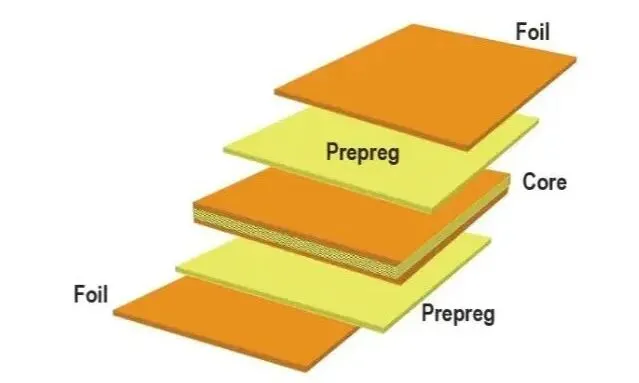
Temperature extremes induce mechanical stresses through differential expansion in PCB stackups. High temperatures soften resins, reducing glass transition temperature (Tg) integrity and leading to layer separation if Tg is exceeded. Low temperatures increase material rigidity, heightening fracture risk under flexure or shock. Solder joints, typically lead-free alloys, exhibit creep at high temperatures and embrittlement at low ones, affecting electrical continuity. Copper traces expand and contract, straining vias and pads if CTE values differ significantly across materials. Thermal modeling helps predict hotspots, ensuring junctions stay within safe limits.

In high-temperature environments, heat dissipation becomes paramount as power components generate additional thermal loads. Conduction through the board, convection from surfaces, and radiation play roles, but PCB properties dominate internal transfer. Low temperatures shift focus to maintaining flexibility and preventing microcracks in dielectrics. Moisture absorption exacerbates both, as freeze-thaw cycles cause delamination per IPC-6012 qualification tests. Engineers must balance electrical performance with thermomechanical stability.
High-Temperature PCB Materials
High-temperature PCB materials feature elevated Tg, often above 170°C, to resist softening and maintain dimensional stability. These materials exhibit low CTE in the z-axis to minimize via barrel cracking under thermal cycling. Resins with high thermal decomposition temperatures prevent charring during prolonged exposure. Copper-clad laminates in these categories support thicker foils for better current handling without excessive heating. Selection involves reviewing datasheet parameters like Td (decomposition temperature) and matching to expected peak excursions. Polyimide-based substrates excel here due to inherent thermal resilience.
For ATM applications, where processors and power supplies run hot, these materials integrate well with thermal vias for efficient spreading. JEDEC standards guide qualification through accelerated life testing at elevated temperatures. Avoiding standard FR-4, limited to around 130°C continuous, prevents reliability gaps.
Low-Temperature PCB Materials
Low-temperature PCB materials prioritize ductility and low brittle transition points to withstand contraction without fracturing. Substrates with consistent CTE across -55°C to room temperature reduce stress on plated-through holes. Flexible dielectrics like polyimides maintain integrity in cold flex tests, crucial for ATMs with moving parts or vibrations. Enhanced solder masks resist cracking, preserving protection over traces. These materials often pair with high-modulus reinforcements to control warpage during cooldown. Datasheets specify minimum operating temperatures based on IPC cyclic bend endurance.
In extreme cold, such as unheated outdoor units, component leads and board stiffness demand matched expansion properties. Hybrid stackups combine rigid high-temp cores with flexible outer layers for overall robustness.
Implementing Thermal Vias for Heat Management
Thermal vias provide low-resistance paths for heat from surface-mount components to inner planes or the opposite side. Arrays of 0.3mm diameter vias under hotspots, filled with conductive epoxy or plated solidly, enhance conduction by 20-50 times over air-filled. Via tents or caps prevent solder wicking during assembly, maintaining thermal paths. Placement density balances inductance for signals with dissipation needs, often 10-20% fill factor. Simulations verify junction temperatures drop significantly with optimized arrays. In ATM power sections, they route heat away from capacitors prone to derating.
Designers space thermal vias to avoid board flex points, integrating with copper pours for plane spreading. High-temperature PCB materials complement vias by sustaining plating integrity over cycles.
Component Selection Strategies
Component selection for extreme temperatures involves derating voltage, current, and power by 50% at boundaries to extend life. Integrated circuits rated for -40°C to +125°C, such as automotive-grade, handle ATM logic reliably. Passives like MLCCs require C0G dielectrics to avoid capacitance shift in cold; X7R types crack below -55°C. Connectors with high-temp plastics and gold plating ensure contact stability. LEDs and relays specify max ratings matching PCB materials. Qualification per JEDEC thermal cycling confirms joint reliability.
Solder alloys with wide melting ranges, compatible with low-temperature PCB materials, prevent cold joints. Engineers cross-reference datasheets against system profiles for holistic fits.

Key Design Considerations
Multilayer stackups optimize by placing power planes adjacent to components for direct heat sinking via thermal vias. Thicker copper (2oz+) reduces trace resistance and I2R losses in high loads. Controlled impedance traces account for dielectric constant shifts with temperature. Edge plating or castellations aid enclosure coupling for external cooling. Solder mask thickness influences convection, thinner for better airflow. Finite element analysis predicts warpage per IPC guidelines.
Vibration isolation through conformal coatings protects against thermo-mechanical fatigue. For ATMs, modular designs allow field swaps of hot subsections. Signal integrity maintains with ground stitching vias alongside thermal ones.
Best Practices in Assembly and Testing
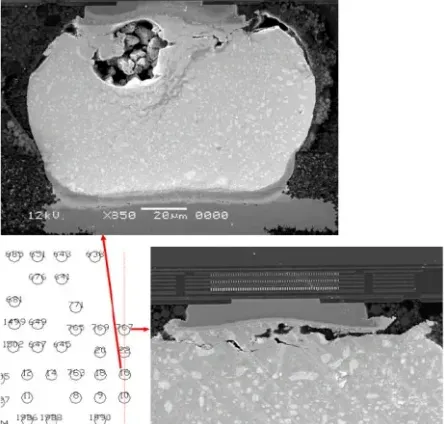
Assembly processes use low-profile stencils to fill thermal vias consistently, avoiding voids that impede conduction. Reflow profiles ramp slowly for high-temperature PCB materials to prevent delamination. X-ray inspection verifies via fill post-assembly. Environmental stress screening, including thermal shock per JEDEC JESD22-A104, simulates field extremes. Functional testing at boundaries confirms margins. Documentation traces materials to specs for traceability.
Conclusion
Designing ATM PCBs for extreme temperatures demands integrated choices in high-temperature PCB materials, low-temperature PCB materials, thermal vias, component selection, and design considerations. Logical stackup planning and standards adherence ensure thermomechanical harmony. Engineers achieve reliable performance by modeling stresses and derating aggressively. These practices minimize failures, supporting ATMs in diverse climates. Future designs may leverage advanced simulations for even tighter optimizations.
FAQs
Q1: What are the best high-temperature PCB materials for ATM power supplies?
A1: High-temperature PCB materials with Tg above 170°C, such as polyimides, provide stability under continuous heat loads. They pair with thick copper for low resistance and thermal vias for dissipation. Select based on CTE matching to components to avoid stress. IPC-2221 aids in verifying thermal paths. This ensures reliable operation in hot kiosks.
Q2: How do thermal vias improve design considerations in extreme heat?
A2: Thermal vias transfer heat from components to planes, reducing hotspots by creating conductive columns. Arrays under ICs, filled for max efficiency, integrate into high-temperature PCB materials seamlessly. Optimize density via simulation to balance electrical and thermal roles. They prevent derating needs, extending component life. Proper tenting maintains assembly yields.
Q3: Which low-temperature PCB materials resist cracking in cold ATMs?
A3: Low-temperature PCB materials like polyimides offer ductility down to -55°C, minimizing brittle failures. Low z-axis CTE prevents via cracks during contraction. Pair with flexible soldermasks for protection. Test per thermal cycling standards confirms endurance. These choices suit outdoor units with vibrations.
Q4: What component selection tips apply to extreme temperature ATMs?
A4: Prioritize parts with -40°C to +125°C ratings, derating power by 50%. Use C0G capacitors and high-temp ICs for stability. Match CTE to low-temperature PCB materials. JEDEC qualification verifies joints. This holistic approach boosts field reliability.
References
IPC-2221B — Generic Standard on Printed Board Design. IPC, 2012
IPC-6012DS — Qualification and Performance Specification for Rigid Printed Boards. IPC, 2015
JEDEC J-STD-020E — Moisture/Reflow Sensitivity Classification of Nonhermetic Surface Mount Devices. JEDEC, 2014
JEDEC JESD22-A104E — Temperature Cycling. JEDEC, 2009