Introduction
Vending machine PCB layout demands precision to handle the unique demands of control systems, payment interfaces, and mechanical actuators. These boards manage digital signals for inventory tracking alongside high-current paths for motors and solenoids, creating a mixed-signal environment prone to interference. Optimizing for signal integrity ensures clean data transmission, while EMC design prevents emissions that could affect nearby electronics. Engineers face challenges from switching noise, inductive loads, and compact enclosures, making layout a critical step. Proper vending machine PCB layout reduces failures, extends reliability, and meets regulatory expectations in public spaces. This article explores structured approaches to achieve these goals.

Why Vending Machine PCB Layout Matters for Signal Integrity and EMC
Signal integrity in vending machine PCBs refers to maintaining waveform quality across traces despite reflections, crosstalk, and attenuation. EMC encompasses both emissions control and immunity to external fields, vital in environments with fluorescent lights, wireless signals, and other machines. Vending machines operate continuously, so poor layout leads to intermittent faults like false vending triggers or payment errors. High-power relays and motors generate conducted and radiated noise, coupling into sensitive microcontroller lines. Effective vending machine PCB signal integrity and EMC design minimizes downtime and repair costs. Compliance with standards like IEC 61000-6-2 for industrial immunity further underscores the need for robust layouts.
Vending machine PCBs integrate diverse functions, from UART for coin validators to PWM for motors, amplifying layout sensitivities. Without optimization, ground bounce from simultaneous switching distorts logic levels, causing resets. EMI emissions must stay below limits to avoid interfering with point-of-sale systems nearby. Layout choices directly impact thermal distribution and mechanical stability under vibration. Engineers prioritize these aspects early to avoid costly respins. The interplay of signal integrity and EMC defines overall system performance.
Key Principles of Signal Integrity in Vending Machine PCB Layout
Signal integrity starts with controlled impedance on high-speed traces, such as those for communication buses in vending controllers. Traces require consistent width and spacing to match source and load characteristics, preventing reflections that degrade eye diagrams. Length matching for clock and data lines ensures timing alignment, critical for protocols like I2C used in sensors. Vias introduce discontinuities, so minimize their use or employ back-drilling where feasible. Decoupling capacitors placed close to IC power pins suppress voltage droops during transients. These principles form the foundation of vending machine PCB signal integrity.
Crosstalk arises when aggressive traces couple capacitively or inductively to victims, injecting noise into vending machine control signals. Increase separation or add ground traces between pairs to reduce coupling. Ground bounce occurs from shared return paths under fast edges, elevating reference potentials. Dedicated ground planes provide low-inductance returns, stabilizing voltages. Pre-layout simulations verify stackup effects on characteristic impedance. Adhering to IPC-2221B guidelines ensures these factors align with proven design practices.

Return path planning completes SI optimization, as signals flow in loops with minimal area to curb inductance. Position components to shorten critical nets, avoiding bends sharper than 45 degrees. Differential pairs for RS-485 payment links demand tight coupling and symmetry. Fabricators appreciate symmetric stackups for consistent etching. Testing post-layout with TDR confirms impedance targets. Vending machine PCB layout thrives on these interconnected strategies.
EMC Design Strategies for Vending Machine PCB Layout
EMC in vending machine PCB design focuses on containing noise from power electronics while shielding sensitive areas. Solid ground and power planes act as shields, distributing return currents evenly and blocking fields. Split planes carefully, stitching with vias to manage transitions and avoid slots that radiate. Filter inputs from mains with common-mode chokes and X/Y capacitors to block conducted emissions. Relays driving motors need snubbers to dampen inductive spikes. These measures align with vending machine PCB EMC design goals.
Radiated emissions peak at clock harmonics, so spread-spectrum clocks or shielding cans over oscillators help. Route high-d di/dt traces orthogonally to quiet signals, minimizing parallel runs. Enclose noisy sections with guard traces tied to ground. Ferrite beads on cables suppress external coupling. Layer sequencing places signals between planes for confinement. Compliance testing reveals layout weaknesses early.

Power integrity ties to EMC, as ripple couples into signals via poor bypassing. Multiple bulk and ceramic caps form low-ESR paths at frequencies. Separate analog and digital supplies with LC filters if needed. Monitor plane resonances during design. Vending machine PCB EMC design reduces noise in vending machine PCBs effectively through layered defenses.
Best Practices for Optimizing Vending Machine PCB Layout
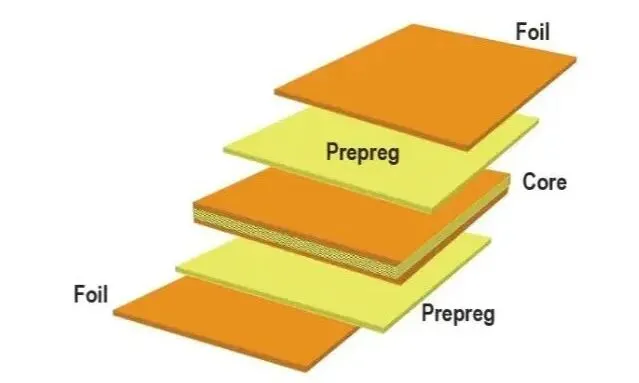
Begin with stackup definition, allocating 4-6 layers for segregation: signal-ground-signal-power-ground. This sandwiches traces for return proximity, enhancing vending machine PCB layout integrity. Route power traces wide for motors, away from signals. Use microstrip for low-speed, stripline for high-speed. Autorouters falter here; manual routing ensures compliance.
Component placement groups analogs together, digitals centrally, power near edges. Orient ICs to minimize trace lengths. Thermal vias under drivers dissipate heat from solenoids. Follow 3W rule for clearance from edges. DFM checks prevent fab issues.
Decoupling demands 0.1uF caps per pin, plus 10uF for rails. Place within 1cm of supplies. Guard rings around crystals isolate clocks. Test points aid debug without parasitics. Iteration via hyperlynx-like tools refines pre-silicon.
Troubleshooting Common Challenges in Reducing Noise in Vending Machine PCBs
Noise from motors couples via ground loops, causing sensor misreads. Audit returns, adding star points or planes. Relay arcing injects broadband EMI; opt for solid-state where possible, with TVS diodes. Scope critical nets for ringing, adjusting series resistors.
Vibration loosens vias; reinforce with filled types. EMI failures trace to unshielded connectors; add gaskets. Post-prototype shielding tweaks often suffice. Reducing noise in vending machine PCBs demands systematic probing.
Firmware glitches mimic SI issues; isolate hardware first. J-STD-001H assembly standards guide rework quality. Field data informs revisions.
Conclusion
Mastering vending machine PCB layout integrates signal integrity and EMC for reliable operation. Key practices like plane shielding, impedance control, and filtering mitigate noise from harsh loads. Structured design per IPC-2221B and IEC 61000-6-2 ensures compliance and performance. Engineers gain confidence through simulation and verification. Optimized boards minimize failures, supporting efficient vending deployments. Prioritize these elements for superior results.
FAQs
Q1: What are the main challenges in vending machine PCB signal integrity?
A1: Vending machine PCB signal integrity suffers from crosstalk and reflections due to mixed high-speed digital and power traces. Motors induce ground bounce, distorting logic. Mitigate with impedance-matched routing, length tuning, and local decoupling. Ground planes provide stable returns. Testing verifies clean waveforms.
Q2: How does vending machine PCB EMC design reduce emissions?
A2: Vending machine PCB EMC design employs solid planes and filters to contain noise from relays. Orthogonal routing and shielding minimize radiation. Ferrites on I/O block conduction. Compliance with IEC standards guides limits. Layout segregation prevents coupling.
Q3: What best practices improve reducing noise in vending machine PCBs?
A3: Reducing noise in vending machine PCBs starts with stackup planning for confinement. Place caps near ICs, route power separately. Snub inductive loads, use guard traces. Verify with near-field probes. Standards ensure repeatability.
Q4: Why is layer stackup crucial in vending machine PCB layout?
A4: Layer stackup in vending machine PCB layout defines impedance and shielding. Signals between planes reduce EMI. Symmetric builds aid fab. It supports current capacity for motors. Poor choices amplify noise.
References
IPC-2221B — Generic Standard on Printed Board Design. IPC.
IEC 61000-6-2 — Electromagnetic compatibility (EMC) - Part 6-2: Generic standards - Immunity for industrial environments. IEC.
J-STD-001H — Requirements for Soldered Electrical and Electronic Assemblies. IPC/JEDEC.