PCB Supply Chain Preparedness: What Customers Must Know Amid AI Demand
WHAT THIS VIDEO COVERS
As AI infrastructure expands rapidly through the second half of 2026, global demand for foundational PCB raw materials—particularly glass fabric and copper clad laminates (CCL)—has reached historic levels. This short video explains the resulting extended lead times and their direct implications for electronics manufacturing schedules. It emphasizes the importance of reviewing inventory levels and production forecasts for Q3 and Q4 early, rather than reacting after disruptions occur.
The content highlights how proactive supply chain measures, including secured material allocations and optimized production planning, can insulate OEM projects from market volatility. Viewers gain clear guidance on timing capacity reservations and engaging engineering teams before peak demand periods intensify pressure on lamination and fabrication resources. The video is especially relevant for teams building high-layer-count boards, high-speed digital designs, and infrastructure-grade electronics where schedule reliability is critical.
For high-volume programs, early coordination with PCB mass production capabilities helps lock in material and slot availability. Teams ready to evaluate options can request an instant PCB quote to initiate capacity discussions. Projects involving complex interconnects will also benefit from understanding current constraints on HDI PCB fabrication timelines.
KEY HIGHLIGHTS
- AI infrastructure is driving unprecedented consumption of glass fabric and CCL, pushing lead times significantly higher than 2025 baselines and creating scheduling pressure for multilayer and high-performance PCB orders.
- Early Q3/Q4 forecast reviews combined with capacity reservations are the most effective way to avoid production delays, cost premiums, and last-minute design compromises when material availability tightens.
- Partnering with a fabricator that has proactively secured premium materials and optimized internal supply chains provides measurable protection against market disruptions while maintaining consistent quality and delivery performance.
The 2026 AI Infrastructure Boom and Resulting Pressure on PCB Raw Materials
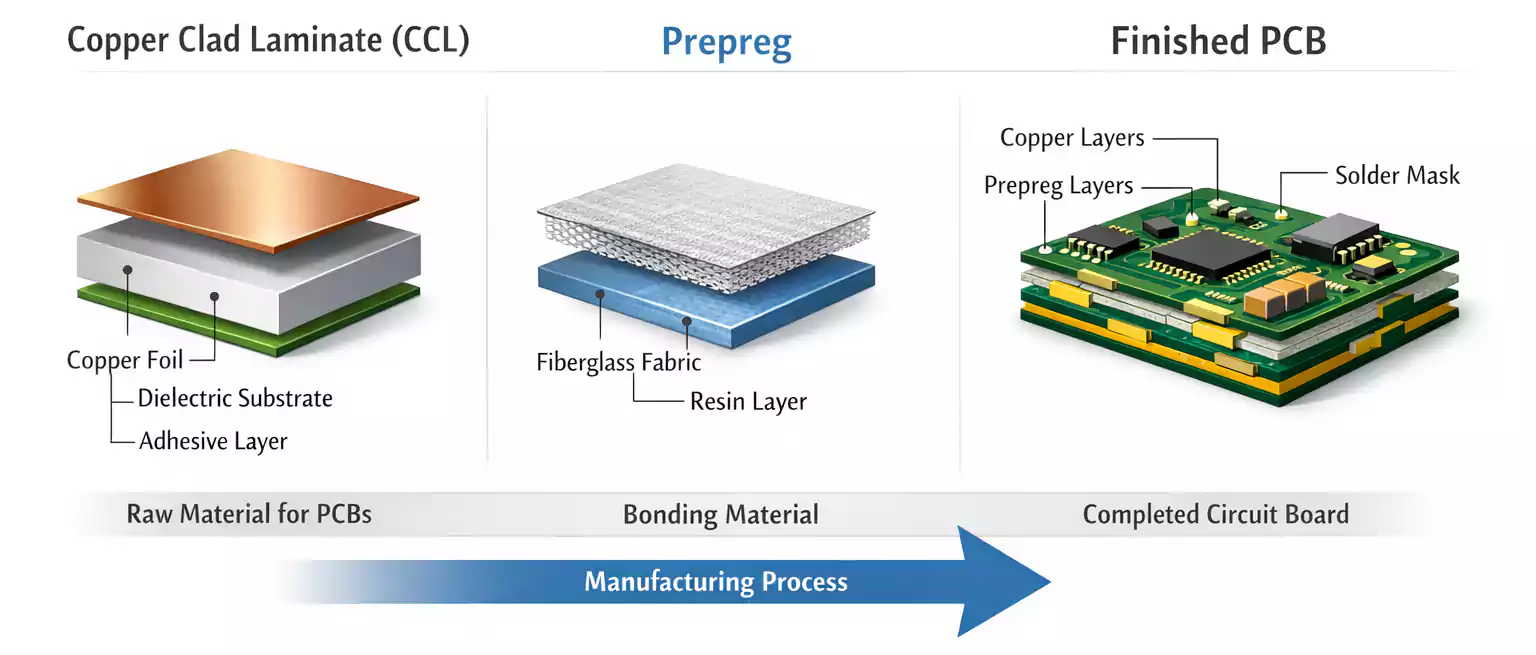
The rapid deployment of AI servers, GPU clusters, and high-performance computing infrastructure has dramatically increased consumption of core PCB materials. Glass fabric (used in prepreg and core reinforcement) and CCL grades—especially high-Tg and low-loss variants required for signal integrity in high-speed designs—are experiencing the strongest demand pull.
In our experience managing complex multilayer orders, lead time extensions of 50–100% compared to early 2025 levels are now common for these materials. Lamination scheduling, which depends on coordinated availability of cores, prepregs, and copper foil, has become a critical path item. When any one element is delayed, the entire pressing cycle and subsequent drilling/plating steps shift, directly impacting final delivery dates.
Failure to anticipate these constraints often leads to rushed material substitutions. In one recent case, a high-layer server board project that switched CCL grades late in the process encountered impedance control deviations and required multiple re-spins, adding six weeks to the schedule. Such outcomes are avoidable when stackup options are validated against current material availability during the initial DFM review.
Practical recommendation: Specify acceptable material families and tolerance bands in your stackup documentation early. This gives CAM engineers flexibility to recommend qualified alternatives without compromising thermal management, mechanical stability, or electrical performance.
Strategic Steps OEMs and Procurement Teams Should Take Now
The most effective mitigation is forward planning rather than reactive expediting. Begin by updating your Q3 and Q4 2026 demand forecasts with realistic buffer assumptions—typically adding 2–4 weeks to standard PCB lead times for boards above 6 layers or those requiring specialty materials.
Next, initiate capacity reservation discussions immediately. Fabricators with secured material pipelines can allocate inventory and production slots for committed orders, protecting against allocation to higher-priority programs later in the year. Delaying this step often results in allocation to spot-market purchases at premium pricing or extended waits.
Design teams should also accelerate DFM and stackup reviews. Early engagement allows identification of opportunities to standardize on more readily available prepreg systems or adjust copper weights and resin content where performance margins permit. This approach reduces single-point dependencies without sacrificing reliability in demanding end applications such as data center hardware or industrial control systems.
Risk Mitigation Matrix for Current Conditions
| Action | Recommended Timing | Primary Benefit | Consequence of Delay |
|---|---|---|---|
| Update production forecast | Immediate (July 2026) | Accurate capacity and material planning | Last-minute scrambles and premium costs |
| Submit designs for full DFM | 8–12 weeks before build | Early material alternative validation | Redesign loops or process compromises |
| Secure capacity reservation | Now through Q3 | Locked material allocation and slots | Loss of priority during peak demand |
| Review alternative stackups | During initial design | Greater sourcing flexibility | Rigid dependence on constrained grades |
How Supply Chain Optimization Translates to Reliable Project Execution
A well-prepared fabrication partner maintains transparent visibility into material pipelines and has pre-qualified multiple sources for critical items. This enables consistent lamination quality, predictable plating and solder mask processes, and stable yields even when primary material streams are constrained.
For customers, the practical outcome is fewer schedule surprises and reduced need for costly workarounds. When production forecasts are shared early, engineering teams can align panelization, fiducial placement, and test strategies with actual available capacity rather than theoretical standard lead times. The result is smoother handoff from design validation through volume ramp.
FAQ
Q1: What PCB raw materials are experiencing the longest lead time extensions due to 2026 AI infrastructure demand?
A1: Glass fabric (E-glass and high-performance variants) and copper clad laminates—particularly high-Tg, low-loss, and high-speed grades—are under the greatest pressure. These materials are foundational to lamination of multilayer boards used in AI servers, networking equipment, and high-performance computing systems.
Q2: How far in advance should procurement teams reserve PCB production capacity for Q4 2026 builds?
A2: For complex multilayer and HDI designs, initiate capacity discussions and material reservations 10–14 weeks before required delivery. This window accounts for current extended lead times on glass fabric and CCL while allowing time for DFM finalization and any necessary stackup adjustments.
Q3: How do current material constraints affect DFM and stackup decisions for multilayer PCBs?
A3: Engineers should build flexibility into stackup specifications by identifying acceptable material substitutions early. CAM teams can then validate alternative prepreg and core combinations against signal integrity, thermal, and mechanical requirements, reducing the risk of late-stage redesigns or yield issues caused by last-minute material changes.
Q4: What are the main risks if OEMs delay production planning amid 2026 PCB supply chain pressures?
A4: Primary risks include extended time-to-market, elevated unit costs from expedited or spot-market purchases, potential quality or reliability compromises from rushed material qualifications, and lost revenue if product launches slip in competitive AI and electronics markets.
As we move into the second half of 2026, the surge in AI infrastructure and advanced electronics has driven global PCB raw material demand to historic highs. Components like glass fabric and CCL are facing extended lead times worldwide.
To insulate our clients from these market disruptions, Aivon has proactively optimized our supply chain and secured premium materials to ensure uninterrupted, high-standard delivery for your upcoming projects.
We highly recommend reviewing your inventory and production forecast for Q3/Q4 early this year. Contact our team today to secure your production capacity and discuss how we can help stabilize your manufacturing pipeline.