










-
 00:52
00:52
Hot Air Gun Settings for Safe PCB Rework
Proper use of a hot air gun is essential for successful PCB rework and safe component removal. This video explains common mistakes such as incorrect temperature settings, excessive airflow, and poor nozzle control, all of which can lead to lifted pads, damaged traces, or displaced components. It provides practical guidelines for temperature ranges depending on solder type, appropriate airflow settings for different component sizes, and proper nozzle movement techniques to ensure even heating. By applying these best practices and using protective methods like high-temperature tape, engineers can improve rework success rates, protect PCB integrity, and maintain reliability in medical, automotive, industrial, and other high-performance applications.
-
 00:37
00:37
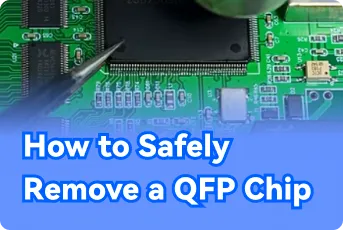
Safe QFP Chip Removal from PCB with Hot Air Rework
QFP (Quad Flat Package) removal is a delicate PCB rework process that requires controlled heating and careful handling to avoid damaging pads, traces, or the board itself. This video demonstrates professional hot-air techniques for safely desoldering QFP chips, including proper nozzle positioning, temperature control, and even heat distribution across all component sides. It emphasizes the importance of allowing full solder reflow before lifting the component to prevent board damage. By following these best practices, engineers and technicians can achieve clean component removal, preserve pad integrity, and support reliable PCB rework and modification in medical, automotive, industrial, and other high-reliability applications.
-
 00:38
00:38
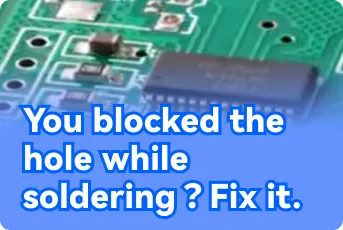
Fix Blocked Through-Hole on PCB After Soldering: Reliable Clearing Methods
Blocked through-holes caused by excess solder are a common issue during PCB assembly and rework, often preventing components from being installed correctly. This video demonstrates two effective methods for clearing solder-filled holes: using a dedicated desoldering tool for quick and repeatable results, or combining a soldering iron with a solder sucker for manual removal. It explains the importance of adding fresh solder, applying controlled heat, and removing solder while fully molten to avoid damaging pads or plated holes. By mastering these techniques, engineers and technicians can improve rework efficiency, maintain assembly quality, and ensure reliable through-hole connections in prototype and production PCB applications.
-
 01:11
01:11
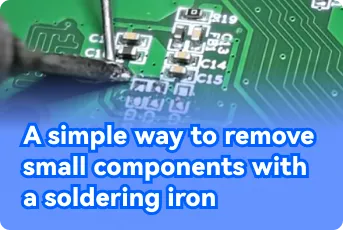
Remove Small SMD Components with Soldering Iron: Reliable Technique for PCB Rework
Removing small SMD components with only a soldering iron is a practical skill for PCB repair, troubleshooting, and prototype modification. This video demonstrates a simple technique for safely desoldering resistors, capacitors, LEDs, and other tiny surface-mount devices using flux, a fine-tip soldering iron, and tweezers. It highlights the importance of alternating heat between both ends of the component, working quickly to avoid overheating, and handling parts gently to prevent pad lifting or trace damage. By mastering this method, engineers and technicians can reduce rework costs, preserve board integrity, and efficiently replace components in consumer, industrial, medical, and other high-reliability PCB applications.
-
 00:48
00:48
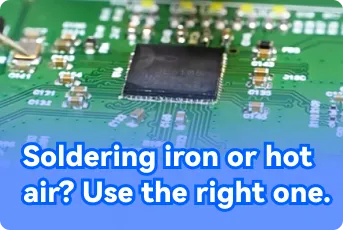
SMD Parts Removal with Soldering Iron: Reliable Techniques Without Hot Air
Removing SMD components without a hot-air station is possible with the right technique and careful heat management. This video demonstrates how to safely desolder surface-mount devices using a standard soldering iron, flux, and basic hand tools while minimizing the risk of lifted pads, damaged traces, or board delamination. It explains the importance of applying sufficient flux, heating pins evenly, and removing components patiently without excessive force. By mastering these methods, engineers and technicians can reduce rework costs, preserve PCB integrity, and efficiently support troubleshooting, repairs, and design modifications in prototype and production assemblies.


