Introduction
Drones, or Unmanned Aerial Vehicles (UAVs), have become indispensable tools across commercial, industrial, and defense sectors. Their performance relies on tightly integrated electronic systems that must deliver stability, endurance, payload capacity, and reliability in demanding environments. For electronics engineers and PCB manufacturers serving the aerospace industry, understanding drone architecture is essential for optimizing flight control boards, power distribution, sensor integration, and high-reliability assemblies.
Top Drone Functions
Drones excel in three primary mission categories:
Aerial Photography and Videography
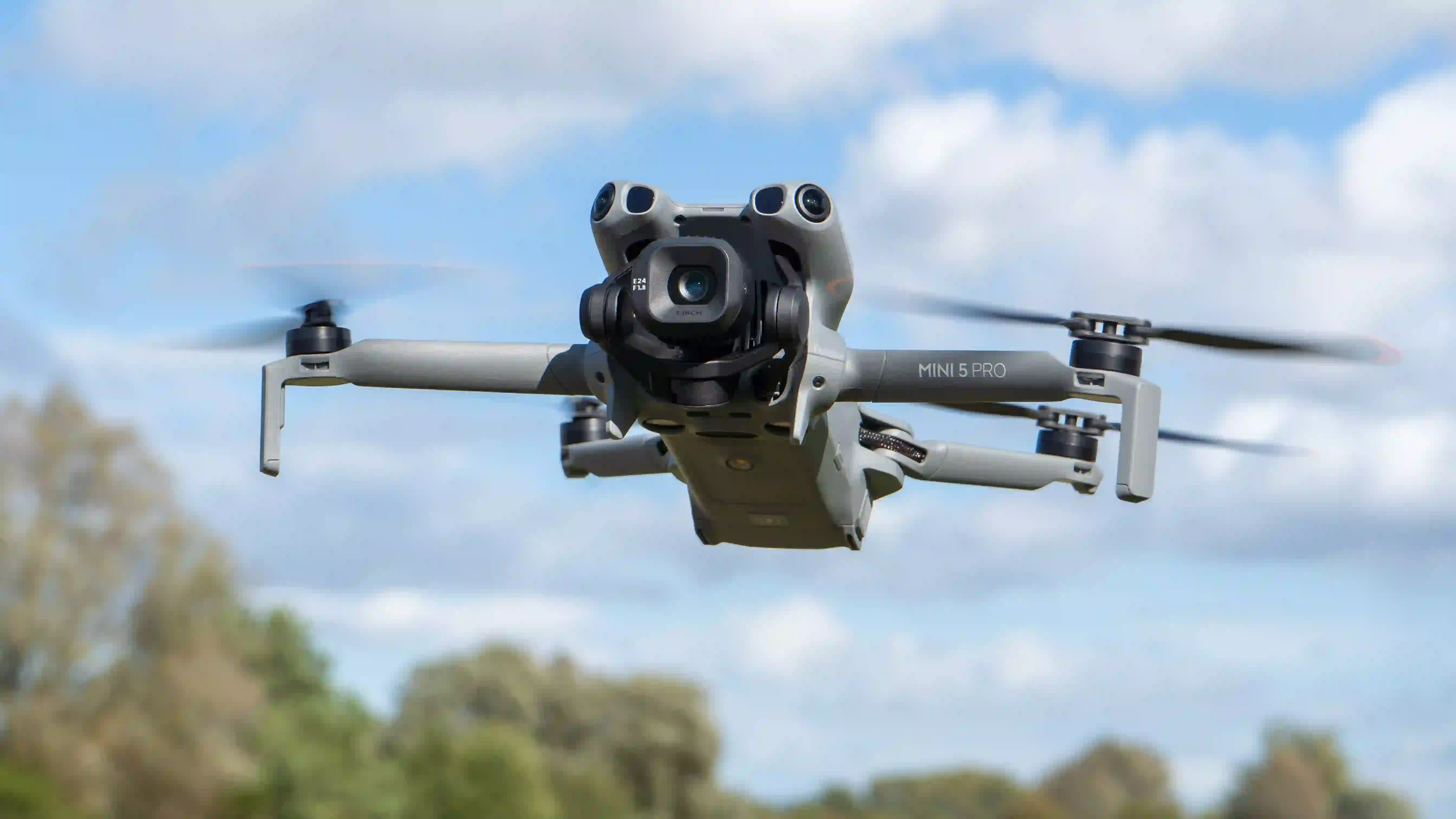
Equipped with high-resolution cameras and gimbals, drones capture professional-grade imagery for filmmaking, real estate, mapping, surveillance, and infrastructure documentation.
Inspection and Monitoring
Drones provide safe, cost-effective access to hazardous or inaccessible areas such as power lines, pipelines, bridges, wind turbines, and industrial facilities. Real-time visual and sensor data enable predictive maintenance and rapid issue identification.
Search and Rescue
In emergency scenarios, drones quickly cover large areas, delivering live video feeds, thermal imaging, and location data to first responders, significantly improving response efficiency in disaster zones or remote environments.
Additional applications include precision agriculture, environmental monitoring, logistics, geological surveying, and security operations.
Core Components of Drones
Drone performance depends on the seamless integration of interdependent subsystems. The most critical electronic and electromechanical components include:
Flight Control System
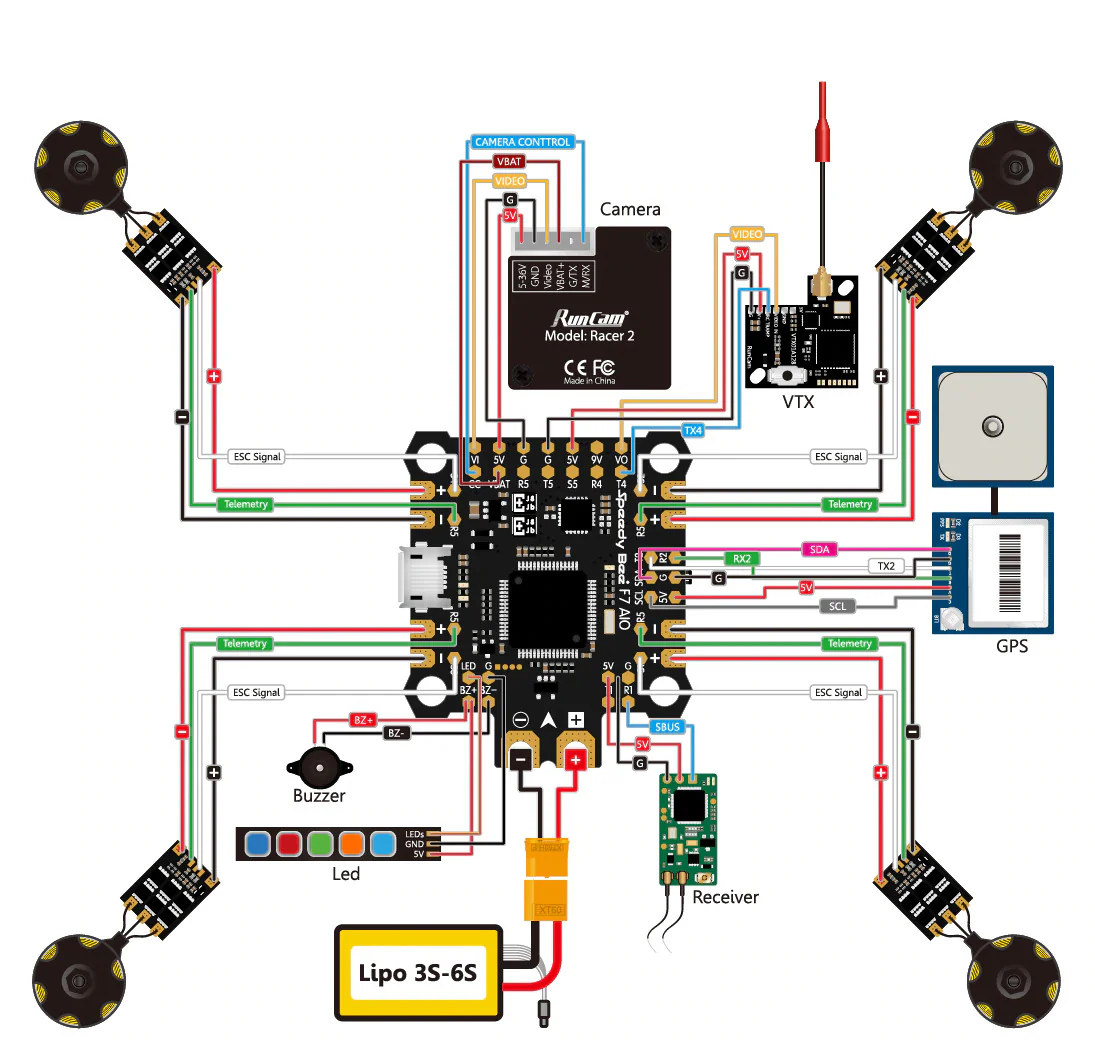
The flight controller serves as the drone's "brain." It processes data from multiple sensors - including IMUs (gyroscopes and accelerometers), magnetometers (compasses), barometers, and GNSS modules - to maintain stability, enable autonomous navigation, waypoint following, and advanced features such as obstacle avoidance and return-to-home.
Power System
This includes LiPo or Li-ion batteries, brushless DC motors, and Electronic Speed Controllers (ESCs). The power system directly determines flight time, thrust-to-weight ratio, and payload capacity. Efficient power delivery and motor control are vital for extended endurance and dynamic flight performance.
Sensors and Imaging Payloads
Beyond flight sensors, drones carry specialized payloads such as RGB cameras, infrared/thermal imagers, LiDAR, multispectral sensors, and radar. These provide environmental awareness for both flight control and mission-specific data collection.
Other important elements include the airframe, wireless communication modules (for control and telemetry), and navigation systems.
PCB Design and Electronics Manufacturing Considerations for Drones
Aerospace-grade drone electronics demand advanced PCB solutions to handle vibration, temperature extremes, weight constraints, and regulatory reliability requirements:
- Flight Controller PCBs: Require high-density interconnect (HDI) designs with controlled impedance for high-speed sensor interfaces and processor communication. Multilayer boards with dedicated power and ground planes ensure signal integrity for IMU and GNSS data.
- Power Electronics: ESCs and power distribution boards must support high currents with thick copper layers, efficient thermal management (thermal vias, heatsinks), and robust solder joints to withstand continuous vibration and thermal cycling.
- Sensor Integration: Flexible printed circuits (FPC) and rigid-flex PCBs are commonly used to connect distributed sensors and gimbals while minimizing weight and improving mechanical resilience. EMI shielding and careful trace routing protect sensitive analog signals from motor and RF interference.
- Miniaturization and Reliability: Lightweight materials, high-Tg laminates, and conformal coatings enhance performance under extreme conditions. Design-for-reliability practices include redundant systems, thorough vibration testing, and compliance with aerospace standards.
- Manufacturing Challenges: High-mix, low-to-medium volume production requires precise assembly, automated testing of flight controllers, and stringent quality control for mission-critical applications.
Industry Applications and Trends
Drones continue to evolve with advancements in AI-enabled autonomy, swarm technology, beyond-visual-line-of-sight (BVLOS) operations, and hybrid power systems. Growing demands for longer flight times, heavier payloads, and enhanced safety are driving innovation in electronics hardware.
Supporting Drone Electronics Through Advanced PCB Manufacturing
High-performance drones rely on specialized PCB fabrication and assembly expertise. Capabilities in rigid-flex circuits, high-reliability multilayer boards, power electronics, and sensor integration enable manufacturers to meet the stringent requirements of aerospace and commercial UAV systems.
From flight controllers and power management boards to payload interfaces, precision electronics manufacturing ensures drones deliver reliable operation, extended endurance, and mission success across diverse environments.
FAQs
Q1: What are the most critical components in a drone?
A1: The flight control system, power system (battery, motors, ESCs), and sensor/imaging payloads form the core architecture that determines overall performance and reliability.
Q2: How do environmental factors affect drone PCB design?
A2: Vibration, temperature extremes, and weight constraints require robust materials, thermal management, vibration-resistant assemblies, and flexible circuits for reliable operation in aerospace applications.
Q3: Why is PCB quality important for professional drones?
A3: High-reliability PCBs ensure stable flight control, efficient power delivery, clean sensor signals, and long-term durability under continuous stress and harsh conditions.